Succubus: From Ancient Demon to Modern Icon * Origins & Evolution

The succubus. A figure shrouded in mystery and allure. This entity has captivated imaginations for centuries. Its origins trace back to ancient civilizations. The story begins in Mesopotamia, around 4000 BCE. Here, the Sumerians spoke of Lilith. She was a night demon, a figure of seduction and danger. Lilith was said to prey on men in their sleep. She embodied both desire and fear.

As time passed, the tale of Lilith evolved. The ancient Hebrews adopted her into their folklore. In Jewish mythology, she became Adam’s first wife. Unlike Eve, Lilith refused to submit. She sought independence. This defiance led to her banishment. She transformed into a demon, haunting the night. Lilith became synonymous with seduction and vengeance. Her story laid the groundwork for the succubus.

In the medieval period, the concept of the succubus flourished. The term “succubus” comes from the Latin “succubare,” meaning “to lie beneath.” This reflects the succubus’s role in folklore. She was a female demon who seduced men in their sleep. The male counterpart, the incubus, would visit women. Together, they formed a dark duo of desire.

The Church played a significant role in shaping the narrative. During the Middle Ages, sexual repression was rampant. The Church condemned lust and desire. The succubus became a symbol of temptation. She represented the dangers of unchecked passion. Men who experienced nocturnal emissions were often blamed. They were said to have been visited by a succubus. This belief led to widespread fear and paranoia.

The tales of the succubus spread across Europe. In France, she was known as “la succube.” In Germany, she was called “Alp.” Each culture added its own twist. The succubus became a reflection of societal fears. She embodied the struggle between desire and morality. The stories often ended in tragedy. Men would lose their lives or sanity after encounters with her.

The Renaissance brought a shift in perception. Art and literature began to explore the theme of the succubus. Poets and painters depicted her as both beautiful and dangerous. She became a muse for artists. The allure of the succubus was undeniable. Yet, the underlying fear remained. The duality of her nature fascinated many.

In the 19th century, the succubus found new life in literature. Writers like Edgar Allan Poe and H.P. Lovecraft drew inspiration from her. The succubus became a symbol of forbidden love. She represented the darker side of human desire. The stories were filled with passion, danger, and intrigue. Readers were captivated by the thrill of the unknown.

The 20th century saw the succubus evolve once more. With the rise of psychology, interpretations changed. Sigmund Freud explored the subconscious. He linked the succubus to repressed desires. The figure became a representation of inner conflict. The succubus was no longer just a demon. She was a reflection of human nature.

In modern times, the succubus has become a pop culture icon. Movies, television shows, and video games feature her prominently. She is often portrayed as a seductive anti-heroine. The lines between good and evil blur. The succubus is no longer just a villain. She is complex, multifaceted, and relatable.

The fascination with the succubus continues. She embodies the eternal struggle between desire and morality. Her story resonates with many. The succubus challenges societal norms. She invites exploration of the darker aspects of human nature. In a world that often shuns desire, she stands as a symbol of empowerment.

The origins of the succubus are steeped in history. From ancient Mesopotamia to modern pop culture, her tale has evolved. Yet, the core elements remain. She is a figure of seduction, danger, and desire. The succubus invites us to confront our fears. She encourages us to embrace our passions. In doing so, she remains a timeless figure. A reminder of the complexities of human nature.

As we delve deeper into her history, we uncover layers of meaning. The succubus is not merely a demon. She is a reflection of our desires, fears, and struggles. Her story is a testament to the power of myth. It reveals how folklore shapes our understanding of the world. The succubus challenges us to question our beliefs. She urges us to explore the shadows within ourselves.

In conclusion, the succubus is a captivating figure. Her origins are rich and varied. From ancient myths to modern interpretations, she has left an indelible mark. The succubus embodies the duality of human nature. She is both a source of fear and fascination. As we continue to explore her story, we find ourselves drawn to her allure. The succubus remains a powerful symbol. A reminder of the complexities of desire and the human experience.

©2025 Rhyan Scorpio-Rhys

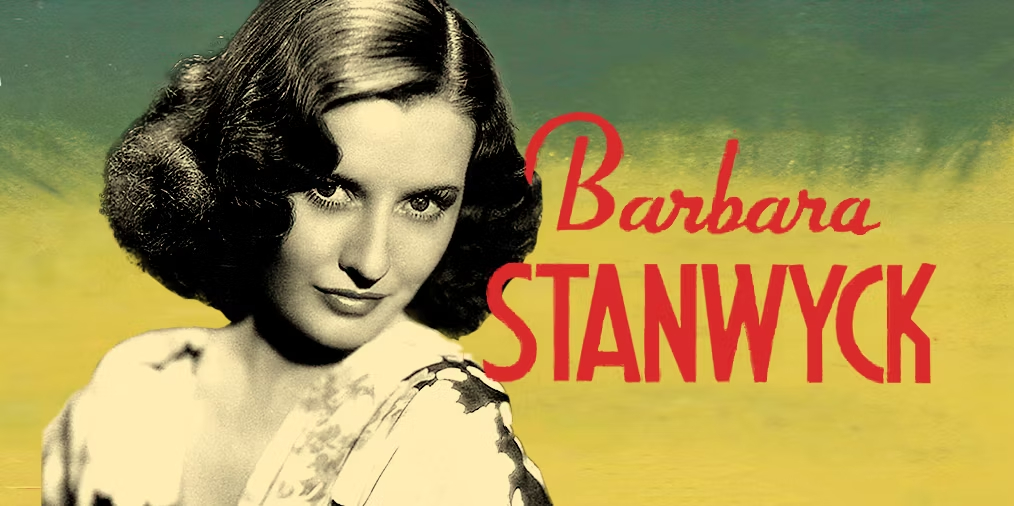
The Daring Legacy of Barbara Stanwyck: A Pre-Code Hollywood Icon

In the luminous constellation of Hollywood’s golden age, few stars shine as brightly or as boldly as Barbara Stanwyck. Before the strict enforcement of the Hays Code reshaped American cinema, Stanwyck captivated audiences with her dynamic performances in a series of pre-code films that pushed the boundaries of storytelling, sexuality, and female autonomy. This blog post delves into the pre-code work of Barbara Stanwyck, exploring how her roles during this era were emblematic of a fleeting period of cinematic freedom and how they helped cement her legacy as one of Hollywood’s most enduring icons.

A Maverick on Screen

Barbara Stanwyck’s career in the pre-code era was marked by a series of performances that were as varied as they were groundbreaking. She portrayed strong, independent women who navigated the complexities of society, love, and ambition in a way that was unheard of at the time. Stanwyck’s characters were often ahead of their time, embodying a blend of vulnerability and strength, and always with a nuanced depth that defied the simple archetypes of women typically seen on screen.

“Night Nurse” (1931)

One of Stanwyck’s most notable pre-code films is “Night Nurse,” where she stars as Lora Hart, a dedicated nurse who uncovers and combats a plot to murder her wealthy patient’s children. The film was bold for its time, showcasing Stanwyck’s character as a tenacious and morally upright heroine willing to fight against corruption and abuse. “Night Nurse” exemplifies the pre-code era’s willingness to tackle serious social issues and highlight female agency.

“Baby Face” (1933)

Perhaps no other film showcases Stanwyck’s pre-code legacy quite like “Baby Face.” In this film, Stanwyck plays Lily Powers, a young woman who uses her intelligence, charm, and sexuality to climb the social and economic ladder, leaving a trail of broken men in her wake. “Baby Face” is a striking commentary on gender, power, and ambition, with Stanwyck’s performance challenging the societal norms of the time. The film was so controversial that it underwent significant censorship and editing to comply with the Hays Code requirements.

Stanwyck’s Impact on Hollywood

Stanwyck’s pre-code films were not just entertainment; they were a reflection of the changing attitudes towards women’s roles in society. Through her characters, Stanwyck explored themes of female independence, sexual autonomy, and the pursuit of personal ambition outside of traditional norms. Her work during this period paved the way for more complex and realistic portrayals of women in cinema.

A Legacy of Empowerment

Stanwyck’s portrayals provided a glimpse into the potential for a more progressive and inclusive Hollywood, one that was sadly curtailed by the enforcement of the Hays Code. However, the impact of her pre-code work endures, serving as a testament to her talent and the fleeting period of artistic freedom that defined early 1930s cinema.

Conclusion

Barbara Stanwyck’s pre-code films remain a fascinating study of a Hollywood at the cusp of change. Through her performances, Stanwyck not only entertained but also challenged and inspired. She navigated the complexities of her characters with an authenticity and depth that continue to resonate with audiences today. As we look back on the pre-code era, Stanwyck’s legacy stands as a reminder of the power of cinema to reflect and influence societal norms, and of the enduring impact of a true Hollywood maverick.

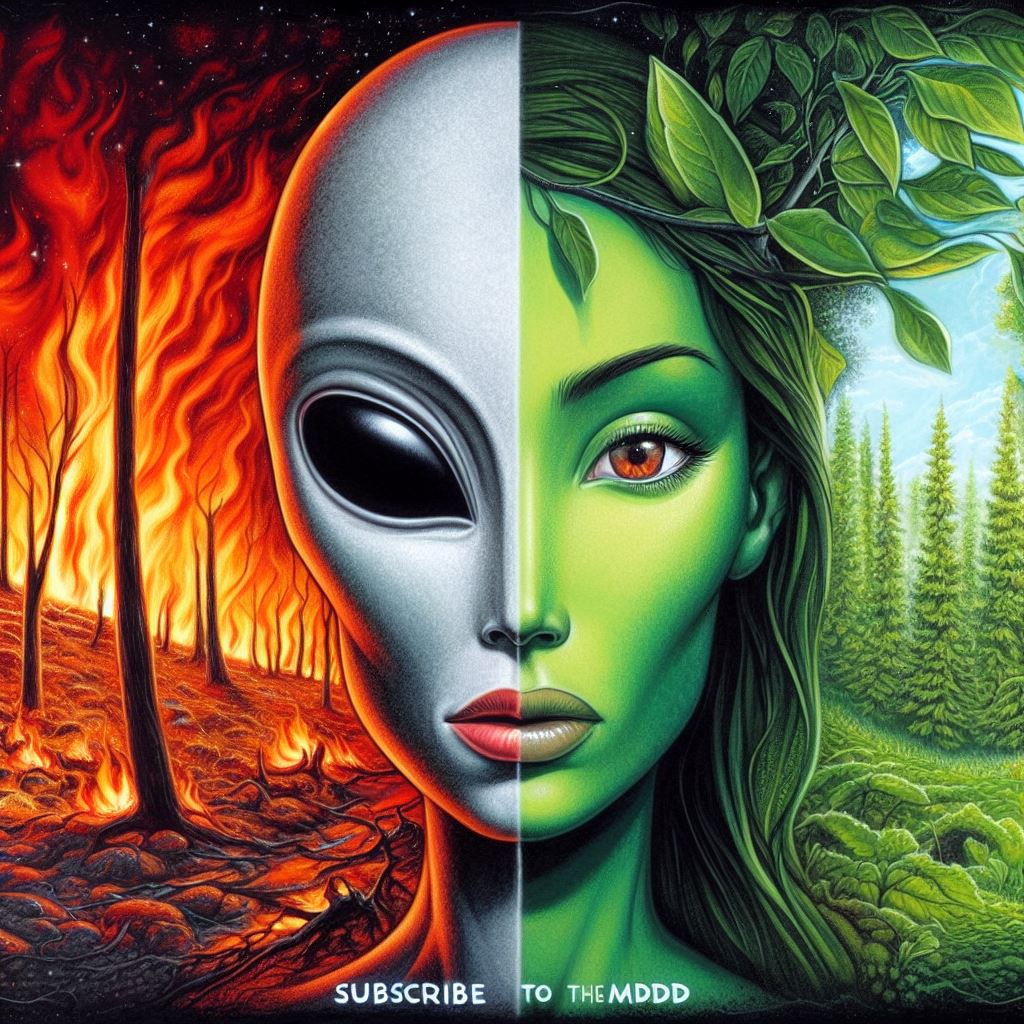
Greek Nymphs Were Extraterrestrial Visitors

I turned one of my ramblings into a video. Give it a look and lemme know what you think. Don’t be afraid to lambaste it. I’m incredibly thick-skinned.

Cheers!

The Underutilization of Marion Ravenwood in the “Indiana Jones” Saga

Introduction

In the pantheon of iconic film characters, Marion Ravenwood stands out as a beacon of strength and resilience in the ‘Indiana Jones’ series. Introduced in ‘Raiders of the Lost Ark’ as the hard-drinking owner of a bar in Nepal, Marion immediately captured audiences’ attention as a woman who could hold her own against any challenger. Her toughness, independence, and complex history with Indiana Jones suggested a character ripe for exploration and development. Yet, as the series progressed, Marion’s potential was increasingly sidelined, transforming her from a formidable partner in adventure to a role more closely resembling a damsel in distress. This article examines Marion Ravenwood’s character arc across the ‘Indiana Jones’ films, highlighting the missed opportunities to fully utilize her character and reflecting on the implications for female representation in action-adventure cinema.

Marion’s Strong Start

When audiences first meet Marion Ravenwood, she is running a bar in Nepal, far removed from the traditional roles women often occupied in early 1980s cinema. Her introduction is memorable: she outdrinks a patron in a display of sheer willpower and tolerance, showcasing not just her toughness but her ability to stand equal or superior to the men around her. This scene sets Marion apart as more than just a love interest or side character; it establishes her as a person with her own story, strengths, and weaknesses.

Shift in Character Role

The arrival of Indiana Jones marks a pivotal moment for Marion’s character. Despite her strong introduction, Marion’s role gradually shifts as the narrative unfolds. Where she initially appears as an independent figure capable of handling the challenges of her environment, her reunion with Jones reintroduces her into the narrative in a manner that increasingly relies on traditional gender dynamics. Although Marion remains spirited and resourceful, her moments of vulnerability and need for rescue become more prominent. This shift is emblematic of a broader trend in action-adventure films, where female characters often oscillate between empowerment and traditional damsel-in-distress roles based on the narrative’s demands.

Character Development and Missed Opportunities

Marion Ravenwood’s character presented a golden opportunity for the ‘Indiana Jones’ series to explore themes of partnership, equality, and mutual respect in the context of high-stakes adventure. Her backstory with Jones, combined with her proven capabilities, could have served as a foundation for a more nuanced exploration of her character. Instead, subsequent appearances in the series further sideline her contributions and capabilities. Scenes that could have showcased her independence or leveraged her unique skills were often overshadowed by her role in the narrative’s romantic subplot or as a character needing rescue.

Narrative Impact

The underutilization of Marion’s character has a ripple effect on the series’ overall narrative. Instead of utilizing Marion’s strengths to contribute to the adventure, the films often revert to conventional storytelling tropes. This not only diminishes her character’s potential impact but also represents a missed opportunity to diversify the series’ approach to storytelling. A more balanced utilization of Marion’s character could have enriched the narrative, offering audiences a broader perspective on the challenges and triumphs of the adventure.

Comparison with Contemporary Female Characters

Comparing Marion Ravenwood to contemporary female characters in action-adventure films highlights the missed opportunities in her portrayal. Characters such as Ellen Ripley in the ‘Alien’ series or Sarah Connor in the ‘Terminator’ series demonstrate that female characters can consistently display resilience, complexity, and growth without sacrificing their independence to narrative demands. These characters maintain their agency and continue to evolve, serving as both central figures in their respective stories and as benchmarks for female representation in the genre.

Fan Reception and Legacy

Despite the limitations imposed on her character, Marion Ravenwood remains a beloved figure in the ‘Indiana Jones’ series. Fans appreciate her for her initial portrayal as a strong, independent character and continue to discuss what might have been had her character been given more to do. Her legacy is a complex one, reflecting both the strengths of her character and the missed opportunities to develop her further.

Conclusion

Marion Ravenwood’s character in the ‘Indiana Jones’ series serves as a poignant reminder of the complexities of female representation in action-adventure cinema. Her initial introduction as a capable, independent figure set expectations that were not fully realized in subsequent films. By examining Marion’s underutilization, this article highlights the missed opportunities for character development and narrative enrichment. As the film industry continues to evolve, Marion’s legacy underscores the importance of creating complex, dynamic characters who can inspire, engage, and stand on equal footing with their male counterparts. The lessons learned from Marion Ravenwood’s portrayal can guide future filmmakers in crafting more inclusive and representative narratives.

Unveiling the Cosmic Connection: Greek Nymphs Were Extraterrestrial Visitors, New Evidence Suggests

In a groundbreaking revelation that’s set to rewrite both history books and sci-fi novels, recent archaeological findings suggest that the ethereal nymphs of Greek mythology were, in fact, the first extraterrestrial visitors to grace our planet. This astonishing theory, proposed by the renowned (and somewhat controversial) Dr. Xenon Metaphoros of the Institute of Mythological Cosmology, is based on a series of ancient artifacts and cryptic historical texts unearthed in a previously undiscovered subterranean library in Crete.

From Olympus to the Stars: The Interstellar Journey

The discovery includes a series of frescoes depicting what appear to be celestial beings descending from starlit skies, intertwining with scenes of well-known mythological narratives. According to Dr. Metaphoros, “The intricate details in these frescoes clearly point to a more literal interpretation of ‘nymphs descending from the heavens.’ It’s not mere poetic imagery; it’s historical documentation of an extraterrestrial visitation.”

The most compelling piece among the artifacts is a fragmented tablet, tentatively titled “The Cosmic Odyssey,” which contains inscriptions in a dialect that predates Ancient Greek. Linguistic experts at the University of Atlantis (a prestigious yet elusive institution) have tentatively translated portions of the text, revealing references to interstellar travel and technology beyond our current understanding.

Nymphs: Not Just Forest Dwellers, But Star Wanderers

Greek nymphs, traditionally depicted as minor deities associated with nature, have always held an air of mystery in mythological tales. This new evidence, however, paints them in a radically different light – as advanced beings from another world. “Imagine, if you will, Dryads not just as spirits of the trees, but as guardians of cosmic knowledge, imparting astronomical wisdom to ancient civilizations,” muses Dr. Metaphoros.

The implications are staggering. Were the Greeks mere passive recipients of otherworldly wisdom, or did they engage in interstellar cultural exchanges with these nymph-like visitors? Professor Icarus Heliopolis, a leading historian at the Solar Myths Research Center, speculates, “This could very well mean that concepts like democracy, philosophy, and even the Olympic Games might have extraterrestrial origins. The nymphs might have been the ultimate muses, inspiring not just art and literature, but the very foundations of Western civilization.”

Skeptics and Enthusiasts: A Galaxy of Opinions

As expected, this theory has its skeptics. Dr. Helena Chronos of the Historical Accuracy Group dismisses the findings as “an imaginative misinterpretation of mythological allegories.” She argues, “To leap from artistic representation to asserting an extraterrestrial influence is both scientifically unfounded and culturally myopic.”

On the flip side, the revelation has sparked enthusiasm among ancient astronaut theorists and mythological enthusiasts. Social media is abuzz with the hashtag #NymphsInSpace, with users speculating about the possible connections between other mythological figures and alien visitors.

A New Dawn of Understanding

Regardless of the debate, this discovery opens up a universe of possibilities in our understanding of human history and mythology. As Dr. Metaphoros aptly puts it, “We are not just unearthing artifacts; we are uncovering the cosmic lineage of human civilization. The nymphs, once thought to be mere figments of fertile imaginations, may well be the heralds of humanity’s star-studded ancestry.”

As the scientific and mythological communities continue to analyze and debate these findings, one thing is clear: our understanding of the ancient world and its connections to the cosmos may be on the brink of a paradigm shift, courtesy of the otherworldly nymphs of Greek lore.

Santa Claus: An Alien Legacy Unwrapped in New Archaeological Discovery

In a stunning turn of events that could forever change our Yuletide traditions, a team of archaeologists and extraterrestrial researchers have uncovered evidence suggesting that Santa Claus, the beloved figure of Christmas lore, was in fact the first extraterrestrial visitor to Earth.

From the North Pole to the Stars: Unveiling Santa’s True Origins

The discovery, made at a remote site near the North Pole traditionally associated with Santa’s workshop, includes a series of artifacts that predate human civilization. Among these is a sleigh-like spacecraft, equipped with technology that Dr. Ivor Tinsel, lead researcher at the Celestial Mythology Institute, describes as “far beyond anything we possess today.”

“The propulsion system of this ‘sleigh’ indicates a mastery of anti-gravity and quantum mechanics that we can’t even begin to comprehend,” explains Dr. Tinsel. “This isn’t just a breakthrough in understanding Santa Claus; it’s a breakthrough in our understanding of physics!”

Redefining Rudolph and the Reindeer

Even more startling is the evidence suggesting that the reindeer traditionally depicted as pulling Santa’s sleigh were, in fact, sophisticated bio-engineered creatures. Geneticist Dr. Holly Snowflake notes, “These weren’t just any reindeer; they were designed for interstellar travel, capable of navigating through the fabric of space-time.”

The Intergalactic Gift-Giver

The most significant aspect of this discovery is the light it sheds on Santa’s role as a gift-giver. Historical linguist Dr. Nick Yule posits that “gift-giving was perhaps a means of peaceful communication with early humans, a gesture of goodwill from an extraterrestrial visitor.”

This hypothesis is supported by the unearthed remnants of toys and gadgets, made from materials not found on Earth, alongside ancient cave paintings depicting a jolly figure distributing these items.

Skepticism and Enthusiasm: A Polarizing Revelation

As expected, the revelation has been met with both skepticism and enthusiasm. Some historians, like Professor Carol Kringle, argue that these findings are a misinterpretation of ancient folklore. “Santa Claus is a symbol of human generosity and kindness,” she states. “To attribute his origins to extraterrestrial activity is to strip away the heart of our Christmas traditions.”

Conversely, the UFO enthusiast community has welcomed the discovery, seeing it as validation of long-held beliefs about alien visitations. Social media has erupted with hashtags like #AlienSanta and #ExtraterrestrialChristmas, sparking a global conversation about the implications of this discovery.

A Cosmic Christmas: Reimagining Traditions

Regardless of the differing views, this discovery invites a fascinating reimagining of Santa Claus and Christmas traditions. As Dr. Tinsel notes, “If Santa Claus was an alien, it doesn’t diminish the magic of Christmas; it expands it into the cosmos. We’re not just celebrating a holiday on Earth; we’re partaking in a universal tradition that transcends planets and species.”

As the world prepares to celebrate Christmas, this new perspective on Santa Claus offers a tantalizing glimpse into the unknown, suggesting that the magic of the holiday season may indeed have cosmic origins.

The Monster Illuminati Revealed: The Occultus Consortium—A Hidden Cabal of the Most Infamous Monsters in History

Introduction

In a groundbreaking investigation, we delve deep into the cryptic world that has eluded human comprehension for centuries. Using sources ranging from ancient manuscripts to high-tech surveillance, we reveal the existence of The Occultus Consortium—a secret organization of notorious monsters influencing world events. Consisting of enigmatic figures such as Count Dracula, Frankenstein’s Creature, and The Wolf Man, this organization is so shrouded in secrecy that some question its existence. The evidence presented in this documentary report exposes their hidden lairs, audacious objectives, and internal conflicts that might be their undoing.

Origins

Tracing the origins of The Occultus Consortium takes us back to the cobblestone streets of 19th-century Europe. Deciphered letters between Victor Frankenstein and Count Dracula speak of a ‘new dawn for the concealed,’ a dawn that would unite various entities of monstrous origins. Although the deciphered texts are fragmented, they point toward a grand meeting, a summit that would later be known as the ‘Inaugural Gathering of the Shadows.’ It was here, in a concealed chamber beneath an unnamed castle, that The Occultus Consortium was officially formed.

Members and Hierarchies

Since its inception, The Occultus Consortium has grown in both influence and membership. The original founding members represent a wide array of monstrous lineages, each commanding a distinct faction within the organization:

Count Dracula: The charismatic vampire serves as the organization’s unofficial spokesman. His primary interest lies in keeping the world of monsters veiled from the eyes of humanity, thus avoiding possible extermination.

Victor Frankenstein / The Creature: This member, or rather members, represent the faction of scientific monstrosity. Frankenstein’s Creature has been seen attending the meetings, with theories suggesting that Victor Frankenstein himself might be resurrected in some form.

The Wolf Man (Larry Talbot): Serving as the voice for the natural-born monsters, Talbot promotes a unique ideology centered around coexistence with humans and nature alike.

The Creature from the Black Lagoon: An ancient aquatic entity, this creature embodies the natural world’s monstrous manifestations. Its agenda revolves around environmental preservation and the reclamation of territories lost to human encroachment.

The Mummy (Imhotep): The millennia-old sorcerer heads the faction representing magical creatures. His arcane pursuits aim to consolidate mystical power, viewing it as the ultimate safeguard against human aggression.

Each member, while part of a larger whole, pursues an agenda, often resulting in tense discussions and heated debates. No member holds official supremacy, a situation that both fortifies and undermines the Consortium’s influence.

The Hidden Lair

The headquarters of The Occultus Consortium is the subject of much speculation, with stories and folklore painting it as everything from a subterranean crypt to an extradimensional realm. Our most reliable sources, however, point to a hidden lair deep within the Carpathian Mountains. Protected by a mixture of arcane spells and state-of-the-art security systems, this fortress is rumored to be impenetrable. Recent seismic surveys indicate unusual subterranean structures that align with the leaked architectural plans we’ve obtained. While the exact location remains unknown, the evidence suggests a sanctuary designed to accommodate the unique needs and abilities of the Consortium’s diverse members.

Objectives

Disparate as they are, the members of The Occultus Consortium are bound by a shared urgency: the preservation and elevation of monsterkind. Classified documents intercepted from various intelligence agencies outline diverging goals among the group’s members:

Count Dracula: Advocates for concealing the existence of monsters, fearing that exposure would lead to their extermination.

Victor Frankenstein / The Creature: Promotes the advancement of monsterkind through scientific means, specifically bioengineering and transmutation.

The Wolf Man: Encourages peaceful coexistence between monsters and humans, presenting a radical perspective on integrated societies.

The Mummy: With a focus on the accumulation of arcane knowledge and power, aims to construct a magical arsenal as a deterrent against human interference.

These conflicting goals are not just ideological; they’ve led to strategic disagreements within the Consortium, affecting its course of action and raising questions about its long-term viability.

Inner Conflicts

While the Consortium’s external actions remain largely enigmatic, its internal politics are a whirlpool of tension and ideological clashes. A dossier purportedly leaked by an inside source details the heated arguments and divisions within the group. Especially vocal are The Wolf Man and The Mummy, whose opposing viewpoints on human-monster relations often escalate into impassioned debates. An excerpt from a recent meeting reads:

“If you proceed with this arcane nonsense, you risk the exposure of us all!” The Wolf Man howled. “These humans are not our enemies; they are kindred souls trapped in different bodies!”

“You naïve pup! Our existence will always be a threat to their frail egos,” The Mummy retorted, his bandaged hands tightening around an ancient scroll. “Only power can assure our survival.”

As tensions reached a boiling point, the camera footage shows a shadowy corner of the meeting room, where additional seats remained conspicuously empty. Could this suggest the existence of another layer to the Consortium, a more secretive circle? And if so, who—or what—comprises this inner sanctum?

The Crisis

The Consortium faces a crisis that eclipses individual ambitions and ideological disagreements: a prophecy known as ‘The Great Unveiling.’ Ancient manuscripts detail a time when the boundaries between the human and monster worlds will blur, leading to catastrophic events. With the prophecy’s signs aligning, urgency grips the Consortium’s meetings. It’s in these dire moments that the second circle—represented by enigmatic figures like the Bride of Frankenstein, the Invisible Man, and the Phantom of the Opera—makes a rare appearance. Though their exact roles and motivations are cloaked in mystery, their involvement suggests that the Consortium’s influence and complexity extend far beyond what was initially presumed.

Interviews & Testimonials

Given the extreme secrecy surrounding the Occultus Consortium, obtaining firsthand accounts is next to impossible. However, we’ve managed to compile anonymous testimonials that further validate the organization’s existence and aims.

“I was once a groundskeeper at a castle deep within the Carpathian Mountains. One evening, I stumbled upon a hidden chamber. What I saw… I can’t even describe. Let’s just say the legends are real, and they have agendas.” – An anonymous source, believed to be a former servant of Count Dracula.

“I found an old manuscript belonging to my ancestor. It was more of a journal, filled with meetings and plans that sounded too fantastical to be real. I dismissed it as the ramblings of a madman until I started seeing the signs.” – Descendant of Victor Frankenstein, identity protected for safety reasons.

“It all sounded like old wives’ tales until the livestock started disappearing. Then people started whispering about wolf-like figures in the forest. Now I don’t know what to believe.” – A resident from a rural European town plagued by mysterious events.

These interviews, while not definitive proof, serve as corroborative evidence that adds layers to the shadowy tapestry of the Consortium.

Conclusion

In the labyrinthine corridors of history and folklore, the Occultus Consortium remains a nebulous entity—simultaneously shaping and evading our understanding. Through this groundbreaking investigation, we’ve uncovered alliances, conflicting objectives, and even an inner sanctum of enigmatic figures. Yet, for every question answered, two more arise, each more puzzling than the last.

As the signs of “The Great Unveiling” grow more evident, the urgency to unravel the Consortium’s mysteries intensifies. Whether heroes, villains, or complex beings whose motives transcend human morality, what remains clear is that these legendary monsters are active participants in the world’s unfolding drama.

With new leads pointing towards an even deeper layer of secrecy within the Consortium, our investigation is far from over. Who are the shadowy figures of the inner circle? What role will they play in the coming events? These questions demand answers, and it is a quest we undertake with both trepidation and resolve, for the truth may shake the very foundations of our reality.

A Heavy Cross to Bear – Choosing The Right Cross Tattoo

Crux immissa. Crux capitata. Crux commissa. Crux immissa. Crux ansata. Cruz gammata.

The cross. It is the most ancient and universal symbol, which in pre-erudite cultures often symbolized a duality. Associated with the horizontal beam of the cross were the symbols of the feminine, which included the characteristics of passivity, earthiness, destruction, and death. On the other hand, the vertical beam suggested its masculine counterpart, which was considered celestial, eternal, creative, positive, active, and full of life.But before the cross became a religious and holy symbol, it was used in a cruel method of execution called crucifixion, where a victim was tied and nailed by the wrists and feet to a large wooden cross and left to hang there until dead. This practice was believed to have begun with ancient Persians, and Alexander the Great introduced crucifixion throughout his empire when he crucified a general who disagreed with his campaign plans. Later, the Roman Empire adopted the custom from Carthage and used it for slaves, rebels, enemies and criminals. After Jesus of Nazareth had been put to death, Saint Helena was said to have discovered the cross that Christ died upon in the fourth century AD. Helena was instrumental in converting the crumbling Roman Empire into the Christian Holy Roman Empire, and when Christianity became the state religion, Emperor Constantine abolished crucifixion.

Now, when it comes to religious symbol body art, the cross tattoo is by far the most popular tattoo design.

What Cross Tattoo Designs Represent On A Man Or Woman

Cross tattoos have the distinction of being one of the few tattoo designs that are, for the most part, unisex. It represents that same thing for women and men, as the symbol of the cross deals with the spiritual rather than the physical.

What Type Of Person Gets A Cross Tattoo Design

People who get cross tattoos are in tune with their spirituality and they know that they’re more than just their physical bodies. Their intuition and faith factor in heavily when the solution to a problem is beyond reasoning and thinking. Most of the problems we face day to day are intangible, so in seeking answers, these people transcend physical limitations. Cross tattoos also help spiritual people be at peace with themselves, and they seldom feel alone. The cross tattoo serves as a reminder that they are loved by God all the time, and feeling this love, they are peaceful, compassionate, open and loving to all human beings. With cross body art, a special relationship with God is implied.

Different Types Of Crosses

The Crux Immissa is shaped like a lower case “t”, with the horizontal beam inserted (which is what immissa means) at right angles to the upright post. This is the most common form of the Christian cross, and it was on a cross such as this that Christ actually died (for that reason it is sometimes referred to as the Passion cross). This cross is also called Crux Capitata (“with a head”) and the Latin cross.

The Crux Commissa is shaped like a capital “T” (commissa means “joined” or “attached”) and it is more widely known as the Tau Cross or St. Anthony’s cross.

The Crux Decussata is an “X” shaped cross (decussata comes from decus, Latin for “distinction”, “honor”, “glory” and “grace”). The crux decussata is seen in the elaborate Chi Rho Cross and Baptismal Cross, and the simple St. Andrew’s cross.

The Crux Ansata, or ansated cross, is most commonly known as the Ankh (a looped Tau cross that serves as the ancient Egyptian hieroglyph meaning “life”). The hieroglyph itself is a sketch of the womb and the sexual union of male and female genitalia, which signifies zest, energy, reproduction, regeneration, and immortality. The symbol closely resembles the Hindu depiction of a Hermaphrodite standing on a lotus flower.

The Cross of Triumph is similar to the design of the Latin cross, only it adds a large circle to the base with the outline of an upside-down T inside. This cross is a symbol that testifies to the universal triumph of the Gospel throughout the world.

The Calvary Cross is like the Crux Immissa on it’s mounted on three steps (which represent the hill of Calvary or, more often, “faith”, “hope” and “love”. It is also known as the Graded cross.

The Eastern Orthodox Cross (also known as the Russian Cross and Byzantine Cross) is another cross that is similar to the Latin Cross with two additional cross beams that sit above and below the original horizontal beam. The upper is shorter in length and runs parallel to the original cross beam while the lower slopes down from left to right at an angle.The top beam bears the plaque conveying Pontius Pilate’s inscription, “INRI” (Iesus Nazarenus Rex Iudaeorum) which is Latin, Greek and Hebrew for “Jesus the Nazorean, King of the Jews”. The true meaning of the bottom beam is a little more of a mystery. One popular theory (circa the eleventh century) is that it represents a footrest and the slant symbolizes a balance scale showing the good thief, St. Dismas, having accepted Christ would ascend to heaven, while the thief who mocked Jesus would descend to hell. In this interpretation, Christ and the cross is a balance of justice.

The Templar Cross features horizontal and vertical beams of equal length, the ends of which are flared. To fully understand the history of the cross, we must go back to the year 1118, when a military order was formed by nine French noble knights, whose ranks included Hugues de Payens and Geoffrey de Saint-Omer. The founding knights of this order, known as “The Poor Knights of Christ”, took monastic vows and were devoted to the protection of pilgrims and the defense of the Holy Land. When the King of Jerusalem, King Baldwin II (circa 1118-1131), installed the order in a part of the Palace of Jerusalem called, Solomon’s Temple, for their residence and armory, the order became known as Knights of the Temple or Templars.In 1128, the Knights of the Temple were confirmed by Pope Honorius II, and they received the white vestment as a symbol of the purity of their life, to which Pope Eugenius, in 1146, added “the red cross with two bars”. Despite many years of sacrifices and rendering service to bit Christianity and civilization, Philip the Fair, King of France (who was in the Order’s debt), arrested all the Templars in 1307, and seized their goods and possessions. But Phillip was unable to judge the Order, as it was answerable only to the Pope, so he set about to coerce Pope Clement V to act against the Order. The Pope eventually yielded to pressure in 1312 and the Order was forced to revert to its original status of a Secular Military Order of Chivalry.In 1314, noted Templar Grand Master Jacques de Molay was burned at the stake near Notre Dame Cathedral, Paris. And in England, though Edward II did not take immediate action against the Order, he permitted the Inquisitors to judge the Order at the Church of All Hallows By-the-Tower, and then set about seizing the Templar lands and possessions, including the Temple in London, for himself rather than passing them on to the nominated custodians, the Knights of Saint John.

The biggest misconception regarding the Knights Templar is that they always wore the cross as part of their raiment, when in actuality it wasn’t until 1147 that the Pope Eugene III granted the Templars the right to wear a red cross, sewn above the heart on the left side of the Templar garment. Before this time the knights wore only a white coat and their sergeants wore a brown one.

The Crusader’s Cross (also called the Jerusalem Cross) is symbolized as the crux immissa surrounded by four smaller crosses and usually represents Christ’s command to spread the Gospel around the world, a mission that started in Jerusalem. Although the true meaning of this cross is unknown, the most popular beliefs are:

* The larger cross represents the Old Testament teachings and the smaller crosses incorporate the New Testament teachings. The four apostles, Matthew, Mark, Luke and John, surrounding Christ in the center Christianity (the center cross) being broadcast by missionaries to the four corners of the world
* Five crosses representing the five wounds of Jesus on the cross (hands, feet and side)

It is believed that the name Crusader’s Cross came about because the symbol was on the papal banner given to the crusaders by Pope Urban II.

The Maltese Cross is comprised of four triangles who apexes meet to form an eight-pointed star that has varies shapes (blunt, curved and sharp). Originally used by the Knights of the Hospitaller Order, so known due to their charity toward the sick and poor in setting up hospices and hospitals, the symbol is still in use today by fire and ambulance services. During this time, battle armor was often extensive, covering bodies and faces and making it difficult in battle to differentiate friend from foe, so the need for an identifiable insignia for the knights became vital. Since they fought for a holy cause, they selected the symbol of the cross and when the Knights of Saint John of Jerusalem moved to the Island of Malta, the emblem inherited the island’s name. The Maltese cross represented the principles of charity, loyalty, chivalry, gallantry, generosities to friend and foe, protection of the weak, and dexterity in service. Because of its connection with the Knights of St. John, this cross is also called St. John’s Cross.

The Celtic Cross is simply a Latin cross with a ring in the center, and as is the case with most of the other crosses listed here, this cross is called different things by different people. For example, Episcopalians and Anglicans call it the Celtic cross, whereas Catholics refer to it as the Irish cross. Sometimes it’s even mistakenly identified as St. John’s Cross (see: Maltese Cross). Equally ambiguous is the meaning of the ring in the center of the cross. Interpretations range from it being a symbol of eternity that emphasizes the everlasting love of God, as shown through Christ’s crucifixion, to the symbolization of Christ’s resurrection, to the simplified explanation that it’s a halo. Then there’s the theory that when St. Patrick converted Druids to Christians, he took one of their standing stones etched with a circle that symbolized their moon goddess, and scratched a Latin cross mark over the circle, to show that Christianity had replaced their pagan beliefs.

The Celtic cross also contains plaitwork, which are patterns of interwoven cords that symbolize the “Thread of Life”, since the human soul was thought, by the Celts, to be a fragment of the divine, which would ultimately return to its divine source, after ridding itself of its accumulated, inherited impurities (see: Celtic Knots for more information regarding plaitwork).

The Anchor Cross is also known as St. Clement’s Cross, named after the fourth Pope who was banished from Rome in the first century by Emperor Trajan. Clement was forced to work in a Russian stone quarry and he caused trouble for himself when he located a spring of fresh water from the ground that quenched his fellow prisoners’ thirst (believed to be miracle, which aided in his later sainthood), and since no good deed goes unpunished, the prison governor ordered Clement’s death. He was subsequently tied to anchor and tossed into the Black Sea to prevent Christians from recovering the body. Clement later became the patron saint of anchorsmiths, blacksmiths, mariners, marble workers and stonecutters.

Which Cross Tattoo Is Right For Me?

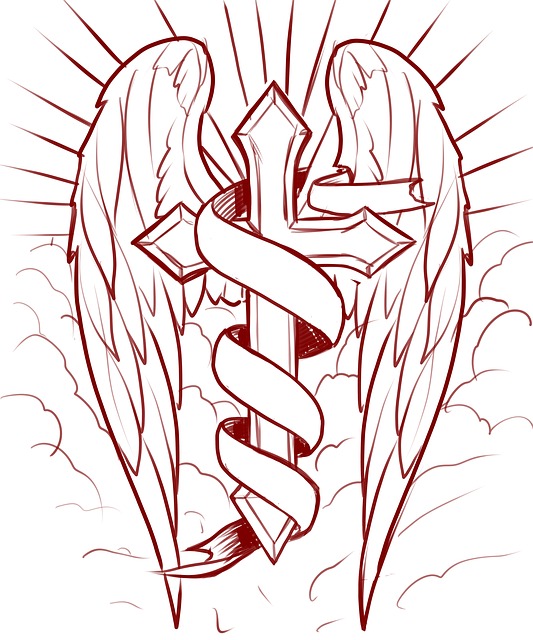
Believe it or not, this is a difficult question to answer, because there is no logical thought pattern behind the choice (with the exception of the choosing the cross symbol that identifies your religion). The design could be a traditional Christian cross, a tribal cross, a Celtic cross, a gothic cross (being “goth” doesn’t make you a bad person), or a Latin cross with either a rosary, wings or praying hands. The only thing that matters is that the cross tattoo design you select, speaks to you spiritually. This decision is between you and God.

How will you show your faith and love?

Copyright ©2005 Rhyan Scorpio Rhys

A Dragon Tattoo By Any Other Name…

Ormr. Ddraig. Dreigiaw. Derkein. Derkomai. Drakon. Draca. Draco. Dragon.

Despite the language of the name given them, dragons inhabit the myth and legends of most ancient and modern cultures and have been portrayed throughout history as magical creatures possessing raw power and mystical might. This is the allure of the dragon tattoo design. No other tattoo art or tattoo design makes as distinctive and commanding an individual statement than a dragon tattoo.

Dragon tattoos also have the added advantage of being so fluid that they can conform to and flatter the contours of any part of the body. Many hardcore tattoo addicts have even gotten dragon designs whose tail begins at one ankle and winds its way up the leg and torso with the dragon’s head finally resting on the chest. Dragons can even coil themselves into intricate full and half sleeve tattoos, and a dragon in flight with its wings spread makes an excellent lower back tattoo.

Origin of the Word “Dragon”

The origin of the word “dragon” has been traced to a Greek word, “derkein,” meaning “sharp-sighted one,” which appears to describe a snake, so when it was converted to Latin, the word became “draco,” or “giant snake.”

The Popularity of Dragons

Dragons have always been the topic of fascination and mystery, as well as being a source of wonder, a symbol of hope and purity, and sometimes…jealousy, miserliness, maleficence and fierce rage.

Dragons have also been known to be notorious riddle-masters, sentinels of sacred shrines, and hoarders of treasures beyond imagining. It is even said that great philosophers would climb the highest mountains peaks or venture into the lowest caverns to seek the sage advice of dragons in secret.

When not out to slay dragons for immortality, like Sigfried, or for the golden apples of great happiness, like Hercules, we lowly mortals live under the ever-vigilant gaze of dragons. Sometimes we reside in the sphere of a dragon’s good fortune. And there are those lucky few who actually get to live under the wing of a dragon’s protection.

Dragons have even crossed over into the real world. Vikings carved dragon figureheads on the prow of their ships because they believed the dragons would endow keen sight and cunning to the Viking warriors. And in China, emperors think they are the real dragons and the sons of the heaven. They sleep on dragon beds, sit on thrones called the dragon seat, and their ceremonial dress is known as dragon robes.

Nowadays it’s quite common to hear parents tell their children bedtime stories about good and kindly dragons. For a fee you can hire the services of a dragon specialist who will tell you the name of your own personal guardian dragon and for an additional sum you may even obtain a sketch of your appointed guardian. There are even group therapy sessions that help you release the inner dragon that lies dormant in all of us.

With the success of Peter Jackson’s Lord of the Rings film trilogy, interest in dragons and the magical world created by J.R.R. Tolkien has renewed, just as it had back in 1973 when Gary Gygax of TSR, Inc. created a roleplaying game named Dungeons and Dragons (D&D).

D&D also goes into great length about dragon societies and the philosophy that revolves around the ancient Ceremony of Sublimation, where dragons aspire to reach a higher level of existence and possibly immortality unique to dragonkind.

And then there are the tattoos. Dragon tattoo designs come in many forms, Celtic dragon tattoos, tribal dragon tattoos, Asian dragon tattoos, and the list goes on. When it comes to body art, dragon tattoos are among the most popular tattoo designs.

What a Dragon Tattoo Represents on a Woman

A dragon tattoo on a woman usually acknowledges “woman as the creator.” Like the dragons of many mythologies, woman’s true body form is that of life, the world and the universe. It is this superior form that allows her to be without equal. Dragon body art also represents a flowing, fluid grace that conceals a reserve of power just beneath the cool surface. Studies have shown that women who get dragon tattoos become more self-confident and assertive.

What a Dragon Tattoo Represents on a Man

A dragon tattoo design on a man typically signifies raw power. Like dragons, men are the guardians of that which is sacred, such as women and objects of great wealth. But this must be tempered with wisdom, lest the greed of dragons overpower the man’s soul and turn him into a ravenous creature with an insatiable appetite. Men who get dragon tattoos view themselves as being revered for their wisdom but feared for their tremendous power.

Why All The Sudden Interest In Dragon Tattoo Designs?

Actually, the interest isn’t all that sudden at all. Dragons have always been an archetypal choice for a traditional tattoo design. Far more popular than tribal, butterfly, Celtic, and even cross tattoos, beautifully rendered coiling dragon tattoo flash can adorn any part of both the male and female body. Not to mention that tattoo designers have begun to take traditional dragon tattoo illustration to the next level, giving the dragon body art a stylized edge that is sure to keep people staring at your personal dragon tattoo design in awe and appreciation.

But before you rush out to get your dragon tattoo, you should familiarize yourself with the history of dragons to determine which tattoo design best represents your characteristics and strengths and beliefs.

THE HISTORY OF DRAGONS

Some of the first recorded stories involving dragons date back to the Sumerian civilization, located between the Tigris and Euphrates Rivers in an area once called Mesopotamia, which later became Persia, and is now better know as Iraq and Iran.

Mesopotamian Dragons

The earliest written dragon myth was carved onto clay tablets and depicts the story of a dragon named Asag, who battled the hero-god, Ninurta. Even in these stories, dragons guarded treasures, held back floods, and imparted great knowledge.

Babylonian Dragons

In Babylonian myth, a dragon was believed to have aided in the creation of the world and the gods, and although some of the dragons served as the guardians of god’s treasure and nature, most were depicted as evil creatures, who all too often angered the gods. It is believed that Asag and Ninurta, from the Mesopotamian myth, are introduced by the Babylonians as Tiamet and Marduk, though this may not be totally accurate as the preserved records are in poor condition and incomplete.

A story that did survive is the epic tale of Gilgamesh, who set out to slay Humbab, the dragon guardian of the forest, who was thought to be a threat to the nearby town.

Babylonian history also tells in the “Book of Bel and the Dragon,” that the ruler Nebuchadnezzar, kept a dragon in the temple of the god Bel, where the dragon was worshipped. When the Hebrew prophet, Daniel, began denouncing idols, Nebuchadnezzar told him of the dragon and argued that the dragon was real and Daniel must worship it. Daniel asked why the people worshipped such a creature, and when faced by the dragon, slew it.

Sumerian Dragons

Sumerian myth depicts several dragons, chief among them, Zu, a cunning and devious dragon who stole the Tupsimati, the tablets of law, from the god Enlil, who wore the tablets on him. Another popular dragon is Gandareva, an immense creature who was the guardian of another dragons and preyed upon humans for food.

ASIAN DRAGONS

The Differences in Asian Dragons:

The Chinese boast that their dragons are the “true dragons” and the proof of this lies in the number of claws on the dragon’s foot. The true Chinese dragons have five claws. The Japanese dragons have four claws, and the Vietnamese dragons have only three.

Chinese Dragons

In Chinese culture, the dragons are considered the governors of rain, entrusted with the power to decide where and when the rain falls. Dragons also play a significant role in Chinese Festivals and the dragon dance has a long history that dates back past the Song Dynasty, circa 960-1279 AD. Chinese even consider themselves “the descendants of the dragon” and their culture is rich with the presence of dragons, which is considered to be a symbol of imperial power.

Japanese Dragons

Ryujin, a Japanese Dragon King, who lived in a palace under the sea, loved his wife and daughter so much that he spoiled them both, often sending out sea creatures such as octopus and jellyfish on errands to retrieve odd things. In one version, Ryujin’s daughter, Otohime, wanted to dine on monkey liver and a handsome and strong-boned jellyfish was dispatched to retrieve the liver but was outwitted by the monkey. In rage, the dragon king beat the jellyfish to a pulp, a shape that they hold to this very day.

Korean Dragons

Tales of Korean dragon are fewer in number than their Chinese and Japanese counterparts. The most popular myth involves a poor fisherman who caught a Carp, and the Carp begged for its life so that he may return to his family. The fisherman obliged, and the Carp turned out to be one of the sons of the Dragon King, so the fisherman was rewarded greatly.

Vietnamese Dragons

The story of Slowcoach, involves a kindly man who fashions a fishhook out of a piece of enchanted wood. When he puts the hook into the lake, the water rises and the fishing pole and line disappear into the turbulence and the waves almost drown him. Then a beautiful woman walks out of the water and tells Slowcoach that she is the daughter of the dragon king and his enchanted fishhook is caught in her father’s mouth. When Slowcoach agrees to remove the fishhook, she turns him into a bubble and takes him to the underwater dragon palace. The fishhook is removed and the dragon king rewards Slowcoach with a bottle containing a little blue fish, which later turns out to be the dragon king’s daughter.

Hindu Dragons

Vitra is the dragon that comes from the Indian subcontinent. Vitra absorbed the cosmic waters from the universe and coiled around a great mountain. Vitra is sometimes described as the personification of winter.

A more fascinating Indian Dragon myth involves the only dragon ever to be converted to a human religion. The Dragon, Apalala, lived in the Swat River and was converted by Buddha himself. Apalala then set out to teach it to other dragons, who drove him away but allowed him to continue teaching the humans.

EUROPEAN DRAGONS

European dragons hold the honorary title of the “kings of evil.” And although these chaotic creatures have plagued mankind since the earliest remembrances with their malicious intent and insatiable battle-lust, still humans feel a strange sense of awe and respect for them.

The tale of St. George’s dragon is perhaps the most famous of the European dragons, in which a dragon appears at the village of Cappadocia and threatens to destroy the region. In fear the villagers offer sacrifices to the dragon in the form of sheep and later the village maidens. Eventually the only maiden left is the princess, who is tied to a stake. Before the dragon can devour her however, George wanders by and slays the dragon.

Another dragon can be found in the epic Anglo-Saxon poem, Beowulf, which chronicled the three battles of the hero of the same name. In the first battle, Beowulf slew Grendel. In the second, Beowulf battled Grendel’s larger, more fearsome mother. In the third and final battle, Beowulf fought a fierce and fiery dragon, that he managed to vanquish, but suffered wounds so lethal that he himself perished.

Greek Dragons

Greeks mythology views dragons as terrifying dark creatures, remnants of an earlier age, that needed to be slaughtered by a hero. Dragons were guardians of underground sources of power, and often guarded springs, where the watery underworld burst to the surface.

Austrian Dragons

In the Vorarlbeg area of West Austria dragons were not considered supernatural but rather simply an unwanted part of nature like wolves, bears, and mountain cats. The annoying dragons occasionally took a horse, cow, or some sheep but were rather shy about confronting mankind and were thus never seriously feared or hunted.

French Dragons

Tarasque is a dragon of a different kind. Reputed to be the daughter of the giant serpent, Onachus, and the water dragon, Leviathan, Tarasque came from the sea up the river Rhone and decided to make her home in Southern France. She terrorized the region for many years, despite the attempt by many knights and heroes to slay her. That was until St. Martha faced the dragoness alone in a white dress and armed only with her faith and a jar of holy water. Apparently that was enough as she led Tarasque back to the town where the now docile and trusting creature was hacked to pieces.

German Dragons

The village of Brand in Germany hosts a dragon who appeared and began eating cattle and tormenting the villagers. Every effort to destroy the dragon ended in failure, until a traveling scholar arrived and created a tempest that completely covered the valley in a landslide of rocks, trees, giant boulders, and mud. The dragon was never spotted again and the area became known as the “dragons grave.”

Norse Dragons

Nidhogger was a famous Norse dragon, who lived at the foot of Yggdrasil, the tree of life. Nidhogger was, in reality, Fafnir whose greed for the gold he horded slowly turned him into the great dragon.

English Dragons

In Sussex England there is a deep cleft in the ground named after the dragon who had resided there, Knucker, who in true dragon fashion caused the usual sort of mischief. This dragon, however, wasn’t slain by a knight. It was killed by a local farmer’s son, Jim Pulk, who put poison in a pie and offered it to Knucker as a meal.

Irish Dragons

Ollipeist is the most famous Irish dragon, who fled Ireland when St. Patrick started imprisoning dragons. It is said that he left a mark with his tail in what is now called the Shannon Valley.

Swiss Dragons

The historical figure St. Magnus (1698-1772), credited with founding several notable churches and monasteries, had his first encounter with a dragon at the city of Kempton, which was said to be empty of men and filled with dragons. He lured the dragons out by sleeping in the open and managed to slay the lead dragon, Boas, by calling on the power of his god.

Russian Dragons

Gorynytch, three-headed dragon with seven tails knew of the prophecy involving the hero, Dobrynja, who would slay him, but was still defeated despite having this information.

Did You Know?

Did you know that the name “Dracula” is linked with dragons” In 1410, the holy Roman Emperor, King Sigismund of Hungary, established a clandestine fraternal order of knights which he named the Order of the Dragon to advocate Christianity and protect the Empire against the Ottoman Turks. At Sigismund’s behest, an emblem was created depicting a dragon clutching a cross with its wings extended.

In 1431, Vlad Tepes II demonstrated great bravery in battling the Turks and as a result was inducted into the Order. His name became “Vlad Dracul” which translated to “Vlad the Dragon.” His son, Vlad Tepes III, inherited his father’s name as well as his lust for battle and was called “Vlad Dracula.” The Romanian word “ulea” translates as “son of the,” which means his name was meant to be “the son of the dragon,” however, “drac” has a second meaning, “devil,” which is one his enemies believed was more accurate.

OTHER DRAGONS OF NOTE

Borneo Dragons

From the Island of Borneo comes the myth of a dragon named Kinabalu, who lived at the summit of a mountain of the same name, and possessed a fabled pearl of immense size. The Emperor of China heard about the pearl and sent an army to get it for him but the dragon killed all but a few. These survivors return and told the emperor about the disaster and said he could not be overcome by strength of arms. So the emperor sent his two clever sons named Wee San and Wee Ping to get the pearl.

Hawaiian Dragons

Mo-O-Inanea is considered to be the mother of all dragons, but little is known about her since natives are very reluctant to talk about this dragon. Some speculate she may still exist and is being protected by the Hawaiians.

Australian & New Zealand Dragons

Dragons in this region are called “taniwha” and the most famous is a dragon named Hotu-puku, who is credited with the mysterious disappearances of travelers going between Rotorua and Taupo.

African Dragons

In West African mythology, it is said that the world was formed by the genderless one god, Nana-Buluku. Out of loneliness, Nana-Buluku created a rainbow dragon companion named Aido-Hwedo, whose dung created mountains across the flat surface of the Earth and nourished the land so that plants and life could grow. But soon, the planet became so congested with plants and animals and mountains that Nana-Buluku feared the earth would collapse.

In gratitude for being created, Aido-Hwedo offered to help remold the planet, so the great dragon traveled across the earth, its massive dragon tail writhed with so much force and fury that it created the rivers and valleys, until its body formed an immense circular ring with its tail in its mouth, and enfolding the world.

IN SUMMARY

Whether you’re attracted to the history, mythology or pure fantasy of these mysterious creatures, a dragon tattoo can reveal aspects of your true character or serve as a potential warning to those who cross you. Whether you choose a solid black tribal, Asian, Celtic or any of the many other dragon designs, your tattoo will make a powerful statement for the rest of your life.

Shhh, be quiet for a moment. Do you hear that sound” It’s the call of the dragon tattoo beckoning you to take that first step toward fulfilling your destiny.

Copyright ©2005 Rhyan Scorpio Rhys

Viva Mi Raza! A Brief Look at Aztec Art and Tattoo Body Art Design

Aztec/Mexican tattoos have seen a remarkable boom of late, which shouldn’t be too surprising seeing as the mark- ing of skin was an integral part of the ancient Aztec culture. Since religion was essential to their daily lives, Aztecs worshipped myriad gods and goddesses, and would tattoo the chest, wrist, and stomach of children with very specific designs and symbolic patterns in order to show dedication to gods such as Chalchiuhtlicue, Huitzilo- pochtli, Uitzilopochtle, and the more popularly known Quetzalcoatl.

Unfortunately, the true meaning of a great deal of Aztec art is lost it was written in the ancient script of Natuatl, which was a language so complex that it defies proper translation to this very day. This, of course, is a minor setback for the tattoo artists of today who have created interesting and unique tattoos revolving around sun designs. Why the sun, you ask? For the simple fact that the sun was extremely vital to the Aztecs as it was worshipped as the giver of life. They even designed their calendar with the sun in mind, decorating it with various images including skulls, gods and animals.

Another popular design is the Coat of Arms found on the Mexican flag, which is an eagle, holding a serpent in its talon. The serpent is perched on top of a nopal which is situated on a rock that rises above a lake. This image actually stems from the legend of Tenochtitlán, which tells us that the Aztec people were sent on a quest by the war god Huitzilopochtli to travel across Mexico in search of the divine sign that would let them know where to build their new home. The sign, of course, was the eagle and serpent on a prickly pear cactus that grew on a rock in the center of a lake. In case you’re curious, the Aztecs finally came across the divine sign two hundred years later on a small island in Lake Texcoco, and their built their home that today is called Mexico City.

And rounding out the most popular Mexican/Aztec tattoo designs is the scripted phrase, “Viva Mi Raza” which loosely translates to “long live my race”. A variant of this is “Viva La Raza” (“long live the race”). “La Raza” as a proper noun which refers to the Mestizo (or Mestiço) race, a term that usually refers to persons with mixed Latin, European and Amerindian ancestry.

Copyright ©2005 Rhyan Scorpio Rhys