The Opinions Expressed Do Not Necessarily Reflect blah-blah-blah…

The internet is filled with writers who either write for attention, because they’re bored, to fit in, to crack wise, to ruin people’s day, to make connections, to share experiences, etc. These are generally people who write because they can. Nothing wrong with that, but I’m not addressing those writers today.

I’d like to take a moment to turn the spotlight on the people who write because they have to. People with voices that won’t be silenced. Those invisible few who write to be seen. To whom candid writing is a necessity in order to make their message more relatable, significant, profound, and enduring.

I have a friend, well, that’s a bit of a stretch—that term is so inappropriately applied these days—more like an online acquaintance that I’m on friendly terms with (at present), whom I admire, even though I don’t always agree with their views or the appropriateness and timing in which they’re injected into a conversation.* But I respect the hell out of the person because they aren’t afraid of not being liked.

Different from finding your voice–I’ll address that in a future post–not being afraid to express an honest, unfavorable opinion for fear of losing fans or raising the ire of the audience is not only an admirable trait but also a fundamental step toward becoming a better writer.

It’s essential to develop the ability to say something important without getting hung up on the word important. There are those who put forward the challenge to only write what’s missing in the world. It’s a nice sentiment but the knowledge of what’s missing from the world is already out there and has probably, with all due respect, been written by someone more intelligent and eloquent than yourself. What’s missing from the world is the people’s willingness to put worldwide love, caring, peace and understanding into action, despite your personal views or belief system. There is obviously nothing wrong with writing about this… just as there’s nothing wrong with writing about what feels important to you.

So, what separates the “because I can” and “because I must” writers? The musters have generally identified and clarified their unique worldview. The keyword in the sentence is unique. Every writer has a worldview, even if they aren’t consciously aware of it, often adopted from one particular media source or a friend or relative. That’s a great starting point, but to be an authentic writer you need to know what you believe. What are your values? What do you stand for? How do you interpret life? Be aware that as you grow, your worldview will shift and your writing will become more candid.

Musters also strive to be clear and accurate in their writing as their goal is to reveal the truth.  They tend to be selective with words because they appreciate the potential words have to create images that makes their audience feel something profound and enduring.

In summary, write candidly, speak your mind. Say something important. If someone isn’t going to like you because of your opinion, let them dislike the real you. Better that than currying favor with folks who only like you for who you pretend to be, in my far-from-humble opinion.

But what do I know? I just write a blog.

Sally forth and be writeful.

*If we have an online relationship and you think this post is about you, you’re not vain at all, in fact, you’re probably right. Doesn’t mean I don’t have mad love for ya, kiddo.
Fending Off Them Pesky Writing Demons

photo-11

In a previous post I mentioned keeping the demons at bay and decided today I’d explore that in slightly more detail because there will be days, despite all the brilliant advice you’ve collected up to this point and your very best intentions, when you will not be able to write a single word. I just need you to realize:

You. Are. Not. Alone. In. This.

Every writer falls victim to these pesky writing demons at some point, but what marks your ability as a serious writer is how you rise to the challenge and get your writing back on track, secure in the knowledge that you have the power to keep the negative mental beasties at bay. As always, I offer a few tips for you to stuff inside your writing rucksack for a rainy day:

  1. When you pluck an idea from the ether, jot it down immediately. Ideas arrive without warning and evaporate from your mind like a dream upon waking. When you’re hit with an idea, you’re always sure you’ll remember it. Foolish mortal. How many story ideas have you lost relying solely on your overtaxed memory? When an idea hits, take a moment to put it in writing–we tend to remember things we physically write down–or carry around a digital voice recorder or use that recording app on your smartphone that you forgot you have.
  2. Don’t start on a blank page. La página en blanco. La page vierge. Die leere seite. La malplenan paĝon. Den tomma sidan.Built entirely of writers blocks, the blank page is the fire in which writers burn. The abyss that stares back and makes us overthink committing words to the page. The way to combat it? Don’t start with a blank page. Put something at the top of the page. Anything. A random sentence, the story’s mission statement, or ask a question. Better yet, have a character ask a question and then set out to answer it. Whatever you put there isn’t set in stone and can be altered or eliminated entirely once you work out what you truly want to write.
  3. You don’t always have to begin at the beginning. Sometimes you’re hit with a juicy dialogue exchange, or a powerful scene, or an intense interaction… but it belongs somewhere in the middle of a story that you haven’t quite sussed out yet. That’s all right. Take what you have and get it down on paper without worrying about the order in which scenes are written. Once you have that, you can begin fleshing out other connecting scenes and when your basic draft is done, you can go back, reshuffle the order and polish it.
  4. Stop waiting for the perfect word. When you sit down to write, write. Flipping through your mental thesaurus is not part of the creative process of capturing your ethereal ideas and solidifying them on the page. Keep writing. Don’t let anything take you away from the act of committing words to the page. Write first, show your brilliance later.
  5. Cheat on your favorite writing spot. Yes, yes, cheating is a bad thing and I would never condone it anywhere else, for any other reason (honest), but sometimes you can become so comfortable writing in one particular place that it ends up being the only place you can get your writing done. By venturing out and writing in new locations–the park, public library, coffee shop, public atriums–you’re training yourself to put words on paper wherever you are. The ideal location doesn’t make you a writer, your ability to write no matter where you are situated does.
  6. Know when to hold ’em, know when to fold ’em. There’s only so much revision, re-editing and perfecting a story can take. There comes a time in each story’s life when you’re going to have to accept that your baby is all grown up now and it’s about as perfect as you can make it. Also, continuously reworking a story is a little mind game you play with yourself. It’s an excuse for not starting on the next story, the one that really needs your attention. Stop holding yourself back. On to the next one.
  7. Develop agitation towards procrastination. It’s not your friend, really, it’s not. Despite how clever you think you’re being by justifying your reasons for not writing, you’re only hurting yourself because writing doesn’t get easier the more you fob it off. It simply means you have less time to do it. Writing isn’t the enemy here, time is. Make time to be heard.

There are many other writing demons and some time in the future I’ll address the more serious ones–insecurity, self-doubt, jealousy–but I will leave you with two parting thoughts: 1) Part of maturing as a writer is coming to the realization that your writing will never be the perfect little darling in the real world as it is in your mind, and 2) Writing something that’s acceptable (but not quite perfect) is a damn sight better than not writing anything at all.

Sally forth and be writeful.

Hone, Hone, Hone Your Writing Craft, Gently on the Page…

hone_your_craft_poster-r6b69f9c0d09d4cbea7a2a9de0e7a811b_ihk_8byvr_216

Hate to be the one to break it to you, but solid writing skills don’t suddenly blossom overnight. Like any skill, it has to be learned before it can be mastered. Your writing ability is a weapon unique to you, no one else has your voice, but raw talent isn’t enough to help you wield this weapon effectively. First it needs to be honed by patience, determination, experience, and the 10 practical tips listed below:

  1. WRITE EVERY DAYWriting is a muscle that needs to be exercised to get stronger. The blank page is that jogger’s path in the park you walk past everyday, the treadmill tucked in the corner of the garage, the exercise DVD that never quite found its way into the player, the dusty and unused gym membership you purchased at the beginning of the New Year. It’s the thing you need to show up for everyday in order to get it to work for you.
  2. DON’T PROCRASTINATE – Sometimes you can be too smart for your own good. Knowing how difficult and painfully agonizing writing can be, you begin hearing the siren call of all the things that attempt to lure you away from planting your hinder in a chair and committing words to the page. Sometimes you justify it with useful endeavors (housework, laundry, errands, and the like), other times you hide behind the white lie of doing research on the internet, or you flat out vegetate and do absolutely nothing at all. And I’m not saying there’s anything wrong with any of these activities… you simply don’t do them when it’s time to write.
  3. FIGHT THROUGH WRITER’S BLOCK – I’ve already addressed this in a previous post and since I’m not in the mood to repeat myself, you can read my thoughts on writer’s block, as well as some possible solutions to get you back into the flow here.
  4. LEARN FROM THE MASTERSYou may have noticed (head to the back of the class if you haven’t) that I continuously post lists featuring the thoughts, rules and writing habits of famous authors. The reason should be obvious. They’ve been where you are now, handled what you’re currently struggling with… and they made it through. Who better to get advice from?  It’s like that old story:

    A man walks down the street, not paying attention where he’s going and falls into a hole. The walls are so steep he can’t get out. A doctor passes by and the guy shouts up, “Hey you. Can you help me out?”  The doctor writes a prescription, throws it down in the hole and moves on.

    Then a priest comes along and the guy shouts up, “Father, I’m down in this hole can you help me out?” The priest writes out a prayer, throws it down in the hole and moves on.

    Then a friend walks by, “Hey, Joe, it’s me can you help me out?”  And the friend jumps in the hole. The man is dumbfounded, “Are you stupid? Now we’re both down here.”

    The friend says, “Yeah, but I’ve been down here before and I know the way out.”

  5. FIND YOUR MUSEIf you haven’t found your muse yet, you’re probably looking in the wrong place. And woe betide the scribe who only seeks inspiration online. There’s a time to interweb—truth of the matter, you can overload your brain to the point of creative blockage or total shutdown—and a time to get back to basics by venturing out into the world to experience things that catch your attention and identify the things that motivate you to be creative.
  6. KILL YOUR DARLINGS – You love your stories to the point of looking at them through the eyes of a proud parent. Nothing wrong with that, you should be proud of them, they’re your creation, after all. But are they healthy? Are they at the right weight or are they unnecessarily bloated? Editing is the balance in your writing, the order in chaos, and it’s every bit as grueling as struggling through writer’s block. But once you master this, you’ll be amazed to discover how your writing style changes.
  7. ASK FOR FEEDBACK – Don’t even fix your mouth to ask me why. You know the reasons (you’ll become a better writer, writing will become a less painful process, blah-blah-blah). When you might need feedback is probably a better question to ask. Maybe you’ve just plotted out a story and want to run the idea past a family member or friend? Or perhaps you’re halfway through a draft and you’re unsure about the direction you’ve decided to take. Essentially, asking for feedback helps you break out of the isolation of writing and you’re no longer working in a vacuum, wondering whether or not you’re making yourself understood. Seeking feedback from others is taking positive, constructive steps to improve your own writing and develop as a writer. And develop a tough skin because not all of the feedback you get will be positive.
  8. READ, READ, READ – Stephen King once wrote, “If you don’t have time to read, you don’t have the time (or the tools) to write. Simple as that.” and if you don’t believe that and don’t like to read, you shouldn’t pursue writing as a profession. Reading good writing can teach you about structure, dialogue, pacing, plot, using symbols and imagery to convey a point. Reading expert writing gives you something to strive for, as well as keeping you humble; there will always be writers out there who are better than you, just accept it. You can even learn lessons from reading bad writing (Why doesn’t the dialogue flow? Why are scenes dragging? Why don’t i care about the characters?).
  9. STUDY THE RULES, THEN BREAK THEMLearning to be a more efficient writer can be a chore—it’s always daunting trying to adopt a new way of working. Stepping outside your comfort zone is never fun and rules generally tend to seem restrictive. But before you ask, “Why can’t I just pick and choose stuff that suits me?” consider that in order to be able to choose the bits to use and the parts to leave behind, it’s necessary to first learn all the rules before you can go cherry-picking through them.
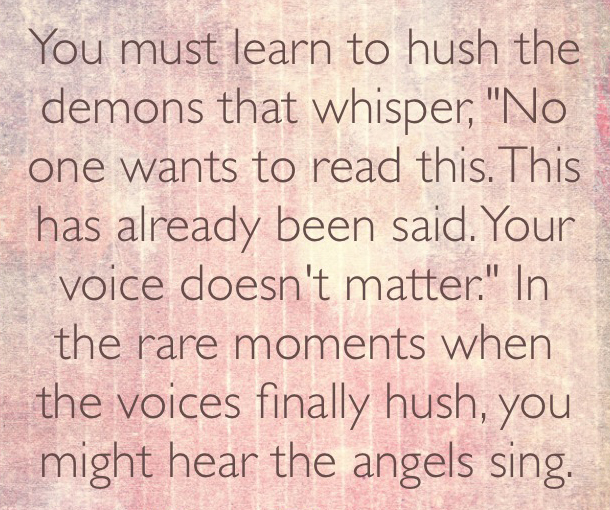
  10. KEEP THE DEMONS AT BAY – That brainbox of yours is a Pandora’s Box jam-packed with surprises and miracles and as-yet-untapped genius… and the counterbalance to that are the demons that nurture that tortured writer’s spirit you possess. They feed on rejection and whisper fear and doubt in your ear, but since they’re a necessary evil, it’s important that you develop the ability to silence them while you’re writing. Nothing gets between you and your writing, especially not some crabs in a barrel mind demons.

Sally forth and be writeful… and enjoy your weekend.

Improve Your Screenwriting in 22 Steps

Everyone has at least one good story within themselves to tell, but not all people are writers, just as not all writers are screenwriters. Good news for you, right, you determined and spunky aspiring screenwriter? Well, yes and no.  The current rough odds of selling a screenplay to a major and minor Hollywood production company or within the independent market come in at 1 in 5,000. And that’s only if you’re a good screenwriter with a great script.

Part of your job as the aforementioned determined and spunky aspiring screenwriter is to cut those odds by half or even a quarter (don’t look at me like that, it’s doable). Here are 22 ways to set you on your path:

  1. Write every day.
  2. Read produced screenplays and search for what they did well. Read for a contest and see the difference between the winners and the ones that didn’t make it.
  3. Take screenwriting classes. I can easily recommend a few.
  4. Get feedback on your writing.
  5. Critique another writer’s scripts.
  6. Join a screenwriting group.
  7. Take your favorite screenplay and transcribe it, noticing the choices the writer made.
  8. Select a technique to improve and use it in one or more scenes.
  9. Write the same scene a completely different way: (Reverse a scene or character; Increase the stakes; Change who prevails in the scene; Use a twist to change the end of the scene; Put the characters in a worse position)
  10. Have another writer write one of your scenes in a completely different way.
  11. Take a character to an extreme to see what other possibilities are available.
  12. Take a line of dialogue or description and rewrite it 10 different ways or more.
  13. Stretch yourself: Give your character an unsolvable problem and then solve it.
  14. Pick a scene in a movie you like and write it. Once you have completed it, read the writer’s script for that scene and see how he or she wrote it differently.
  15. Watch a movie, stopping it at the end of each scene. Write down what happened in the scene, how the characters changed, what was the in and out points, and what was the most interesting part of the scene.
  16. Take your best idea and top it in some way! Sometimes, it is not about the writing. It is about the thinking and the breakthroughs and getting used to coming up with fresh ideas. Force yourself to top your best ideas on a regular basis and soon, you’ll have the best ideas in Hollywood.
  17. Find out what a producer or reader wants in a script. This can shift your chances dramatically. It may save you from writing something that has no chance of success.
  18. Take an acting class.
  19. Do a read-through with actors.
  20. Shoot a short on DV. For anyone who has done this, you’ve had the experience of seeing actors bring your script to life. Until you do, you can’t imagine the amount of pride and embarrassment you’ll experience. But directing even one scene will change how you write.
  21. Give yourself permission to write from your heart with no holding back.
  22. Decide that you will constantly improve your writing until you are one of the best screenwriters there is.

I know, I know, you probably won’t get around to doing everything on the list, but you should attempt to do at least one everyday. And that’s one in addition to writing (like I had to tell you that).

Sally forth and be writeful. And sell a script while you’re at it. I dare you.

The Four Important Stages of a Writer’s Development

pencils-HD-Wallpapers

In Stage 1, you write for yourself. More daydreams than proper stories, your writing at this point appeals to you more so than other people. These stories tend to reflect your desires and fantasies and may contain in-jokes and references unfamiliar to a general audience.

In Stage 2, you strive to break free of your narcissistic writing shell and communicate with a wider audience, but your reach exceeds your grasp. You’re aware of what you want to write but you’re caught in that in-between space of partially-developed and fully-fleshed-out stories. This is usually where you begin receiving your rejection letters. Keep these. Sure, they’re crushing at the time but they’re great to look back on once you’ve sold your work.

In Stage 3, your stories have begun to flesh themselves out but they’re still not where they need to be structurally and/or technically. This is also where you begin to work on improving your character development.

In Stage 4, you’ve acknowledged and tackled all the problems in the previous stages, and though you haven’t totally mastered them yet, you can compose stories competently enough to jam your foot in the doorway of the professional writer field.

Are there other stages? Sure, and I’ll address them in a later post (this should be more than enough for you to gnaw on for now), so until next time…

Sally forth and be writeful.

How do you solve a problem like MARY SUE?

hello-my-name-is

With Amazon stepping into the fan fiction game with its Kindle Worlds feature, there’s a lot of internet chat going on about Mary Sue —– typically a female character who’s so perfect as to be annoying (the male equivalent is the Marty-Stu). Usually written by beginning writers, the Mary Sue is almost always beautiful, smart, etc., in short, she’s the perfect girl that falls in love with the protagonist and winds up upstaging all of the other characters in the story.

Some say Sue is the RomCom female equivalent of a male action hero (best at what they do, expert in any and every situation) while others complain that she’s an over-idealized, vanilla, uninteresting, unbelievable character without flaws or insecurities.

She’s been around forever, as long as beginning writers have been scribing their own versions of their favorite books, movies and TV shows, but she first picked up the Mary Sue moniker in 1974 in the Star Trek parody fanfic:

A TREKKIE’S TALE By Paula Smith

“Gee, golly, gosh, gloriosky,” thought Mary Sue as she stepped on the bridge of the Enterprise. “Here I am, the youngest lieutenant in the fleet – only fifteen and a half years old.” Captain Kirk came up to her. “Oh, Lieutenant, I love you madly. Will you come to bed with me?” “Captain! I am not that kind of girl!” “You’re right, and I respect you for it. Here, take over the ship for a minute while I go get some coffee for us.” Mr. Spock came onto the bridge. “What are you doing in the command seat, Lieutenant?” “The Captain told me to.” “Flawlessly logical. I admire your mind.”

Captain Kirk, Mr. Spock, Dr. McCoy and Mr. Scott beamed down with Lt. Mary Sue to Rigel XXXVII. They were attacked by green androids and thrown into prison. In a moment of weakness Lt. Mary Sue revealed to Mr. Spock that she too was half Vulcan. Recovering quickly, she sprung the lock with her hairpin and they all got away back to the ship.

But back on board, Dr. McCoy and Lt. Mary Sue found out that the men who had beamed down were seriously stricken by the jumping cold robbies , Mary Sue less so. While the four officers languished in Sick Bay, Lt. Mary Sue ran the ship, and ran it so well she received the Nobel Peace Prize, the Vulcan Order of Gallantry and the Tralfamadorian Order of Good Guyhood.

However the disease finally got to her and she fell fatally ill. In the Sick Bay as she breathed her last, she was surrounded by Captain Kirk, Mr. Spock, Dr. McCoy, and Mr. Scott, all weeping unashamedly at the loss of her beautiful youth and youthful beauty, intelligence, capability and all around niceness. Even to this day her birthday is a national holiday of the Enterprise.

Afraid you may have inadvertently created a Mary Sue? Why not run her through The Universal Mary Sue Litmus Test?

Sally forth and be writeful.

The Dynamic Progression of Dual Protagonists (say what?)

Twins-600x449

Being normal and following the rules bores the pants off of you, so how do you shake up an otherwise blasé story? Why, you chuck in another protagonist, of course! Two for the price of one, double the bang for your buck, right? Well, I hate to be the one to break it to you, kiddo, but it’s generally not a good idea (unless you’re writing an ensemble/multi-plot screenplay like Crash or Magnolia). Each plot should have a single protagonist—–or Main Character—–whose eyes we see the story through. Une. Unus. Uno. Uma. Eins. Ena. One.

But you’re a rebel, aren’t you? You ain’t gonna have no faceless hack on a blog tell you how to write your story. So, since you’re determined to go the dual protagonist route, why not try thinking of your screenplay in terms of a Dynamic Progression —–having a Main Character who arcs and a Dynamic Character who teaches the Main Character what they need to know? (Pay, I say, pay attention, kid… I’m tryin’ to show you how you can have your cake and eat it too).

THE DYNAMIC PROGRESSION

The Main Character: the main character’s experience or emotional journey is emphasized through his active misbehavior (the way the character acts which affects other people around him/her negatively.)

Example 1: the main character uses violence to solve problems, but then, in the end, works through the main climax utilizing non-violent methods. The active misbehavior doesn’t have to be a negative behavior necessarily, but it does have to affect everyone else around the main character in a negative fashion.

Example 2: In The Apartment, the main character is a human doormat, constantly allowing himself to be trodden upon by others——this is his active misbehavior. Then, he finally learns to stand up for himself at the end.

The Dynamic Character: the central relationship between the main character and a secondary character, with this relationship acting as a catalyst for change in the main character.

Example: Adrian is the reason we care about Rocky. The main character’s active misbehavior affects the secondary character in a negative way. This dynamic relationship is useful in structuring the second act.

The dynamic character may also have an active misbehavior—–most often this is the exact opposite misbehavior exhibited by the main character (violent main character paired up with a non-violent partner; an obsessive-compulsive main character paired up with a laid-back partner, etc). This is true for buddy movies such as Lethal Weapon—–a crazy, suicidal cop is partnered up with a careful, conservative family man—–and on top of this, the conservative, family man cop is retiring in a week.

The 4 Stage Dynamic Progression – in which the main character and the dynamic character are transformed by each other (extremely useful for structuring the second act).

1. Dynamic Introduction: Not necessarily when the main character and the dynamic character meet, but when the nature of their relationship is firmly established.

Example 1: The Sting – Redford meets Newman in scene X, but in scene Y, Redford asks him, “Will you teach me?” and Newman says yes—–the nature of their relationship has then been established.

Example 2: Heathers – when Winona and Christian, together, cover up the accidental death of a friend–they are now locked together in their cover-up. Note that they had met earlier, but the exact nature of their relationship had not been established until the point of said cover-up. The Dynamic Introduction usually happens just before or just after the Act 1 to Act 2 shift.

2. Dynamic Escalation: the deepening of the dynamic relationship, where it becomes more profound, and usually hits The Point of No Return at the mid point.

Example: in Witness—-Harrison Ford and Kelly McGillis are locked together when they realize he has to protect her by allowing him to hide out at her place, but their relationship deepens and reaches The Point of No Return when they fall in love (and have sex for the first time–another common Dynamic Escalation). The Dynamic Escalation usually happens halfway through Act 2, at the Mid-Act 2 Reversal.

3. Dynamic Estrangement. The main character and the dynamic character are separated: whether it be mentally, physically, or both. In Star Wars, Ben Kenobi dies, in The Matrix Morpheus is captured, etc. The Dynamic Estrangement usually happens at the Low Point just before the Act 2 to Act 3 shift and is typically the catalyst which begins Act 3 (Neo’s decision that, yes, he is in fact going back into the Matrix to rescue Morpheus, etc.)

4. Dynamic Convergence/Resolution. The dynamic relationship is resolved—–there is closure to the relationship. Sometimes this means the two cannot hope to be together, but they understand at the same time why it has to be this way (Casablanca, Roman Holiday or in Star Wars when Ben Kenobi returns, in a sense, with the sage advice, “Use the Force, Luke” while Luke makes his final run on the Death Star). The Dynamic Convergence takes place in the climax, the battle scene, at the height of Act 3.

See? That wasn’t so painful, was it? Sally forth and be writeful.

50 Redundant Phrases To Avoid

redundancy

  1. Absolutely certain or sure/essential/guaranteed: Someone who is certain or sure is already without doubt. Something that is essential is intrinsically absolute. A guarantee is by nature absolute (or should be). Abandon absolutely in such usage.
  2. Actual experience/fact: An experience is something that occurred (unless otherwise indicated). A fact is something confirmed to have happened. Actual is extraneous in these instances.
  3. Add an additional: To add is to provide another of something. Additional is extraneous.
  4. Added bonus: A bonus is an extra feature, so added is redundant.
  5. Advance notice/planning/reservations/warning: Notices, planning, reservations, and warnings are all, by their nature, actions that occur before some event, so qualifying such terms with advance is superfluous.
  6. As for example: As implies that an example is being provided, so omit for example.
  7. Ask a question: To ask is to pose a question, so a question is redundant.
  8. At the present time: At present means “at this time,” so avoid the verbose version.
  9. Basic fundamentals/essentials: Fundamentals and essentials are by their nature elementary, so remove basic from each phrase.
  10. (Filled to) capacity: Something filled is done so to capacity, so describing something as filled to capacity is repetitive.
  11. Came at a time when: When provides the necessary temporal reference to the action of coming; at a time is redundant.
  12. Close proximity/scrutiny: Proximity means “close in location,” and scrutiny means “close study,” so avoid qualifying these terms with close.
  13. Collaborate/join/meet/merge together: If you write of a group that collaborates or meets together, you imply that there’s another way to collect or confer. To speak of joining or merging together is, likewise, redundant.
  14. Completely filled/finished/opposite: Something that is filled or finished is thoroughly so; completely is redundant. Something that is opposite isn’t necessarily diametrically opposed, especially in qualitative connotations, but the modifier is still extraneous.
  15. Consensus of opinion: A consensus is an agreement but not necessarily one about an opinion, so consensus of opinion is not purely redundant, but the phrase of opinion is usually unnecessary.
  16. During the course of: During means “in or throughout the duration of,” so during the course of is repetitive.
  17. Definite decision: Decisions may not be final, but when they are made, they are unequivocal and therefore definite, so one should not be described as a definite decision.
  18. Difficult dilemma: A dilemma is by nature complicated, so omit difficult as a modifier.
  19. Direct confrontation: A confrontation is a head-on conflict. Direct as a qualifier in this case is redundant.
  20. End result: A result is something that occurs at the end, so omit end as a modifier of result.
  21. Enter in: To enter is to go in, so throw in out.
  22. Estimated at about/roughly: An estimate is an approximation. About and roughly are superfluous.
  23. False pretense: A pretence is a deception, so false is redundant.
  24. Few in number: Few refers to a small number; do not qualify few with the modifier in number.
  25. Final outcome: An outcome is a result and is therefore intrinsically final.
  26. First began, new beginning: A beginning is when something first occurs, so first and new are superfluous terms in these cases.
  27. For a period/number of days: Days is plural, so a duration is implied; a period of or a number of is redundant. It’s better to specify the number of days or to generalize with “many.”
  28. Foreign imports: Imports are products that originate in another country, so their foreign nature is implicit and the word foreign is redundant.
  29. Forever and ever: Ever is an unnecessary reduplication of forever.
  30. Free gift: A gift is by definition free (though cynics will dispute that definition), so free is extraneous.
  31. Invited guests: Guests are intrinsically those who have an invitation, so invited is redundant.
  32. Major breakthrough: A breakthrough is a significant progress in an effort. Though major is not directly redundant, the notable nature of the event is implicit.
  33. [Number] a.m. in the morning/p.m. in the evening: The abbreviations a.m. and p.m. already identify the time of day, so omit in the morning or in the evening.
  34. Past history/record: A history is by definition a record of past occurrences, and a record is documentation of what has already happened. In both cases, past is redundant.
  35. Plan ahead: To plan is to prepare for the future. Ahead is extraneous.
  36. Possibly might: Might indicates probability, so omit the redundant qualifier possibly.
  37. Postpone until later: To postpone is to delay. Later is superfluous.
  38. Protest against: To protest is to communicate opposition. Against is redundant.
  39. Repeat again: To repeat is to reiterate an action, so again is unnecessary.
  40. Revert back: Something that reverts returns to an earlier state. Back is superfluous.
  41. Same identical: Same and identical are just that (and that). Omit same as a qualifier for identical.
  42. Since the time when: Since indicates a time in the past; the time when is superfluous.
  43. Spell out in detail: To spell out is to provide details, so in detail is repetitive.
  44. Still remains: Something that remains is still in place. Still is redundant.
  45. Suddenly exploded: An explosion is an immediate event. It cannot be any more sudden than it is.
  46. Therapeutic treatment: Treatment in the sense of medical care is by nature therapeutic, so the adjective is redundant.
  47. Unexpected surprise: No surprise is expected, so the modifier is extraneous.
  48. Unintended mistake: A mistake is an inadvertently erroneous action. The lack of intention is implicit.
  49. Usual custom: A custom is something routinely and repeatedly done or observed, and usual is redundant.
  50. Written down: Something written has been taken down. Down is superfluous.

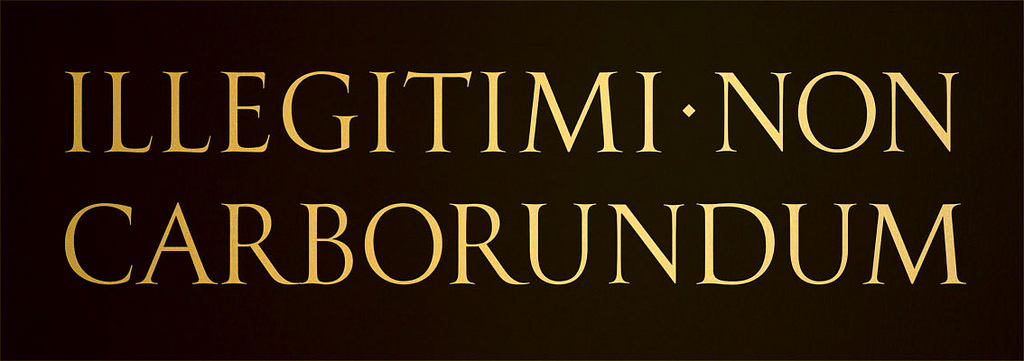
Illegitimi Non Carborundum (no matter who they are)

ImageThe aphorism “illegitimi non carborundum.” is mock-Latin for “don’t let the bastards grind you down.”

This isn’t about handling the countless rejection letters you’ll receive if you plan to purse writing as a profession. That’s already been addressed in a previous post.

I’m talking about the little things—–the offhanded comments, the pieces of friendly advice, the hard doses of reality (meant for your own good, of course)—–that chip away at your self-confidence bit by bit and make you want to turn your back on writing.

Maybe you’re no good at it, maybe you’ll never make it as a writer, maybe you’ll never finish that novel, maybe you’ll never get your name out there, maybe no one will ever pay you for what you’ve written. So what? I’ve said it once before but it bears repeating: if you want to write, write.

You don’t need to justify your desire to do so. Ever. To anyone.

Sally forth and be writeful.

To Make a Long Story Shortest: #TwitterFiction

First there was the micro novel, or microblogging novel, a work of fiction intended as a full-length novel written and distributed in chunks, varying in size, depending on the social media site it was being published on. Then, flash fiction burst onto the scene (see: The Short and Short of Flash Fiction) and dared to tell big stories with extreme brevity. Not to be undone, a new arrival,Twitter fiction (aka tweet fiction), tossed its hat into the ring, boasting its ability to tell a story within 140 characters.

Thumb your literary nose up at it, if you will, but surely you can see the art in concise writing. Catching the key moment of a story and carefully selecting the proper words so that your audience infers your meaning and does all the heavy lifting of filling in the details themselves requires a level of skill and finesse. Not to mention the challenge of drawing laughter or tears from your reader, or filling them with horror or dread as you build suspense in such a confined space.

And this latest sub-genre hasn’t escaped the notice of well-known writers who have tried their hand at 140-character novels:

Geoff Dyer – I know I said that if I lived to 100 I’d not regret what happened last night. But I woke up this morning and a century had passed. Sorry.

James Meek – He said he was leaving her. “But I love you,” she said. “I know,” he said. “Thanks. It’s what gave me the strength to love somebody else.”

Ian Rankin – I opened the door to our flat and you were standing there, cleaver raised. Somehow you’d found out about the photos. My jaw hit the floor.

Andrew O’Hagan – Clyde stole a lychee and ate it in the shower. Then his brother took a bottle of pills believing character is just a luxury. God. The twins.

Jeffrey Archer – “It’s a miracle he survived,” said the doctor. “It was God’s will,” said Mrs Schicklgruber. “What will you call him?” “Adolf,” she replied.

SJ Watson – She thanks me for the drink, but says we’re not suited. I’m a little “intense”. So what? I followed her home. She hasn’t seen anything yet.

Charlie Higson – Jack was sad in the orphanage til he befriended a talking rat who showed him a hoard of gold under the floor. Then the rat bit him & he died.

India Knight – Soften, my arse. I’m a geezer. I’m a rock-hard little bastard. Until I go mushy overnight for you, babe. #pears

Rachel Johnson – Rose went to Eve’s house but she wasn’t there. But Eve’s father was. Alone. One thing led to another. He got 10 years.

Inspired and curious, I even took a stab at Twitter narrative one idle Sunday and among my favorites are:

A large stone, the opportunity, a swampside grave; all that was needed to end a lifelong sibling rivalry. Guess who’s Daddy’s favorite now?

Mother warned him not to look but curiosity was his master. Now he struggles to reverse the time of eye to unsee the horror.

Regardless of your personal views on Twitter and tweet fiction, I honestly think you should give it a go. If nothing else, you can consider it a warm-up exercise to get your mental juices flowing. Can you think of a better way to hone your craft than practicing clear, clean and concise writing? And what have you got to lose? Surely not time. In the moments wasted complaining about the artform, you could have written several magnum opuses.

Sally forth and be tweetful.

— Rhyan Scorpio-Rhys

PS. If you’re looking for more famous author tweet novels, you can find them by searching #140novel on Twitter.

P.P.S. Not exactly #tweetfiction-related, but dealing with creating fiction, the NY Times ran an article on the importance of Twitter in today’s pop-culture era: How To Make a TV Drama in the Twitter Age.