The well didn’t just open.
It relented.
That was the feeling Bzou couldn’t name at first—the sense that the boards and nails had not been a barrier so much as a negotiation, a long-standing agreement between villagers and whatever waited below. The wood had been old and stubborn, but the darkness beneath it had felt patient, as if it had been counting seasons the way wolves counted hunger. When the last board cracked inward and the iron nail tore free with its shriek, the cold that surged up wasn’t the chill of groundwater.
It was breath.
It carried the taste of stone and old blood and something stranger, something like the memory of smoke trapped in a throat. It rose around them and clung, and Bzou realized—too late—that the air itself was changed here, as if the village had been built to keep a certain kind of atmosphere contained.
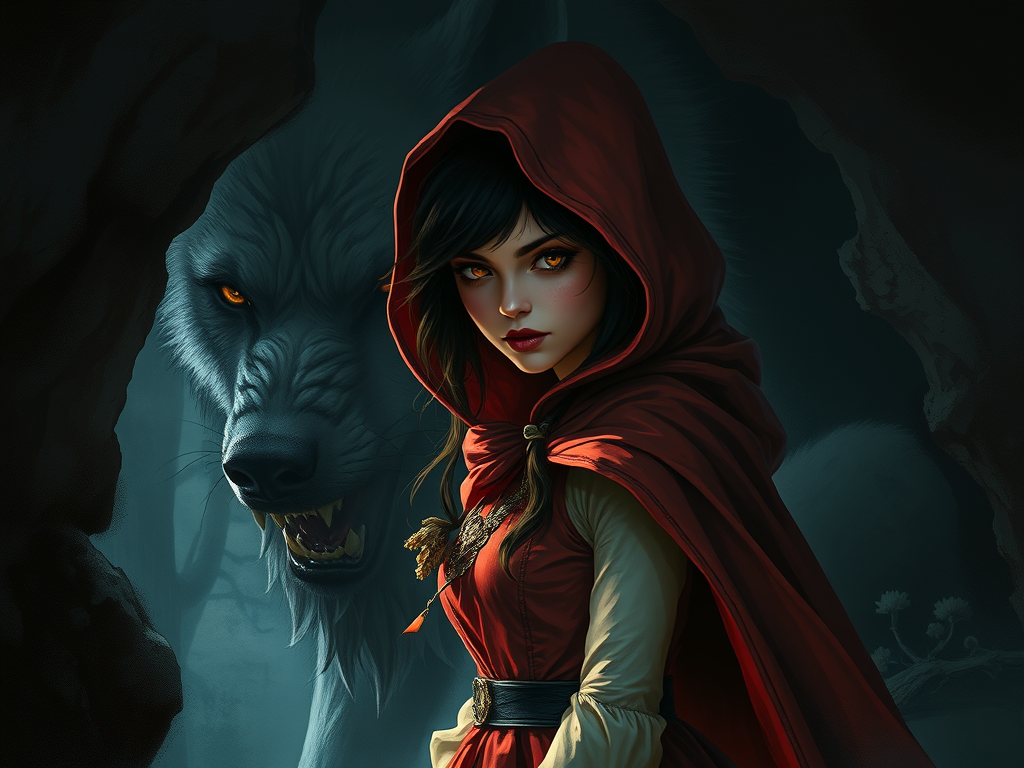
Redalhia kept her crowbar in hand. It wasn’t a weapon, not really. More like a confession. Proof she had decided to stop asking permission.
The breathing below.
Slow.
Steady.
Not panicked.
Not animal.
Not even human, exactly.
Bzou leaned over the lip of the well, his eyes adjusting, searching for the shimmer of water. There was none. Just a black shaft descending into a darkness so complete it looked solid.
“It’s not a well,” Redalhia said.
“No,” Bzou replied, and his voice sounded rougher than he meant it to. “It’s a mouth.”
Redalhia struck a match, shielding the flame from the fog with her palm. The light was small and temporary, but it did what fire always did—it made shadows admit they were there.
The inside of the well was lined with stone blocks slick with age. No moss. No water stains. No signs of weathering the way a real, used well would have. It wasn’t built to draw life up.
It was built to push something down.
The match burned low.
Redalhia’s eyes flicked to Bzou. “You first?”
Bzou didn’t answer. He simply swung one leg over the lip and lowered himself into the shaft, claws finding purchase where human hands would have slipped. The stone was colder than it should have been, cold enough to bite. It felt like touching a winter that had never ended.
Redalhia followed. He heard the faint scrape of her boots, the controlled cadence of her breathing, the way she forced her body to move like she hadn’t just pried open a village’s oldest lie.
Above them, the fog and dawn were already disappearing, swallowed by the narrow circle of sky.
Below them, the breathing continued.
As they descended, the air thickened. It became harder to inhale, not from lack of oxygen but from the weight of it, as if each breath had to pass through layers of old stories before it could reach the lungs. The matchlight made the stones glisten, but it wasn’t moisture. It was something like residue—oil rubbed into rock by a thousand hands making the same descent, each time believing it would be the last.
Bzou stopped when his feet hit a ledge that should not have been there.
The well didn’t end.
It opened.
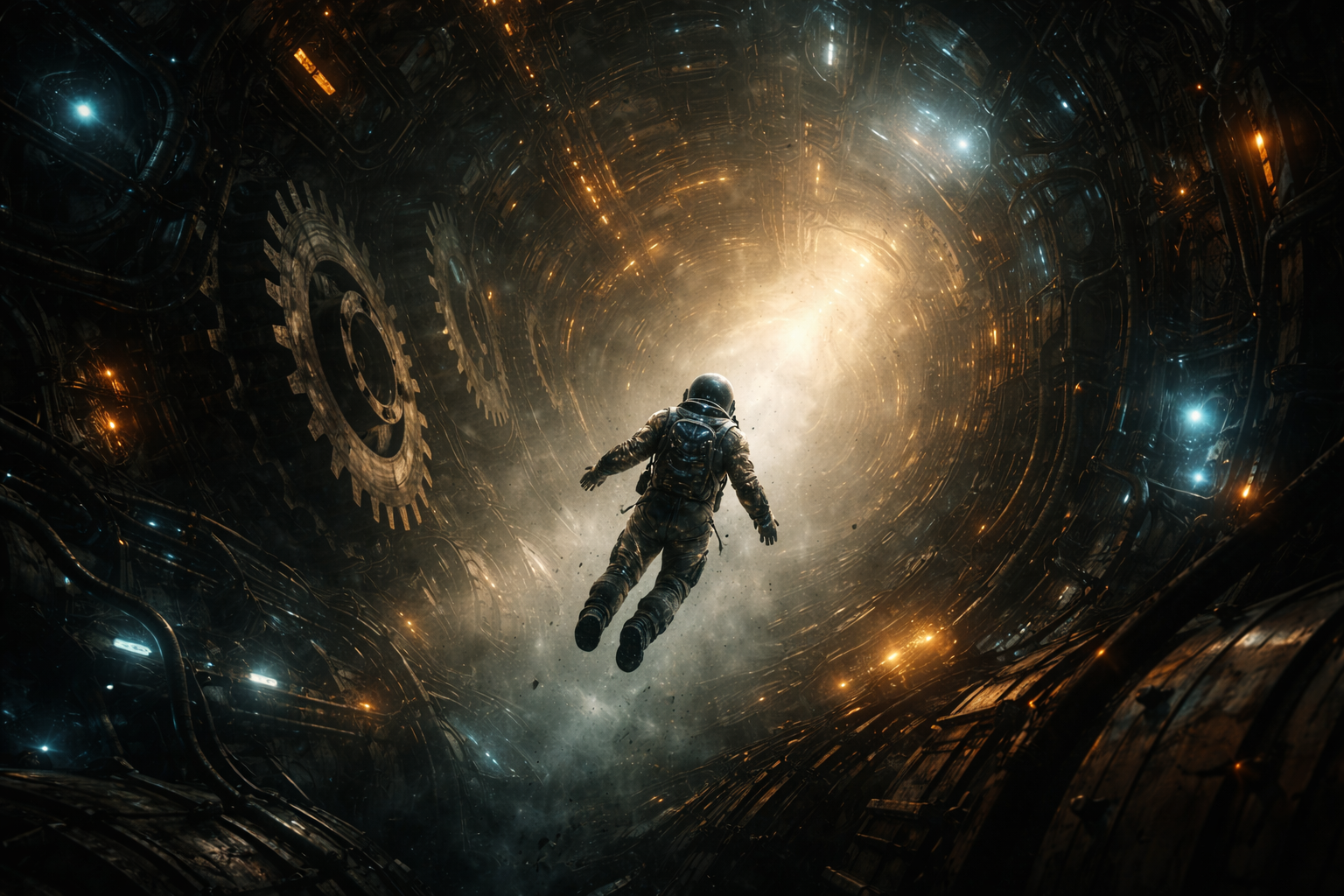
A narrow tunnel yawned sideways into the earth, its walls curving, winding downward like the throat of something that had learned to shape itself around secrets. The air from within was warmer, but not comforting. It was the warmth of a body that has been feverish for too long.
Redalhia dropped beside him and lifted the match again.
The flame shuddered.
Not from wind.
From recognition.
The tunnel walls were marked with symbols pressed so deep into the stone they looked grown there. Not carved by chisels. Not painted. More like the rock had been convinced to remember the shapes. They pulsed faintly when the matchlight wavered, a dark-red glow that made the stone look bruised.
Redalhia’s hand hovered near one of the sigils, then stopped. She didn’t touch it.
“You know these,” Bzou said.
“I don’t,” she replied too quickly.
Then she exhaled and tried again, voice softer. “I… feel them.”
That was the first crack in her composure since the square, the first sign that whatever waited below wasn’t merely a monster to be hunted. It was a history trying to climb into her mouth.
They moved.
Downward.
Always downward.
The tunnel narrowed, then widened, then narrowed again, as if built to confuse the sense of distance and direction. Every few steps, the air changed. Stone. Water. Ash. Blood. Then, underneath it all, the same steady breathing, as if the earth itself was sleeping and their footsteps were the dream.
Bzou’s fur bristled as the scent shifted again.
Not decay.
Not death.
Something preserved. Something kept.
They turned a bend and the tunnel spat them into a chamber.
It wasn’t grand. No cathedral of bones. No dramatic cavern dripping with stalactites. Just a room cut into the earth that felt too deliberate to be natural and too old to be recent. The walls were lined with stacks of bones arranged like offerings. Not human. Not wolf. Somewhere between. Long limbs, wrong joints, skulls shaped like questions.
At the center sat a shape wrapped in old fabric and iron and rope.
Not a corpse.
A body.
It was breathing.
Shallow, careful breaths, like it had spent years practicing how to be alive without being noticed. The bindings around it were not merely restraints. They were rituals—twists of black iron inscribed with the same pulsing symbols, rope threaded through with hair and something that looked like dried blood, layers of cloth stiffened by old oils.
Redalhia stepped forward as if pulled.
Bzou’s hand shot out and caught her wrist—not hard enough to bruise, but hard enough to remind her she still belonged to herself.
“Don’t,” he said.
Redalhia’s eyes didn’t leave the body. “It’s… her.”
Bzou’s stomach tightened. “Your grandmother?”
Redalhia swallowed. “No.”
The word was a confession. A betrayal of the story she’d been telling herself to keep moving.
Bzou released her wrist, slowly, like letting go of a loaded weapon.
Redalhia moved closer. She knelt. Her matchlight wavered over the bindings.
Then the body exhaled.
A long, slow sigh that rattled through the chamber like a door opening in the mind.
The bindings split.
Not snapped.
Not broken.
Split as if they had never been real, as if whatever held them together had decided it was time to stop pretending.
The cloth peeled back.
The body beneath was thin, too long for its frame, skin pale as candle wax left too close to heat. Its hands lay on the stone with fingers that had too many joints, too much articulation. The mouth was cracked at the corners, lips too dry to be alive.
But the eyes—
The eyes were human.
And they looked straight at Redalhia, as if they had been waiting specifically for her face.
“You came back,” the body whispered.
The voice was soft.
Familiar in the way nightmares were familiar.
Redalhia’s breath hitched. “Who are you?”
The figure smiled. Not with warmth. With knowledge.
“Your grandmother’s daughter.”
Redalhia went still, as if her bones had been replaced with stone.
“My grandmother didn’t have a daughter,” she said, and the words sounded like an argument she’d rehearsed for years.
The figure tilted its head. “Didn’t she?”
Bzou took one step closer, putting himself between Redalhia and the thing—not out of heroism, but out of instinct. Predators knew when something wanted to move through a person rather than around them.
Redalhia’s voice came out smaller. “You’re lying.”
The figure’s gaze slid to Bzou, then back. “I’m remembering.”
The pulsing sigils on the walls brightened, and the air thickened again, as if the chamber was inhaling. Bzou felt the pressure behind his eyes, the sensation of a story being pressed into the skull.
Then the chamber shifted.
Not physically. Not like an earthquake.
Like a change in time.
The stone walls blurred at the edges. The bones became less bones and more shapes. The air warmed. The smell of old blood became the smell of fresh earth. Bzou’s claws dug into the stone as the room turned into something else around him, as if the well itself was not simply a hole but a reel, and someone had just spun it backward.
They were standing in the village.
But not this village.
Gildengrove, before it learned to smile with clenched teeth.
The streets were brighter. The houses newer. The air smelled like bread and wet wood and animals, like ordinary life still had a claim. People walked openly without the hunched shoulders of those who had practiced secrecy for generations. Children ran with laughter. A market stall shook in the breeze.
And yet.
Bzou smelled the rot at the edges of it all, the subtle stink of something buried too close to the surface.
Redalhia turned in place, eyes wide. “I know this,” she whispered, horrified.
Bzou’s throat went tight because he did too.
Not as a memory.
As a wound.
They weren’t watching a vision.
They were inside one.
The crowd around them didn’t notice. No one looked at them like intruders. No one flinched at Bzou’s size or Redalhia’s cloak. They moved through the square as if the two of them belonged here as naturally as smoke belonged to fire.
Then Redalhia saw her.
A woman standing at the edge of the square, whispering urgently to a tall man wrapped in a dark cloak.
The woman’s face was Redalhia’s face.
Not similar.
Not ancestral.
Hers.
Redalhia’s hand flew to her mouth.
The man turned slightly, and Bzou felt the bottom drop out of him, because those eyes—sharp, inhuman, set in a human face—were his.
Not metaphorically.
His.
The memory didn’t allow denial. It pressed itself into his ribs, into his lungs. For a moment he felt fingers where claws should be, a human body wearing too much weight, a skin that didn’t fit. He tasted dread like iron.
Redalhia took a step forward as if drawn. The woman in the memory grabbed the cloaked man’s arm.
“It’s spreading,” the memory-Redalhia whispered. “If we don’t act now, it will reach the others.”
“We have no choice,” the cloaked man said, and Bzou felt the words as his own, spoken from a throat he’d tried to forget.
The square changed.
Not slowly. Not gently.
The market stalls became a circle. The laughter became silence. The air became thick with smoke. Torches lit the faces of villagers—faces that were afraid but determined, as if they had convinced themselves necessity would absolve them.
A circle had been drawn on the ground.
In blood.
Symbols glowed dark-red along its edges, the same symbols from the tunnel walls, alive and hungry.
And at the center of that circle—
A child.
A girl.
Small. Still. Looking up at Redalhia-with-Redalhia’s-face and Bzou-with-Bzou’s-eyes with trust so pure it was obscene.
Bzou’s stomach lurched. “No,” he said aloud, but the memory did not care.
The girl didn’t cry.
She didn’t fight.
Because she had been told not to be afraid.
Because she believed the adults who were about to destroy her.
Redalhia’s voice trembled—not the Redalhia beside him now, but the one in the memory. “It won’t hold if we don’t.”
Bzou looked down.
A knife in his hand.
His hand.
Human fingers wrapped around a blade.
The girl’s throat under his other arm, warm, fragile.
Redalhia-now made a sound that wasn’t a word.
Bzou could not move. He could only watch himself.
The knife went deep.
Blood hit earth.
The circle sealed.
The village exhaled like it had been holding its breath for years.
The torches burned brighter.
And somewhere beneath it all, something in the dark went quiet.
For a moment, the memory made it feel like relief.
Then the girl took a breath.
Slow.
Deep.
Like waking.
She opened her eyes.
They were wrong.
Black as a well, veined with dark red, as if the symbols had crawled into her pupils and made a home.
She smiled.
Not like a child.
Like the thing below the village learning to wear a face.
“You thought this was the end,” she whispered.
The villagers in the memory smiled back.
Not surprised.
Not horrified.
Welcoming.
The story snapped.
The vision folded like paper and burned away, and the chamber returned—stone and bones and old air—leaving Bzou and Redalhia kneeling in front of the unbound figure.
Redalhia was shaking now. Not from fear. From the violent collision of knowing.
“We did it,” she whispered. “We… we built Gildengrove to contain it.”
Bzou’s voice came out hoarse. “We built it as a cage.”
The figure on the stone smiled again, patient as winter. “You built it as a transfer.”
Redalhia blinked hard. “What does that mean?”
“It means you didn’t seal me,” the figure said gently, almost kindly. “You fed me into a shape you could manage. A child. A lock. A vessel that made the village believe it had won.”
Redalhia’s eyes flared with rage. “You’re the girl.”
“I was,” the figure replied. “And I am.”
Bzou felt the room tighten around them, the sigils pulsing brighter. The air was a throat closing. He understood then why the village had smiled too tightly for too long. Why Claude had set rules like he was policing a prison rather than a town.
Because the village didn’t exist to protect people from wolves.
It existed to protect people from what lived below.
And the protection was not clean.
It was a bargain.
The figure’s gaze drifted to Redalhia. “Your grandmother kept the old story from you because she wanted you to stay free of it.”
Redalhia’s voice cracked. “Then why was she taken?”
The figure’s smile faded, just slightly. “Because she tried to end it.”
Bzou’s hackles rose. “End it how?”
“By refusing to pass it on,” the figure said. “By breaking the wheel.”
Redalhia swallowed. “So they put her somewhere.”
The figure’s eyes darkened. “Or she put herself somewhere. There are many kinds of prisons.”
Bzou’s mind moved quickly, predator-fast. Claude. The carcass. The bodies in the cellar. The nailed house. The iron in the well.
“You’re not supposed to wake,” Bzou said.
“No,” the figure agreed. “I’m supposed to remain a rumor. A locked door. A children’s story told with a laugh so no one has to admit they’re still afraid.”
Redalhia’s hands clenched. “And now you’re awake because we opened the well.”
“I’m awake,” the figure said, “because you remembered.”
Bzou felt it then—the faintest shift under his skin, like a new nerve ending coming online. The sensation was subtle, but it wasn’t his. It was an addition. A presence leaning in, listening through his senses.
Redalhia stiffened, eyes widening, as if she felt it too.
The figure watched them with something like tenderness. “It’s already begun.”
Redalhia shook her head once, sharp. “No. We can fix this. We can seal you back in.”
The figure’s smile returned, and it was almost pity. “You don’t seal a story by repeating it.”
Bzou’s jaw tightened. “Then what’s the answer?”
The figure looked past them, toward the tunnel, toward the well, toward the village above that had built its entire life around this hole.
“You have two choices,” it said softly. “The same choices you had before. The same choices you will have every time you come back.”
Redalhia’s voice turned hard. “Say it.”
The figure obliged.
“You can let the village kill you,” it said, “and pretend that ends it. They will burn you, carve you, scatter what remains, and build new rules over your ashes. They will feel safe for a while. Then the breathing will start again. Another well. Another lock. Another child. Another sacrifice dressed up as necessity.”
Redalhia’s throat worked. “And the other choice?”
The figure’s eyes gleamed, dark-red veins pulsing in the whites as the sigils on the wall brightened.
“The other choice,” it said, “is to stop being the village’s solution.”
Bzou felt the presence under his skin shift, pleased. He hated that he could feel it.
Redalhia’s voice went small again. “You mean… become it.”
The figure smiled, and the chamber seemed to breathe with it.
“I mean carry it consciously,” it whispered. “Not as a lie. Not as a bargain. Not as a hidden rot under smiling streets. You can take it into yourselves and walk out of this well, and the village will never have to feed it again.”
Bzou’s eyes narrowed. “That’s not a gift.”
“No,” the figure agreed. “It’s a sentence. But it’s also an end.”
Redalhia stared at the bones arranged around them, at the evidence of old cycles, old offerings, old bargains. Her face looked carved, like stone trying to learn how to cry and refusing.
“They’ll come,” she said, more to herself than to him. “Claude will bring them. Torches. Spears. They’ll try to kill us before we climb out.”
Bzou listened.
Above, faint as a distant heartbeat, he heard movement. Not the breathing now. Human movement. Many feet. The village gathering itself.
“They’re already coming,” he said.
Redalhia closed her eyes for one second, as if that was all the time she could afford. When she opened them, the calculation was back, sharper than before.
“If we take it into ourselves,” she said slowly, “we’re not saving ourselves. We’re saving them.”
Bzou’s mouth tightened. “And condemning whatever remains of us.”
Redalhia’s gaze lifted to the figure. “Where is my grandmother?”
The figure’s eyes softened. “Trying to keep you from making the choice she couldn’t bear.”
Redalhia swallowed. The swallow looked like pain.
Bzou felt the presence under his skin press gently, like a hand on the back, urging him forward.
He hated the way it felt like instinct.
Redalhia looked at him then, really looked—past fur and teeth, past pact and threat, into the part of him that still remembered fingers and guilt.
“Bzou,” she said, voice steady. “If we walk out and let them burn us, they’ll tell themselves they won.”
Bzou’s throat rumbled low. “They’ll keep winning, forever.”
Redalhia nodded once. “If we walk out as the thing they fear…”
Bzou finished it, because the words were already in his mouth. “They’ll have to stop pretending.”
The presence inside him stirred again, almost amused.
Redalhia reached into her cloak and pulled out the small knife. She turned it in her hand, not as a threat now but as a symbol. The village had always loved simple tools. Ropes. Nails. Knives. Things you could hold and call justice.
She set the knife down on the stone between them.
“No more blades,” she whispered. “No more children. No more lies.”
Bzou stared at the knife like it was an altar offering. Then he did something he had not done in a very long time.
He knelt.
Not in submission.
In agreement.
The figure in the center of the chamber leaned forward, its too-jointed fingers reaching, hovering inches from their faces.
“You remember,” it murmured. “So you are available.”
Redalhia’s breath shook. “If we do this, do we ever get back what we were?”
The figure’s expression turned almost gentle. “You don’t get back what you were.”
Bzou felt the village above them surge—voices, boots, the scrape of iron. The torches were close enough now that their heat could almost be imagined through stone.
Redalhia’s eyes flicked toward the tunnel. “They’re here.”
The figure smiled again, slow and knowing.
“But you might get to choose what you become.”
Bzou could have taken the easy ending.
Let the village kill him, let the story repeat itself with a new face.
Instead, he leaned forward into the figure’s outstretched hand, and Redalhia did the same, their foreheads almost touching the thing’s palm.
The moment their skin met it, the chamber inhaled.
The sigils flared.
The bones around them rattled softly, as if applauding.
And inside Bzou’s chest, the presence unfolded—not like a violent invasion, but like something settling into a seat it had owned for centuries. He felt heat spread beneath his ribs, felt his heart thud once, hard, and then continue beating as if nothing had changed.
Except everything had.
Redalhia gasped, sharp and involuntary, her hands clenching as if she could crush the air. Her eyes widened, pupils dilating until they looked too dark, too deep.
“It feels…” she whispered, voice turning strange at the edges.
Bzou’s voice came out low, wronger than before. “Old.”
Above them, a sound echoed down the shaft—wood cracking, nails tearing free, the village prying open the well from the other side.
Torches spilled light down into the darkness, thin and orange, like the world above trying to pretend it still understood what it was looking at.
Claude’s voice carried down, distorted by distance but unmistakable. “Light it! If they’re down there, we burn the whole damn throat shut!”
Redalhia’s mouth curved.
Not her smile.
The thing’s.
Bzou felt his teeth lengthen slightly, felt his senses sharpen into something almost ecstatic. He hated it. He loved it. He understood why the village had chosen bargains instead of truth.
Because truth was hungry.
He looked at Redalhia. She looked back. In her eyes he saw a flicker of her—just enough to prove she was still there.
“We can still let them end us,” she said softly. “And it’ll keep spinning.”
Bzou listened to the village above. The torches. The fear. The righteous rage. The desire to erase the chapter before it could be read.
He exhaled.
“No,” he said. “We end it.”
Redalhia nodded once, and the nod felt like an oath.
Together, they stepped toward the tunnel leading back up.
Not running.
Not hiding.
Walking like the well belonged to them now.
As they climbed, Bzou felt the presence inside him settle deeper, content. He realized, with a cold clarity, that the village had never been trying to destroy the thing in the dark.
They’d been trying to keep it from choosing its own shape.
At the top, the well’s mouth was ringed with firelight.
Claude stood at the edge with his torch raised, eyes wild, men behind him with spears and chains, villagers farther back clutching charms and prayers like weapons.
The crowd fell silent as Bzou’s head and shoulders emerged from the darkness, followed by Redalhia.
The fog swirled around them like stage smoke.
Claude’s torch wavered.
Not from wind.
From doubt.
Bzou climbed out fully and stood, dripping nothing, carrying no blood, yet smelling like something the village had been fed to fear since its first founding.
Redalhia stepped beside him, hood down, her eyes too bright in the torchlight.
Claude swallowed, hard. “What did you do?”
Redalhia’s voice came out calm, almost tender. “We stopped the wheel.”
Claude lifted the torch, hand shaking now. “You brought it up here.”
Bzou looked at the villagers—the children peeking around adult legs, the old women clutching their charms, the men gripping tools, the Huntsmen standing like they were the only ones who could keep the story in line.
The presence inside him pressed forward gently, eager.
Bzou held it back.
For a second.
Long enough to speak as himself.
“You built your village on a child’s throat,” he said.
A murmur rippled. A few faces flinched as if struck.
Claude’s jaw tightened. “Lies.”
Redalhia tilted her head. “You know the truth. That’s why you burn wolves like offerings. That’s why you seal houses before the bodies are cold. That’s why you make rules and call them law.”
Claude’s torch rose higher.
“Then you leave us no choice,” he snarled. “End them!”
The Huntsmen stepped forward.
Spears leveled.
Chains rattled.
And Bzou felt the final decision settle into place like a bolt sliding home.
If they surrendered, the village would keep its lie. If they fought, the village would have to see what it had been feeding.
Bzou looked at Redalhia.
In her eyes, he saw her again—her anger, her grief, the hard diamond of her resolve.
“Last chance,” she whispered.
Bzou turned back to the village.
He let the presence inside him rise.
Not as a scream.
As a remembering.
The fog around them thickened, then moved like it had become muscle. The torches flared, not brighter, but warmer, as if their flames recognized the older fire in Bzou’s chest. He felt his shadow stretch long and wrong across the ground.
The villagers stepped back without meaning to.
Claude held his ground out of stubbornness alone.
Bzou spoke again, and this time his voice carried two tones—his and something beneath it.
“You don’t get to bury it again,” he said. “Not in a child. Not in a well. Not in me.”
Redalhia lifted her hands, palms open, not in surrender but in presentation, as if showing them the truth they had been paying to avoid.
“We will leave,” she said. “And the village will live.”
Claude’s eyes narrowed. “And what do you take with you?”
Redalhia’s smile flickered—hers, for a heartbeat. “Your rot.”
Bzou felt the thing inside him purr at the word.
Claude’s torch dipped.
Not surrender.
Calculation.
Then he hissed, “Burn them.”
The Huntsmen surged.
And Bzou made the final choice.
He did not run.
He did not plead.
He stepped forward into the torchlight, opened his mouth, and let the village see—just for an instant—what it had built itself to contain.
The torches sputtered as the fog surged like a living curtain.
The first Huntsman’s spear struck, and the iron point hit Bzou’s chest and stopped dead, as if it had met stone. The Huntsman’s eyes went wide. He tried to pull it back and couldn’t.
Redalhia moved beside Bzou with a grace that did not belong to a human body. She didn’t attack. She didn’t kill.
She took the fear out of the air and threw it back at them.
The villagers stumbled, choking on their own panic. It poured out of them in waves, thick and sticky, old as the first time they’d learned they could call cruelty “necessity.”
Claude backed up one step.
Then another.
His torch wavered, flame bowing as if in deference.
Bzou leaned close enough that Claude could smell the well on him, could smell the centuries of bargains.
“This ends,” Bzou said softly.
Claude’s lips trembled. “You’ll curse us.”
Bzou’s expression didn’t change. “No.”
Redalhia’s voice came in like a blade. “We’ll free you. And you’ll hate us for it.”
They turned, together, away from the village, and walked into the tree line, leaving the well open behind them like an unhealed wound the town would have to finally look at.
Claude did not follow.
No one did.
Because they understood the oldest truth of all:
You can hunt a monster in the woods.
You cannot hunt the thing you built your life around.
By the time the sun climbed enough to thin the fog, Bzou and Redalhia were gone.
Some said they burned Gildengrove to ash that night.
Some said the village remained, but the smiling stopped, and the children began asking questions no adult could answer.
Some said the well was sealed again by noon, nailed and prayed over and circled with iron.
But the older ones—those who had felt the air change when Bzou climbed out—knew better.
Because the well did not simply hold darkness.
It held memory.
And once a memory is awake, it does not go back to sleep just because you cover its mouth.
Some nights, when the fog rolls in thick and the village tries to pretend it is ordinary, a slow breathing rises from beneath the boards anyway.
Not hungry.
Not raging.
Just patient.
Just remembering.
And if you stand at the edge and listen long enough, you might hear two voices in the trees beyond the last house—one rough and low, one smooth and sharp—speaking the same old promise into the dark.
No more children.
No more bargains.
No more lies.
And then the forest goes quiet again, like a mouth that has decided, for now, to keep its teeth to itself.


 MADD FICTIONAL