A Writer Must Be Like God in the Universe

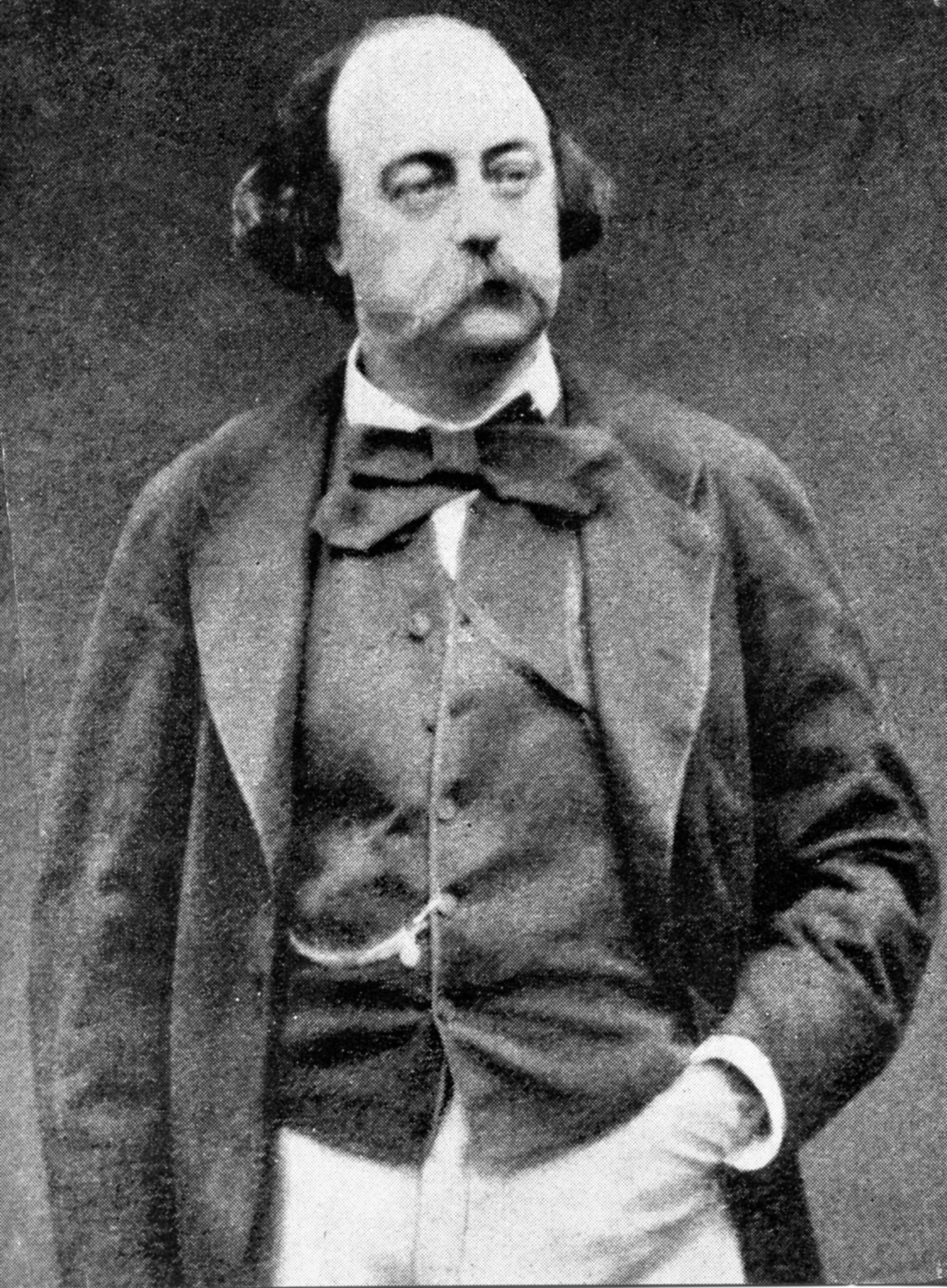
“The author, in his work, must be like God in the Universe, present everywhere and visible nowhere.” —- Gustave Flaubert

In your ordinary everyday existence, you’re merely a person, be it lawful, chaotic, neutral, friendly or antisocial. But when you write, you become something far greater than self. You ascend to the highest self possible and become the god of the universe(s) you create. You know all there is to know and have the ability to think anything into being, and being omniscient, you know full well the folly of making a personal appearance to your characters.

On occasion you may opt to visit your world in the form of a raisonneur or Author Avatar—-a fictionalized version of yourself who is called upon to comment on a given situation, deliver your verdict, and possibly break the Fourth Wall in a self-deprecating fashion, but should never influence the plot and should only be loosely tied to events.

Because you’re god of your universe(s), you also work in mysterious ways by playing the role of The Adversary. You are the force that opposes you. With regards to your characters, in this role you are duplicitous, traitorous, hindersome, curmudgeonly, vindictive, mutinous, licentious, and profane. How can that not sound exciting?

What are you waiting for? Sally forth and be god playingly writeful.

— Rhyan Scorpio-Rhys

PS. If you’re experiencing difficulty accessing your inner godhood, perhaps a quick pep talk from Alan Watts will help you on your path:

Speak Boldly of Your Intention to Write

“There’s a difference between interest and commitment. When you’re interested in doing something, you do it only when it’s convenient. When you’re committed to something, you accept no excuses – only results.”  —–Kenneth H. Blanchard

Commitment is what transforms an idea floating around in your head into reality. Putting pen to paper speaks boldly of your intentions and are the actions which speak louder than the words. It’s making the time when there is none. Coming through time after time after time, year after year after year. Commitment is the stuff character is made of; the power to shape ethereal things. It’s the daily triumph of integrity over skepticism.

So, how committed are you?

Sally forth and be writeful.

— Rhyan Scorpio-Rhys

24 Truths About Being a Writer

Danbo’s Sadness ©2011 Error-23

“The great thing about being a writer is that you have a long, perhaps frighteningly long time in which to do your work.” —- Julia Leigh

  1. Your writing will mature (mature should not be mistaken for get better).
  2. You will receive a rejection letter once in your life (it will actually be more than once, much more, but I wanted to break the news to you gently).
  3. You will be asked to write outside your genre/comfort zone and the criticism you receive from it will cause you to doubt your talent.
  4. You will eventually write something that you will regret.
  5. You will be envious of a hot new fad writer whose name you won’t remember in 20 years.
  6. Your friends will think one of your characters was modeled on them and will reevaluate your friendship based on how the character is treated in the story.
  7. The content of your writing will isolate you once in a while.
  8. Your opinions of writers whose work you dislike will change once you get to know them.
  9. You’re going to run into someone who absolutely despises your work.
  10. You’re going to regret letting an editor pressure you into chopping down what you consider to be a perfect story.
  11. You’re going to read one book in a genre that holds no interest for you that you actually enjoy.
  12. Some people are going to think you’re a talentless hack, and other people are going to think you’re a genius. Either take both camps or neither one seriously.
  13. You’re never going to finish all your stories. Despite your best efforts.
  14. Someone’s opinion of your work will tear out your soul and you’re going to need a hug from your mom, significant other, or a really good friend.
  15. You’re going to bullshit your way through at least one writing assignment and pray that you sound like you know what you’re talking about.
  16. You’re going to get lost in the middle of a story you’re writing and meander through the plot until you find your direction again.
  17. You’re going to reenact a scene from your story all alone in your room when no one else is around.
  18. You’re going to write the most raw and unapologetic story ever that will make you cringe in five years.
  19. You’re never going to stop looking for yourself.
  20. You’re a writer, so stop trying so hard to be famous, expecting success to happen so quickly (or at all), and getting down on yourself so often.
  21. You’re going to be ashamed to tell people you’re a writer. Break that habit and walk with your head held high.
  22. You’re going to talk shit about other writers. Quit it. Yes, Stevie King, I’m looking at you. Put your pea shooter away.
  23. You’re going to become a hermit. Take a walk outside.
  24. You’re going to fall in love with your stories, characters, ideas, and speculative elements and one day you might really figure out how to love yourself the same way.

Sally forth and be writeful.

— Rhyan Scorpio-Rhys

Setting Your Mind the Write Way

Empty-frame

“Discipline allows magic. To be a writer is to be the very best of assassins. You do not sit down and write every day to force the Muse to show up. You get into the habit of writing every day so that when she shows up, you have the maximum chance of catching her, bashing her on the head, and squeezing every last drop out of that bitch.” — Lili St. Crow

The simple definition of what constitutes being a writer is:

A writer writes.

While I find this answer simple, honest and direct, it is not wholly true. You can, in fact, be a frustrated writer, a person who has writing on their minds but hasn’t yet made the time to commit their words to the page. That’s okay because it’s never too late to start. While I can’t speak to why you personally need to write, I can offer my opinion of why you should write.

It’s life changing.

Writing helps you reflect on your life and the changes you’re making. It clarifies your thinking. Doing it regularly makes you better at it. Crafting words for an audience helps you think from a reader’s perspective. Writing daily stimulates the brain into coming up with new ideas regularly and helps you work on your problem-solving skills.

The only thing standing between the thought of writing and the act of writing — is you. You need to plant your butt in the chair and put yourself into the proper frame of mind to write. It’s as easy as following these simple suggestions:

  1. Open yourself up to the wonder that surrounds you. Reconnect with that childlike curiosity. Be present and engaged in your life and the world.
  2. Understand that criticism isn’t your enemy. Accept it as it comes, learn from it and grow.
  3. Be passionate. About people. About life. About yourself.
  4. Stop hiding from fear. Face it, experience it, overcome it, then write about it.
  5. Stop trying to be normal. There’s no such creature.
  6. There isn’t a reason not to write. Don’t make excuses. Don’t accept them either.
  7. Pack your bags and move out of your comfort zone.
  8. Learn to approach writing with an attitude of gratitude. It’s a pleasure to write, not a chore.
  9. That person who stares back at you in the mirror? That’s not who you are, it’s who you used to be. Make a habit out of shocking yourself by taking risks.
  10. Fall in love with reading and the act of writing. Whenever you push the pen on paper, do it like you’re on your first date.
  11. New experiences create new story ideas. Expose yourself to as many as possible.
  12. You have a darkness inside you. We all do. Step boldly into the dark corners and explore the traits and characteristics you tamp down in an effort to fit into society. There’s juicy material just waiting to be excavated.
  13. Recognize when it’s time to take a breather. Stepping away and occupying your mind with something else allows you to return with a fresh perspective. Don’t stay away too long, though.
  14. Creatio ex interitus. From destruction comes creation. Make a habit of destroying something when you write, then build something new from the debris.
  15. Take no experience for granted, not even the mundane ones.
  16. Stop envying what other people have or what they’re doing with their lives. Concentrate on being you and be happy with yourself. Seriously.
  17. No retreat, no surrender. If I may be so bold as to quote Ed Harris from James Cameron’s The Abyss, “You never backed away from anything in your life! Now fight!” Never Give up, no matter what.

Sally forth and be writeful.

— Rhyan Scorpio-Rhys

Sometimes Ya Just Gotta Write Badly in Order to Write Goodly

Bad_Writing

“The first draft of anything is shit.” ― Ernest Hemingway

Story ideas are like Christmas come early. You just can’t wait to unwrap them to reveal the goodies they hold. They also have the distinction of being a brand-spanking-new toy to play with. Your interest and enthusiasm levels are high and you’re chomping at the bit to transcribe your brilliant newborn onto paper. Life doesn’t get much better than this.

Then, somewhere along the way—-usually in the middle of Act 2—-the bloom is off the rose and finishing the piece becomes an arduous, nigh impossible task because either your interest has changed or your inspiration got a flat tire and you don’t have a spare in the trunk. The first telltale sign of trouble is that very last sentence you wrote that just doesn’t seem to work, no matter how you tweak it.

My advice? Let it be bad.

Your goal at this stage should be to get through your first draft as quickly as possible. It’s like that saying, you can’t see the forest for the trees. Well, that sentence or paragraph that you’re stuck writing and re-writing is the tree and you still have plenty more trees to clear before worrying about how pretty and perfect your forest is.

So, write through to the end, then you can take a step back, see the real shape of your story, and go about the process of polishing it to perfection—-or as close to that as you’re able to manage. But in order to get to that place, you first have to give yourself permission to write badly.

You can start by promising yourself you won’t tell anyone just how eye-burningly awful the first draft was and we’ll all be none the wiser. You can keep a secret, can’t you?

Sally forth and be courageously bad writeful.

— Rhyan Scorpio-Rhys

Drop From the Sky to Rescue You

tumblr_msy43iq40b1r0i205o3_400 tumblr_msy43iq40b1r0i205o6_400

“I’d run my whole life long to reach you; paddle my way across Atlantic and Pacific; traverse Jungle and Desert to find you; climb cliffs and drop from the sky to rescue you. Anything to be close to you. Any way to say I love you.” ― Heather Kris Thomas, A Place for You and Me

I was sitting around today, lamenting the upcoming series finale of Breaking Bad, while admiring the writing staff’s brilliant ability to jam the show’s characters up in impossible situations and finding creative ways to extricate them from no-way-out scenarios. Which, of course, got me thinking about The Art of the Rescue.

Don’t worry, this post is gonna be a light one. No how-to instructions—-although there is a list, I’m a writer, it’s in my blood, sue me—-or tips and tricks. Just a brief look at a few of the more common variety rescue archetypes:

Damsel/Dude in Distress

The person in distress is essentially a beloved character who has been rendered helpless and placed in danger in order to distract or delay the protagonist, leaving the villain to get on with their nefarious scheme.

Save the Girl/Guy

Different from the example above, here the person in danger is the love interest of the protagonist and when it comes time for the hero to make the sadistic choice of whether to save the life of the one she/he loves over anybody (companions, friends, family) or anything (a city, the world, the universe) else, there’s a moment of hesitation.

The trick is to have your main character struggle with the choice for the right length of time. Too short and your protagonist can come across as cold-hearted. Too long and they wallow in a pool of wishy-washiness.

A possible workaround would be for your hero to come up with a third option where both rescues can be achieved, and if you can pull this off properly, your main character wins the coveted medal for the clever badassdom.

The Dive Rescue

You’ve seen this time and time again.

A young child chases their runaway ball or some poor, unsuspecting sod wanders out into the street and lands smack dab in the path of a speeding semi-truck—whose horn works but the brakes don’t— and a character rushes out to snatch the child from impending doom, or dive-shoves the person out of harm’s way.

The variant of this is a character on the sidelines who dives into the path of a bullet or knife or other projectile weapon. This character tends to yell, “No!”, often in slow motion and lives long enough to confess their true feelings for the protagonist or to offer the one crucial piece of advice needed for the hero to complete their task.

If You Go, We All Go

Hand in hand—no pun intended—with the dive save, this rescue occurs when someone falls off a roof or a cliff to their most certain death… but, just before they slip out of reach, another character dives and catches them by the wrist. Then, as they both start slipping over the edge, another person catches the last person’s wrist, and so on and so on…

One Last Thing Before I Die

One of the protagonist’s friends or allies is presumably killed in the midst of a struggle and now the hero is on the ropes and is about to meet their end… when, just in the nick of time, the but-I-thought-you-were-dead-friend/ally intervenes and saves the main character’s life, giving them the Heroic Resolve to keep fighting. This risen from the dead character actually survives about fifty percent of the time.

The Big Guns Arrive

When a character—who can also be the protagonist in this scenario—is staring certain death in the face, and resigns themselves to it, because they know nothing can save him/her now…

BOOM! The door kicks in and standing in the doorway is the cavalry, ready to chew bubblegum and kick some ass! And they’re all out of… you get the drift.

Typically a ragtag bunch of minor characters whom the protagonist has saved in the past have banded together to mount a rescue. The great thing about these guys is that they don’t always succeed in stomping a new mudhole in the baddie’s keister. Their primary function is to free the protagonist and let her/him do all the heavy lifting.

One final thought before i let you go, the thing you need to be mindful of when penning your last minute rescue is avoiding the dreaded pit of Deus ex Machina:

Latin for god out of the machine, the term stems from ancient Greek theater and refers to scenes in which a crane (machine) was used to lower actors or statues playing a god or gods (deus) onto the stage to set things right, often near the end of the play.

Modern day Deus Ex Machina occurs when some new event, character, ability, or object solves a seemingly unsolvable problem in a sudden, unexpected way. Classic examples include:

  • In Homer’s The Odyssey, after Odysseus and Telemachus slaughter the suitors, the families of the suitors show up at the farm of Laertes seeking vengeance. As a battle is about to begin, Athena appears in the last few lines of the poem and tells both parties to stop, to which they comply.
  • In William Golding’s novel Lord of the Flies, just as the protagonist Ralph is about to be killed by the band of “hunters” at the end of the story, a ship appears from nowhere onto the island, drawn by the smoke produced by the wildfire on the island. One of the ship’s officers rescues Ralph. He and the rest of the boys are then taken from the island.
  • In Mark Twain’s The Adventures of Huckleberry Finn, with Jim apprehended in the heart of the South and Huck unable to rescue him, Tom Sawyer reenters the story, having come hundreds of miles downriver to visit a relative. Huck’s reunion with Tom gives him the opportunity to free Jim and allows a channel for the resolution of all dangling storylines that the book had left behind in St. Petersburg, Missouri.
  • In Molière’s The School for Wives, Agnès is suddenly found out to have been betrothed all along to another man, which spares her from having to marry Arnolphe.
  • In Michael Crichton’s The Andromeda Strain, scientists race to find a way to contain an extremely dangerous extraterrestrial virus. In the end, they fail and the virus escapes into the atmosphere, but conveniently for mankind the virus mutates into a completely harmless form.

Sometimes it’s unavoidable. You will inevitably come to a place in one of your many and various stories where you’ve painted yourself into a corner with no other way out. If this should happen and you decide to coax god out of the machine, make sure your surprise solution not only moves the story forward but also causes minimal damage to the overall tone and ambiance of your piece.

Sally forth and be rescuingly writeful.

— Rhyan Scorpio-Rhys

A Poignant Story, Simply Told

In my daily ‘net wanderings I tripped and fell over the above ad from Thailand for a mobile phone company—which really doesn’t factor into the story at all—that serves as a prime example of simple story telling.

All the elements of dramatic structure are present. But instead of creating a long-winded post that most wouldn’t read, I’ve decided to take my own advice and keep it simple. Though not a poet, I wrote my thoughts on the subject in verse:

I have banged on ad nauseum in some previous post
About the best stories told are where less is the most
Abandon complex words you once deem so refined
As it tends to leave more than a few readers behind
Complication wasn’t missed or mourned when it died
As people pursued minimalism, a life more simplified
Leave the clutter behind and your work unpolluted
And remember the old adage:

I said I wasn’t a poet, now you see that it’s true, not only does mama know it, but my daddy do, too.

Sally forth and be writeful.

— Rhyan Scorpio-Rhys

Screw the Fear and Write On

“Screw the fear.” — Jo Leigh

Be it anxiety over acceptance, concerns about misrepresentation, or indecisiveness on whether to delete or send out your latest labor of love and pain, fear has a nasty way of creeping into the writing process, and if you can use it to your advantage by allowing it to heighten your awareness and commit to the page the precise thoughts and ideas that need to be expressed, so much the better. It’s when fear snaps shut like a bear trap on your mind and prohibits you from pushing the pen on paper that’s the problem.

I would tell you to forget the fear, but we both know sometimes that just isn’t an actionable solution. The best I can manage is to share with you what works for me: I simply acknowledge it. I tip my hat to fear, slog through the uncertainty and self-doubt that it carries in abundance, and I write. To myself. For myself. I write without thought of sharing it with anyone, without the intention of submitting it for publication. Since the act I engage in is so personal and integral to my understanding the world around me, I refuse to let fear have any say in what or how I write. I write what I feel must be written. No one else has to agree. Because if I don’t write my mind, my view of the world perishes when I no longer exist.

It’s my marker. My proof I was here.

But, should you choose not to heed me advice, perhaps you’ll listen to those talented few, listed below, who are graced with a turn of phrase that far surpasses my own.

Sally forth and be fear ignoringly writeful.

— Rhyan Scorpio-Rhys

1. “There is no greater agony than bearing an untold story inside you.” ― Maya Angelou

woolf

2. “Lock up your libraries if you like; but there is no gate, no lock, no bolt that you can set upon the freedom of my mind.” ― Virginia Woolf, A Room of One’s Own

3. “You never have to change anything you got up in the middle of the night to write.” ― Saul Bellow

4. “Tomorrow may be hell, but today was a good writing day, and on the good writing days nothing else matters.” ― Neil Gaiman

margaret-atwood

5. “A word after a word after a word is power.” — Margaret Atwood

6. “Start writing, no matter what. The water does not flow until the faucet is turned on.” ― Louis L’Amour

7. “Let me live, love and say it well in good sentences.” — Sylvia Plath, The Bell Jar

8. “One of the few things I know about writing is this: Spend it all, shoot it, play it, lose it, all, right away, every time. Do not hoard what seems good for a later place in the book, or for another book, give it, give it all, give it now.” — Annie Dillard

9. “The role of a writer is not to say what we can all say, but what we are unable to say.” — Anaïs Nin

10. “The scariest moment is always just before you start. After that, things can only get better.” — Stephen King, On Writing

The Immortality of a Storyteller

“I am a storyteller.

In the course of my life, I will write something — SOMETHING, that will grow in the mind of a person who reads it. It will shape them. Perhaps while I live, perhaps a hundred years from now. SOMETHING I do will alter the course of their life. Perhaps it will be a tiny stone in a river, or perhaps it will be like a boulder. I will encourage them to love a bit more, or to stand against the darkness that haunts them.

Because of me.

Because I was a little brave one day. Because some morning a sunrise opened my heart, or my beloved kissed me as she never had before. I will, in some small way, shape the future. Shape the world.

This is my immortality.”

~ J.M. Guillen

We Live and Breathe the Power of Words

I watched the trailer for the documentary “Salinger” on YouTube without meaning to. It was one of those ad-thingies that pop up before the content you actually want to watch. Normally I click SKIP AD, but this time I’m glad I didn’t. The doc professes to be “An unprecedented look inside the private world of J.D. Salinger, the reclusive author of The Catcher in the Rye.” and while I’m not the hugest fan of documentaries (a good deal of them are padded waaay too much to meet feature length requirements, in my opinion) I’ll probably give this one a go when it hits a theater near me.

But I digress…

The reason I brought this trailer up was because it spoke to me on the power words have to manipulate our emotions, provide the motivation to become better people and do great things, and sadly, sometimes to take us by the hand and lead us down darker paths.

You can never truly predict how someone will interpret your work, as words offer unique triggers in each of your readers’ minds. Ideas, concepts, situations, memories, actions, circumstances, feelings and thoughts vary as they flow from the subconscious mind to the corresponding emotional responses of the subject at hand.

I’d like to take a moment of your precious time and acknowledge the labors of wordsmiths by having them share their opinions on the power written words have over us all:

“Sometimes, you read a book and it fills you with this weird evangelical zeal, and you become convinced that the shattered world will never be put back together unless and until all living humans read the book.” ― John Green, The Fault in Our Stars

“We live and breathe words. It was books that made me feel that perhaps I was not completely alone. They could be honest with me, and I with them. Reading your words, what you wrote, how you were lonely sometimes and afraid, but always brave; the way you saw the world, its colors and textures and sounds, I felt–I felt the way you thought, hoped, felt, dreamt. I felt I was dreaming and thinking and feeling with you. I dreamed what you dreamed, wanted what you wanted–and then I realized that truly I just wanted you.” ― Cassandra Clare, Clockwork Prince

“I spent my life folded between the pages of books. In the absence of human relationships I formed bonds with paper characters. I lived love and loss through stories threaded in history; I experienced adolescence by association. My world is one interwoven web of words, stringing limb to limb, bone to sinew, thoughts and images all together. I am a being comprised of letters, a character created by sentences, a figment of imagination formed through fiction.” ― Tahereh Mafi, Shatter Me

“There is something about words. In expert hands, manipulated deftly, they take you prisoner. Wind themselves around your limbs like spider silk, and when you are so enthralled you cannot move, they pierce your skin, enter your blood, numb your thoughts. Inside you they work their magic.” ― Diane Setterfield, The Thirteenth Tale

“If I read a book and it makes my whole body so cold no fire can warm me, I know that is poetry. If I feel physically as if the top of my head were taken off, I know that is poetry. These are the only ways I know it. Is there any other way?” ― Emily Dickinson, Selected Letters

“But if thought corrupts language, language can also corrupt thought.” ― George Orwell, 1984

“We seldom realize, for example that our most private thoughts and emotions are not actually our own. For we think in terms of languages and images which we did not invent, but which were given to us by our society.” ― Alan Wilson Watts

“There exists, for everyone, a sentence – a series of words – that has the power to destroy you. Another sentence exists, another series of words, that could heal you. If you’re lucky you will get the second, but you can be certain of getting the first.” ― Philip K. Dick, VALIS

“Words… They’re innocent, neutral, precise, standing for this, describing that, meaning the other, so if you look after them you can build bridges across incomprehension and chaos. But when they get their corners knocked off, they’re no good any more… I don’t think writers are sacred, but words are. They deserve respect. If you get the right ones in the right order, you can nudge the world a little or make a poem which children will speak for you when you’re dead.” ― Tom Stoppard, The Real Thing: A Play

“It doesn’t matter if you and everyone else in the room are thinking it. You don’t say the words. Words are weapons. They blast big bloody holes in the world. And words are bricks. Say something out loud and it starts turning solid. Say it loud enough and it becomes a wall you can’t get through.” ― Richard Kadrey, Kill the Dead

“To see evil and call it good, mocks God. Worse, it makes goodness meaningless. A word without meaning is an abomination, for when the word passes beyond understanding the very thing the word stands for passes out of the world and cannot be recalled.” ― Stephen R. Lawhead, Arthur

Sally forth and be writeful.

— Rhyan Scorpio-Rhys