Duchess and the Anecdote

Duchess“Art to me is an anecdote of the spirit, and the only means of making concrete the purpose of its varied quickness and stillness.” —– Mark Rothko
They come from miles around, my characters do, traveling the great distance from the fringes of my minds eye, some even making the long and arduous haul from my childhood, just to sit and talk. They do this whenever I’m alone.

As they gather ’round, I cast an eye upon their many and various faces and can’t help but feel the slightest twinge of remorse. Being in my company, locked within the confines of my imagination, is not wholly unlike a purgatory for them. A holding pattern, a waiting room, where they converse amongst themselves in voices audible only to myself, trying to catch my attention in the slimmest hope of being set free. Birthed into a story.

Some are fresh meat, the rest lifers, each easily spotted by the differences in their appearance and the strength of their voices. Fresh meats are gossamers—newly formed characters, little more than a stack of traits—who shout in whispers. Lifers, on the other hand, are as fleshed out as you or I, perhaps even more so, who have acquired the proper pitch and turn of phrase to catch me unawares during the times when my mind idles.

Before the talks begin–serious conversation, not the normal natterings they engage in–a flying thing the size of a butterfly, jewel toned blue stripes, greenish gold spots, with flecks of silver on the wings, lands in the palm of my outstretched hand.

What is that, then?” a childlike voice asks from somewhere deep in the crowd, low to the ground. I recognize it instantly.

It’s an anecdote, Duchess. Come see for yourself.” I reply, as the creature’s wings beat softly on my palm.

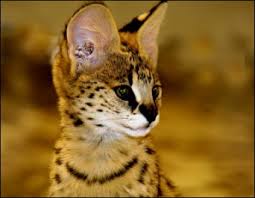
The throng–my personal rogues gallery whose roster includes reputables and reprobates alike–part like the Red Sea, making way for the most noble of all serval cats, The Duchess.

An antidote? Have you been poisoned?” The Duchess queries as she saunters into the open space, a dollop of concern gleaming in her vivid blue eyes.

I try to not laugh, partly out of respect, but mostly due to the fact that though she is the eldest of my unused characters, she is technically still but a kitten. “No, Duchess, it’s an anecdote, as in a short, amusing or interesting story about a person or an incident.

I know full well what an anecdote is, thank you kindly. I was merely attempting to lighten the dreadfully somber mood with a bit of levity.” Not her best faux pas cover, but it was swift, which should count for something. As casually as she could manage, the kitten turned to see if anyone found amusement at her expense. No one did. They knew better. “May I hold it?

I hesitate and stare at the leapling. Created on February 29th all those many years ago, it was my rationale–on paper–for keeping her a kitten, seeing as she had fewer birthdays, she would naturally age at a decelerated rate. The actuality is I have an affinity for kittens. For full grown cats? Not so much. And now the dilemma is if her kittenish nature should come into play and, without meaning to, cause injury to the anecdote, then all this would be for naught.

Her eyes plead with all the promise of being good and I have no choice but to relent. “It’s fragile, so be gentle. Take care not to crush it.” I gently place the anecdote in her cupped paws.

Why does one need an anecdote?” The Duchess of Albion asked, her nose twitching whenever the creature moves its wings.

To tell a proper story.” I answer. “More than just a sequence of actions, anecdotes are the purest form of the story itself.

But I thought characters are at the heart of every great story?

They are and anecdotes connect the hearts and minds of those characters to a story.” I try to feign calm but I can see the kitten’s body tensing up. Her eyes, those glorious baby blues, are studying the creature closely. Was I wrong in my decision to trust that she rules her instincts and not the other way around?

They also add suspense to your story, giving the audience a sense that something is about to happen. If you use them right, you can start raising questions right at the beginning of your story—something that urges your audience to stay with you. By raising a question, you imply that you will provide your audience with the answers. And you can keep doing this as long as you remember to answer all the questions you raise.

The kitten’s breath becomes rapid and her paws close in around the anecdote and I want to cry out, urge her to stop, but it’s far beyond that point now. She is in control of her own fate. Canines bare themselves, paws pulling the creature closer to her mouth.

No!” she shakes her head violently. Her ears relax and her mouth closes as her breathing returns to normal. Then, the oddest thing happens…

The Duchess begins to vanish. All the characters look on in a dazed silence, uncertain how to react.

What is happening to me?” she shoots me a panicked glance as cohesion abandons her form.

Haven’t you sussed it out yet?

No… I’m scared!

Don’t be.” I smile. “Look around you. You’re at the heart of a story. You’re free.

Truly?” she is suddenly overwhelmed with delight, her expression priceless. “But — but what do I do with the anecdote now?

Open your paws, let it fly off.

She unfolds her paws. Tiny wings beat their path to freedom. Then someone from the back of the crowd gives The Duchess a slow clap. Soon, others join in, building into a tidal wave of applause.

The now translucent Duchess waves a tearful thank you to the crowd, before turning back to me with a request, “Say my name.

Why?

Because you always simply address me Duchess and I want to hear you call me by my full name one last time before I g– —

And just like that, she was gone.

I bid you a fond farewell, Your Grace the Duchess of Albion Gwenore del Septima Calvina Hilaria Urbana Felicitus-Jayne Verina y de Fannia. Enjoy your journey. You will be missed.

Sally forth and be writeful.

©2013 Rhyan Scorpio-Rhys

Creative Commons License

Stories Are the Creatures That Forage in the Wilderness of Our Minds

“Stories are the creatures that forage in the wilderness of our minds. Their claws pierce our curiosity, digging in deep to prevent our escape, as they force us into their maw, past razor sharp teeth of conflict.” —- Rhyan Scorpio-Rhys

Tell me a story.” the woman said, book opened to a blank page on her lap, graphite stick firmly in hand and at the ready. The reading chair in which she sat was, what appeared to my eyes, nothing more than a series of interwoven vines that had grown from the lush green carpet in the center of the room. This indoor library of hers smelled of petrichor, the scent of rain on dry earth, which would explain the moisture that dotted the spines of the books stacked in chaotic fashion on the recessed shelves lining the walls.

I — I don’t have any stories.” I shifted uncomfortably in a small puddle on the carpet—that was most assuredly grass—as the woman took in the sum of me.

Nonsense, everyone has stories, some more interesting than others, but they are stories nonetheless.” she said, gesturing with a nod for me to sit. “Everything is present for a story to exist: a teller, that would be you, and an audience, which would be me.”

My seat—a normal metal folding chair with padding—was as much out of place with the room’s décor as I. A reminder, no doubt, that although invited, I was still considered an interloper. The fact that the chair was bone dry despite the moist surroundings was of small consolation. I squirmed until I found the position that afforded the least amount of discomfort and said, “All right, then… I don’t know how to tell a story.”

Ah, a different matter altogether.” she said, placing the book and graphite aside. “The act of storytelling is as old as the creative spark that burns within us all. And though truly great storytellers are born, those lacking the unique gift may still acquire the skill.”

1. Keep it simple.

The first thing to bear in mind is if you have the choice between a complicated or simple telling, choose the simple approach. As marvelous as the brain may be, it can become overwhelmed if it attempts to process too much information at one time.

2. Open big.

Next, you mustn’t be afraid to grab your audience by the balls!” the woman smiled, amused by my unease. “And never apologize for doing so. You’re familiar with the saying, ‘you only get one chance to make a first impression,’ aren’t you? The same applies to your story. You need to carefully craft your opening line to grab your audience’s attention immediately, and represent the promise of your story by displaying a unique voice and perspective.

“There is no going soft here. Your opening line should possess the elements that make up the story as a whole, told in a distinctive voice, a point of view, a rudimentary plot and some hint of characterization. By the end of the first paragraph, your audience should know the setting and conflict… unless there is a particular reason to withhold this information.”

3. Be mindful of your story’s spine.

“Stories are the creatures that forage in the wilderness of our minds. Their claws pierce our curiosity, digging in deep to prevent our escape, as they force us into their maw, past razor sharp teeth of conflict. But despite outward appearances, these beasts are only as strong as their spine.

“Your duty is to support that spine by arranging your content in a logical order and supporting it with anecdotes that raise questions to keep up interest and moments of reflection to show your story’s appeal. We, as the audience, need a reason to care.

“And lop off the vestigial appendages of tangents where you find them. Going too far astray will only lose your audience’s attention.”

4. Don’t alienate your audience.

Some subjects require a delicate touch. You’ll know them by their appearance and the uneasy feeling they leave in your gut. By no means avoid them if they’re integral to your story, but instead find the best way to craft the tale so that you draw your audience in before revealing sensitive details. Invest them in the story before you shock them and then give them time to digest it.

5. End strong.

Whether you end your story on an upbeat note, allow your audience to fill in the blanks, come full circle with your lead, close with a relevant quote, provide a brief summary, or wrap things up with either a surprise or anecdotal ending… you need to come strong. Elevate your story’s effectiveness with a great ending and leave them with a lasting impression. The yang to your ‘first impression’ yin.

“You should also give your audience the proper space to appreciate your ending. A mere sentence or two in which you take a step back and let the story meaning steep in their mind.

And finally, allow your audience to hear the door click shut behind them, signifying that the story is well and truly over. Everything’s done and dusted. Thank you for visiting my world, now it’s time to return to your own.”

Got all that?” she asked. I nodded that I understood.

Good,” the woman rested the tip of the graphite stick on the book leaf, “now tell me a story.

Click.

Sally forth and be writeful.

©2013 Rhyan Scorpio-Rhys

Creative Commons License

Screw the Fear and Write On

“Screw the fear.” — Jo Leigh

Be it anxiety over acceptance, concerns about misrepresentation, or indecisiveness on whether to delete or send out your latest labor of love and pain, fear has a nasty way of creeping into the writing process, and if you can use it to your advantage by allowing it to heighten your awareness and commit to the page the precise thoughts and ideas that need to be expressed, so much the better. It’s when fear snaps shut like a bear trap on your mind and prohibits you from pushing the pen on paper that’s the problem.

I would tell you to forget the fear, but we both know sometimes that just isn’t an actionable solution. The best I can manage is to share with you what works for me: I simply acknowledge it. I tip my hat to fear, slog through the uncertainty and self-doubt that it carries in abundance, and I write. To myself. For myself. I write without thought of sharing it with anyone, without the intention of submitting it for publication. Since the act I engage in is so personal and integral to my understanding the world around me, I refuse to let fear have any say in what or how I write. I write what I feel must be written. No one else has to agree. Because if I don’t write my mind, my view of the world perishes when I no longer exist.

It’s my marker. My proof I was here.

But, should you choose not to heed me advice, perhaps you’ll listen to those talented few, listed below, who are graced with a turn of phrase that far surpasses my own.

Sally forth and be fear ignoringly writeful.

— Rhyan Scorpio-Rhys

1. “There is no greater agony than bearing an untold story inside you.” ― Maya Angelou

2. “Lock up your libraries if you like; but there is no gate, no lock, no bolt that you can set upon the freedom of my mind.” ― Virginia Woolf, A Room of One’s Own

3. “You never have to change anything you got up in the middle of the night to write.” ― Saul Bellow

4. “Tomorrow may be hell, but today was a good writing day, and on the good writing days nothing else matters.” ― Neil Gaiman

5. “A word after a word after a word is power.” — Margaret Atwood

6. “Start writing, no matter what. The water does not flow until the faucet is turned on.” ― Louis L’Amour

7. “Let me live, love and say it well in good sentences.” — Sylvia Plath, The Bell Jar

8. “One of the few things I know about writing is this: Spend it all, shoot it, play it, lose it, all, right away, every time. Do not hoard what seems good for a later place in the book, or for another book, give it, give it all, give it now.” — Annie Dillard

9. “The role of a writer is not to say what we can all say, but what we are unable to say.” — Anaïs Nin

10. “The scariest moment is always just before you start. After that, things can only get better.” — Stephen King, On Writing

The Immortality of a Storyteller

“I am a storyteller.

In the course of my life, I will write something — SOMETHING, that will grow in the mind of a person who reads it. It will shape them. Perhaps while I live, perhaps a hundred years from now. SOMETHING I do will alter the course of their life. Perhaps it will be a tiny stone in a river, or perhaps it will be like a boulder. I will encourage them to love a bit more, or to stand against the darkness that haunts them.

Because of me.

Because I was a little brave one day. Because some morning a sunrise opened my heart, or my beloved kissed me as she never had before. I will, in some small way, shape the future. Shape the world.

This is my immortality.”

~ J.M. Guillen

My Final (I Promise) 20 Reasons You Might Be A Writer

“It’s never too late to be what you might have been.” — George Eliot

You very well might be a writer if…

  1. There are no innocent bystanders in your life. Everybody becomes a character in your writing, warts and all. Especially the warts.
  2. You read the same piece you’ve written over and over again and your inner critic vacillates between: “I can’t believe I wrote something so beautiful” and “What the hell was I thinking? That’s it! I’m done! Never again! It’s back to planespotting for me!”
  3. You lose your mind if anyone attempts to organize that untidy mound of paper on your floor beside your desk, because you know exactly where every piece of writing and research is located in the pile.
  4. You can’t read your old writing from the periods when you actually believed with all your heart and soul that you were a naturally gifted writer, especially during your teen years. You just can’t. It’s too cringe-inducing.
  5. Writers block is as real to you as one of your annoying family members, only this one lives inside your head, taking up valuable space, and refuses to pick up after itself, pitch in with the chores or pay its fair share of the rent.
  6. You casually insert words you’ve invented into conversation and totally ignore the “Wait… what?” expression on your friends’ faces.
  7. The slightest noise from the outside world, the off-tune ice cream truck jingle, kids playing in the street, dogs barking, pushes you off the precipice of sanity in a Tell Tale Heart manner.
  8. A telephone book or an office directory is your character name generator.
  9. The blank page is your personal version of the First Gate of Hell and the cursor taunts you by blinking in Morse code: “Lasciate ogne speranza, voi ch’intrate” and despite your fear, you’re slightly pleased with yourself because you know that translates as, “Abandon all hope, ye who enter here.”
  10. You call a pen without ink a dead soldier.
  11. Writers block makes you the most active person on the planet. Clean the fridge? No problem. Clear the leaves out of the rain gutter? Sure thing. Solve Goldbach’s conjecture (you know, every even integer greater than 2 can be expressed as the sum of two primes)? I’m on it. Spend quality time with the mother-in-law? Um, I think I might try my hand at writing, if you don’t mind.
  12. You hate the phrase, “Well, you’re the writer” whenever someone has to take notes or minutes or make a shopping list. Okay, maybe not the shopping list. It is a list, after all.
  13. You become a human spellcheck and thesaurus for your friends, family and co-workers.
  14. You’ve stubbed your toe or banged your shin in the dark, scrounging for a pen and piece of paper to jot down the absolutely brilliant idea that blindsided you in the middle of the night.
  15. You collect stories on the odd ways people have accidentally met their maker or have been murdered. For research purposes only, of course.
  16. You automatically rewrite the endings to disappointing movies or TV series in your head.
  17. You own more than ten novels that contain your own personal annotations and notes, but you don’t stop there. You also annotate .PDF files and have broken the cardinal sin of making notes in a borrowed book (shame on you).
  18. You own a box that contains old hotel card keys, movie, theater and airline ticket stubs, assorted restaurant and bar sundries (bar coasters, swizzel sticks, fruity drink umbrellas, menus), receipts, and the like, not only for future reference but for the tactile memories associated with each item.
  19. You hate your most embarrassing moments because they play over and over in the movie theater of your mind but revel in the fact that they’ll make great material for a future story.
  20. And finally, you very well might be a writer if writing is the beast that terrifies you to the very core of your being, yet you love it with all your heart, anyway.

Sally forth and be writeful.

— Rhyan Scorpio-Rhys

We Live and Breathe the Power of Words

I just watched the above trailer for the upcoming documentary “Salinger” on YouTube without meaning to. It was one of those ad-thingies that pop up before the content you actually want to watch. Normally I click SKIP AD, but this time I’m glad I didn’t. The doc professes to be “An unprecedented look inside the private world of J.D. Salinger, the reclusive author of The Catcher in the Rye.” and while I’m not the hugest fan of documentaries (a good deal of them are padded waaay too much to meet feature length requirements, in my opinion) I’ll probably give this one a go when it hits a theater near me.

But I digress…

The reason I brought this trailer up was because it spoke to me on the power words have to manipulate our emotions, provide the motivation to become better people and do great things, and sadly, sometimes to take us by the hand and lead us down darker paths.

You can never truly predict how someone will interpret your work, as words offer unique triggers in each of your readers’ minds. Ideas, concepts, situations, memories, actions, circumstances, feelings and thoughts vary as they flow from the subconscious mind to the corresponding emotional responses of the subject at hand.

In honor of Labor Day, I’d like to take a moment of your precious time and acknowledge the labors of wordsmiths by having them share their opinions on the power written words have over us all:

“Sometimes, you read a book and it fills you with this weird evangelical zeal, and you become convinced that the shattered world will never be put back together unless and until all living humans read the book.” ― John Green, The Fault in Our Stars

“We live and breathe words. It was books that made me feel that perhaps I was not completely alone. They could be honest with me, and I with them. Reading your words, what you wrote, how you were lonely sometimes and afraid, but always brave; the way you saw the world, its colors and textures and sounds, I felt–I felt the way you thought, hoped, felt, dreamt. I felt I was dreaming and thinking and feeling with you. I dreamed what you dreamed, wanted what you wanted–and then I realized that truly I just wanted you.” ― Cassandra Clare, Clockwork Prince

“I spent my life folded between the pages of books. In the absence of human relationships I formed bonds with paper characters. I lived love and loss through stories threaded in history; I experienced adolescence by association. My world is one interwoven web of words, stringing limb to limb, bone to sinew, thoughts and images all together. I am a being comprised of letters, a character created by sentences, a figment of imagination formed through fiction.” ― Tahereh Mafi, Shatter Me

“There is something about words. In expert hands, manipulated deftly, they take you prisoner. Wind themselves around your limbs like spider silk, and when you are so enthralled you cannot move, they pierce your skin, enter your blood, numb your thoughts. Inside you they work their magic.” ― Diane Setterfield, The Thirteenth Tale

“If I read a book and it makes my whole body so cold no fire can warm me, I know that is poetry. If I feel physically as if the top of my head were taken off, I know that is poetry. These are the only ways I know it. Is there any other way?” ― Emily Dickinson, Selected Letters

“But if thought corrupts language, language can also corrupt thought.” ― George Orwell, 1984

“We seldom realize, for example that our most private thoughts and emotions are not actually our own. For we think in terms of languages and images which we did not invent, but which were given to us by our society.” ― Alan Wilson Watts

“There exists, for everyone, a sentence – a series of words – that has the power to destroy you. Another sentence exists, another series of words, that could heal you. If you’re lucky you will get the second, but you can be certain of getting the first.” ― Philip K. Dick, VALIS

“Words… They’re innocent, neutral, precise, standing for this, describing that, meaning the other, so if you look after them you can build bridges across incomprehension and chaos. But when they get their corners knocked off, they’re no good any more… I don’t think writers are sacred, but words are. They deserve respect. If you get the right ones in the right order, you can nudge the world a little or make a poem which children will speak for you when you’re dead.” ― Tom Stoppard, The Real Thing: A Play

“It doesn’t matter if you and everyone else in the room are thinking it. You don’t say the words. Words are weapons. They blast big bloody holes in the world. And words are bricks. Say something out loud and it starts turning solid. Say it loud enough and it becomes a wall you can’t get through.” ― Richard Kadrey, Kill the Dead

“To see evil and call it good, mocks God. Worse, it makes goodness meaningless. A word without meaning is an abomination, for when the word passes beyond understanding the very thing the word stands for passes out of the world and cannot be recalled.” ― Stephen R. Lawhead, Arthur

Sally forth and be Labor Dayingly writeful.

— Rhyan Scorpio-Rhys

The Audience Has Spoken: They Want Stories

Kevin Spacey delivered the keynote James MacTaggart Memorial Lecture at the Edinburgh Television Festival, in which he challenged TV channels to give “control” to their audiences or risk losing them. Using as a model his recent foray into television, House Of Cards — a commercial and critical hit after it was released on streaming service Netflix – he warned there was a danger of “thinking that something which is working now will necessarily work a year from now.”

If you weren’t aware, Netflix released the entire season of House Of Cards at once, which in the actor’s words, “demonstrated that we have learned the lesson that the music industry didn’t learn — give people what they want, when they want it, in the form they want it in, at a reasonable price, and they’ll more likely pay for it rather than steal it.”

When you watch the clip you’ll notice that it’s heavily geared toward television content distribution but there’s a message for you, the writer, in there as well that isn’t limited to TV writing, and your inspirational takeaway from this should be:

“The audience has spoken. They want stories. They’re dying for them. All we have to do is give it to them.” — Kevin Spacey

Sally forth and be writeful.

— Rhyan Scorpio-Rhys

19 Habits of Happy Writers (you don’t really want to be miserable all your life, do you?)

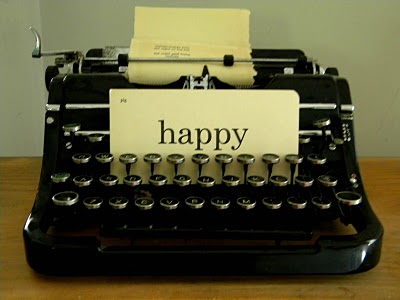
https://maddfictional.com/wp-content/uploads/2013/08/b4784-happytypewriter.jpg

“Happiness is not something ready made. It comes from your own actions.” — Dalai Lama

As writers, it’ll come as no shock to any of you when I say my mood largely affects my writing. When I slide into the dark places, although I attempt to slog my way through the anguish and negativity that gets so thick sometimes as to suffocate me, my writing naturally suffers.

This post stems from an article I read recently on a Swedish study that suggested writers have a higher risk than the general population of anxiety and bipolar disorders, schizophrenia, unipolar depression, and substance abuse. And if that wasn’t enough, we’re also about twice as likely to commit suicide.

I don’t know about you, but I’d like to head this off at the pass. So, below are a few suggestions to help you live a happier existence, broaden your horizons, create a positive environment in which to write, and hopefully bring energy and verve into your projects:

1. Appreciate Life

Be thankful that you beat the odds and woke up alive this morning, some folks weren’t as lucky as you. Develop a childlike sense of wonder towards life and focus on the beauty of things. Learn to make the most of each day, and stop taking things for granted. And definitely don’t sweat the small stuff. It’s small for a reason.

2. Choose Your Friends Wisely

Do your best to surround yourself with happy, positive people who share your values and goals. Friends that have the same ethics as you will encourage you to achieve your writing dreams. They help you to feel good about yourself and are good for a morale boost when needed.

3. Be Considerate

Accept and respect others for who they are as well as where they are in life. With a generous spirit, help when you’re able, without trying to change the person. As a rule, you should try to brighten the day of everyone you come into contact with. Especially the difficult ones.

4. Learn Continuously

Try new and daring things to spark interests, gain experience, and that you can bring back into your writing.

5. Develop Creative Problem Solving Skills

Stop wallowing in self-pity as soon as you face a challenge and instead get busy finding a solution. Don’t let set backs affect your mood, instead see each new obstacle you face as an opportunity to make a positive change. Learn to trust your gut instincts – it’s almost always right.

6. Laugh Lots

Stop taking yourself – or life for that matter — so damned seriously. You can find humor in just about any situation, so learn to laugh at yourself, because, let’s face it, nobody’s perfect. When appropriate, laugh and make light of the circumstances. (Naturally there are times that you should be serious as it would be improper to laugh. Try not to that person.)

7. Forgive!!!

Holding a grudge hurts no one but you. Forgive others for your own peace of mind. When you make a mistake, own up to it, learn from it, and forgive yourself.

8. Be Grateful

Develop an attitude of gratitude by learning to count your blessings; All of them, even the things that seem trivial. Be grateful for your home, your work and most importantly your family and friends.

9. Invest in Relationships

Always make sure your loved ones know you love them even in times of conflict. Nurture and grow your relationships with your family and friends by making the time to spend with them. Don’t break your promises to them. Be supportive.

10. Keep Your Word

Honesty is the best policy. Every action and decision you make should be based on honesty. Be honest with yourself and with your loved ones.

11. Meditate

Meditation gives your very active brain a rest. When it’s rested you will have more writing energy and function at a higher level. Whether it’s yoga, hypnosis, relaxation tapes, affirmations, visualization or just sitting in complete silence, find something you enjoy and make the time to practice daily.

12. Mind Your Own Business

Concentrate on creating your life the way you want it and take care of you and your family. Don’t get overly concerned with what other people are doing or saying. Don’t get caught up with gossip or name calling. Don’t judge. Everyone has a right to live their own life the way they want to – including you.

13. Be Optimistic

See the glass as half full. Find the positive side of any given situation. It’s there – even though it may be hard to find. Know that everything happens for a reason, even though you may never know what the reason is. Steer clear of negative thoughts. If a negative thought creeps in – replace it with a positive thought.

14. Love Unconditionally

Don’t put limitations on your love, even though you may not always like the actions of your loved ones – continue to love them.

15. Be Persistent

Never give up. Face each new challenge with the attitude that it’ll bring you one step closer to your goal. You’ill never fail, as long as you never give up. Focus on what you want, learn the required skills, make a plan to succeed and take action. As humans, we’re always happiest while pursuing something of value to us.

16. Be Proactive

Accept what can’t be changed. Happy writers don’t waste energy on circumstances beyond their control. Accept your limitations as a human being. Determine how you can take control by creating the outcome you desire – rather than waiting to respond.

17. Take Care of Yourself

Take care of your mind, body and health. Get regular medical check ups. Eat healthy and work out. Get plenty of rest. Drink lots of water. Exercise your mind by continually energizing it with interesting and exciting challenges.

18. Build Self Confidence

Don’t try to be someone you’re not (no one likes a phony). You know who you are on the inside so be confident with that, do the best you can manage and don’t second guess yourself.

19. Take Responsibility

Happy writers know and understand that they are 100% responsible for their life. They take responsibility for their moods, attitude, thoughts, feelings, actions and words. They are the first to admit when they’ve made a mistake.

And there you have it. Simple, common sense suggestions to help you take responsibility for your own happiness. I realize that some of these are easier said than done, but could it really hurt to try to work on developing at least a few of these habits as you own? Who knows, the more you incorporate the above habits into your daily lifestyle, the happier you could be.

Being gifted with creativity comes at a price, but it doesn’t have to be a terrible one.

Sally forth and be true to yourself writeful.

— Rhyan Scorpio-Rhys

The Island of Misfit Posts #2: No Enemy But Time

Like its predecessor, Discouraged by Discouragement, this pesky fella here is another one of those posts that didn’t quite turn out as expected and ended up on the cutting room floor (though a part of its sentiment made its way into You’re Where You Are). Caught somewhere between my musings of growing older while still struggling with the craft and my intent of advising impatient writers to slow down, the post started taking the shape of something neither fish, flesh, nor good red herring:

“Do you think, I have not just cause to weep, when I consider that Alexander at my age had conquered so many nations, and I have all this time done nothing that is memorable!” — Julius Caesar

When you reach a certain age, you become acutely aware of time, how much you’ve squandered on things you swore were important at the moment, and how little you still have left in your account. Whenever I get the time brain bug, I’m always brought back to the line from Delmore Schwartz’s poem, Calmly We Walk through This April’s Day (quoted in that horrendous film Star Trek: Generations), “Time is the fire in which we burn.” I love that line. It resonates within me.

But I digress.

Many aspiring authors feel the pressures of time, either believing because of their age that they’ve gotten a late start in the writing process and need to play catch up, or simply haven’t got the proper time to devote to a writing regime, so they attempt to bang out herculean writing tasks without bothering to first learn the rules. They assume because they’ve taken on board the advice to write everyday that their skill set automatically improves and mistakes auto-correct themselves. They read, as instructed, but fail to apply storytelling rules–plotting, story goals, scenes and sequences, the purpose of characters, effective use of dialogue–to their own work.

That’s not to say their writing is bad, it simply lacks a consistent quality. A beautiful bit of prose or a dynamic character can easily get lost in the quagmire of weak grammar, poor pacing, and a meandering plot. Recognizing it can sometimes be hard to turn an objective eye on your own writing, here are a few questions to ask yourself, to see if you need to go back to writers boot camp:

1. Do you tell a story?

I assume you’re familiar with the phrase, “You can’t see the forest for the trees.” This applies to your writing as well, especially when you’re concentrating on your piece at the word choice and sentence structure level. Sometimes it helps to take a step back and get a big picture view of what you’re attempting to do, what it is you’re really trying to write about. The answer isn’t always as clear cut as you’d imagine.

2. Is your writing concise?

This one’s a toughie, because it calls on you to chuck out everything you learned in school about the proper way to write an essay. Well, this ain’t about writing essays, bub (or bubette, no gender discrimination here) and the rules of pacing language are different in fiction. The first rule you need to learn is: Never use a long sentence when a short one does the same job.

3. Are you addicted to adjectives and adverbs?

Adjectives and adverbs are among the more hotly debated issues in the writing community, and while opinions vary, the common rule of thumb is less is more. It can be hard to spot over usage while writing so when you’re done with your piece, look for chains–a string of adjective and adverb two or greater–and whittle it down until you’re left with one or two essential ones. Also worth bearing in mind, when you feel the need to modify a noun or a verb, make sure they need to be modified. If they do, select the best word to convey your meaning.

4. Are you familiar with the word “subtle?”

Your audience is smarter than you realize. There’s no need for you to spell everything out in exacting detail. And, believe it or not, some folks actually enjoy interpreting things for themselves.

5. Should you be shifting viewpoints?

Hopping from one character’s head to another without causing audience confusion requires a certain level of skill, and I’m certainly not suggesting that you shouldn’t be doing it (and if I told you not to, you’d rush out and do it anyway) but why not baby step your way towards it? Work on mastering the one character viewpoint first.

6. Do you show too much?

Yes, the standard rule is “show, don’t tell” but you don’t need to show everything. When in doubt, refer to Elmore Leonard’s rule,”Try to leave out the part that readers tend to skip.”

7. Do you create apathetic characters?

You’re an artist, your work is all about the truth, even in fiction. I get it. I’ve been there. But creating a realistic character based on your current bout of apathy, depression, or (heaven forbid) suicidal thoughts, often doesn’t make for good reading. Your characters must have wants and needs to push the plot forward. Audiences have no need to read stories where the characters have no desire to live or accomplish something.

8. Is your antagonist one dimensional?

Villains that are evil for evil’s sake are boring. Flesh them out with wants and needs like you would your main character. And remember, every villain is a hero in their own mind.

9. Does your dialogue matter?

Yes, leaving white on the page is a good thing as no one like slogging through dense blocks of description, but are you breaking up paragraphs with bits of meaningless chatter? Dialogue should be used as a communication between characters that evokes reaction. One characters says something that another character reacts to, which sparks a reaction, and so on, until the scene concludes. If you have no idea what your character has to say, then you don’t know your character well enough.

10. Can you write an ending?

Some people excel at writing beginnings, and that all they’re good at. Each chapter is a new beginning, with no middle to be found and as for an ending? I’m sure you can work out the answer to that. Other people get off to a slow start in the beginning, come into their own in the middle and peter out at the finish line. Let’s face it, endings are tough. Not only must you keep it clear and simple while you deliver on the promise of the premise (without being didactic), but you have to tie up all your story’s loose ends, and if you’re planning to surprise your audience, it shouldn’t be with an inappropriate twist, added for shock value. Keep in mind that writing the words “The End” doesn’t finish a story if it has no resolution.

In truth, I couldn’t finish it because I wasn’t in the proper frame of mind at the time. Although it might not be visible in the post, that damned time brain bug kept nagging at me, not with words, but with a feeling – the feeling of being left behind in the race for achievement. Before you say a word, I know better. In fact, one of my favorite quotes on this matter comes from the now famous commencement speech, Ladies and gentlemen of the class of ’97:

“The race is long and, in the end, it’s only with yourself.”

But we’re human, aren’t we? And sometimes knowing a truth doesn’t prevent you from feeling the exact opposite.

Sally forth and be writeful.

— Rhyan Scorpio-Rhys

A Message to My Younger Self: Try Harder

I have no doubt that my story will end in very much the same manner as it began, with a secret. And as I stand at the crossroads, caught at the precise moment where a lifetime of secrets left untold should either be revealed or die forever, I stare at the younger man, eyes full of dreams that have not yet been crushed ‘neath the heel of reality, and find it difficult to believe that I was once him.” — Rhyan Scorpio-Rhys, The Very Fabric of Time Itself

I was riding the ferry today and it was one of those rare occasions when I wasn’t plugged into my iPod. I had just finished listening to an episode of The Afternoon Drama (a daily BBC radio play series) and as I was letting the weight of the story settle in, I overheard a conversation between a couple. They were talking about the five messages they would include in a letter if they were able to have it delivered to their younger selves.

This, of course, got me thinking about my own letter and how difficult a process it would be to write. The younger me, we’ll call him Li’l Rhy for the sake of this post, was a card carrying member of The Bronx Chapter of the International Skeptics Society who wouldn’t have believed 1) the letter came from the future, and more importantly, 2) that his future self had written it.

Also, I’m sure if I flat out told him of the obstacles he would face, that information would be redacted by some faceless wage slave at the Temporal Post Office, so the message would have to be as succinct as possible. And, if I’m honest, I wasn’t in love with the notion of sending five messages because that seemed a bit much to me. No one follows all five pieces of advice they receive. Humans just aren’t built that way. I’d either have to settle on offering Li’l Rhy three pieces of advice, hoping that at least one of them stuck, or offer one simple, yet key, bit of advice with a unifying thread. Most likely I’d go with the second option.

The next problem is offering the exact piece of advice Li’l Rhy would listen to. That’s a toughie, that one. Yup. Yes siree, Bob. Sigh. I guess it would all have to fall under the category of Try Harder, as in:

Love fiercely and try harder not to break hearts. Befriend the friendless and try harder not to burn bridges. Laugh more and try harder not to take life too seriously. Follow your bliss and try harder to stave off the darkness. Turn off the TV and try harder to think deeply. Take your time but try harder to avoid procrastination. Dream bigger and try harder to stop worrying about dreams not coming true. And stay away from Jane Hester. Sure, she’s pretty to look at but she’s nothing but trouble and It. Will. Not. End. Well.

I’m sure that last bit will get redacted, but here’s hoping!

Sally forth and be letter-to-your-younger-self writeful.

©2013 Rhyan Scorpio-Rhys

Creative Commons License