Everyone in town had a story about him, and none of the stories agreed on the details, which was maybe the truest thing about him, that he’d become less a person over the years and more a shape people poured their fears into. Some said he’d once burned down a barn out of spite. Some said he’d broken a man’s hand in a dispute over a fence line and never showed a flicker of regret. He lived alone at the edge of the county on land nobody else wanted, farmed a little, kept to himself mostly, and let the stories do whatever they wanted without correcting a single one of them.
The truth, when it finally came out after he’d been gone a few years and someone started going through the old county records for a historical society project, was smaller and stranger than any of the stories. He had, in fact, done harm, real and specific, decades back, the kind that had quietly ruined one particular family’s chance at owning their own land, a paperwork trick during a hard winter when nobody was paying close enough attention. It wasn’t dramatic. There was no barn fire, no broken hand. Just a signature and a debt called in at exactly the wrong moment, calculated instead of cruel, which somehow felt worse once people understood it.
The family it had happened to had already left the county by the time anyone connected the pieces, scattered to other states, other lives, and there was no one left nearby to tell that the wild stories had been protecting the real one all along, papering over something quiet and deliberate with something loud and forgivable. The historical society published a short article about it that almost nobody read, and the barn-fire story kept circulating at the tavern anyway, because it was more fun to tell, and because by then it hardly mattered which version was true.
The trail had been closed for repairs, technically, but the tape across the trailhead was old and sun-bleached and half torn down already, and she figured a warning that faded was a warning that didn’t count anymore. She’d hiked this range a dozen times. She knew the switchbacks, the place where the water ran clear enough to drink without treating it, the ridge where the wind always picked up around three in the afternoon like clockwork.
This time the switchbacks didn’t feel right. She counted six turns where there should have been five, and told herself she’d miscounted, that counting switchbacks while climbing was never as reliable as people liked to think. The water at the usual spot ran cloudy, a faint grit in it like ground stone, and she passed it by without drinking, telling herself she’d catch the next stream instead. The wind came early, an hour off schedule, cold in a way that felt less like weather and more like being looked at.
By the time she reached the ridge the light was wrong for the hour, thin and gray when it should have been gold, and the peak ahead looked farther away than the map said it should be, as if the whole mountain had taken a slow step back the moment she’d started climbing in earnest. She kept going anyway, because turning around felt like admitting something she didn’t have words for yet, and the ground under her boots had started to feel less like rock and more like something merely shaped like rock, patient and paying close attention.
She never told anyone the details of getting back down, only that she had, eventually, and that she’d taken a different trailhead than the one she’d started from despite never leaving the main path. She hasn’t gone back to that range since. When people ask why, she says she prefers flatter country now, and leaves it there, and they let her.
The field had been in the family for three generations, and every year the same song got sung at harvest, half-joking, half-ritual, the kind of thing nobody really believed but everybody did anyway because your grandfather did it and his grandfather before him. This year the harvest was late, the corn heavy and strange on the stalk, ears grown long and knuckled like something reaching rather than something rooted, and when the youngest hand went out at dusk to check the rows, he sang the old song under his breath without thinking about it, the way you hum something you’ve heard too many times to notice.
The corn cracked back.
It wasn’t loud. It was more like a held breath let go, a hundred small snaps rippling down the row in the wrong order, against the wind instead of with it. He stood there in the dark with the husking knife still in his hand and told himself it was just the temperature dropping, stalks contracting, nothing that hadn’t happened before. Then it happened again, closer, three rows over, and this time something in the sound had shape to it, almost a rhythm, almost an answer.
He didn’t finish checking the field that night. He told the family it was too dark to see straight and left the rest for morning, and nobody argued, because everyone had grown up hearing stories about this particular field and had always assumed the stories were just a way of explaining why the yield was better on this land than anywhere else nearby.
In the morning the corn looked ordinary again, dry and gold and patient, and the harvest went ahead as scheduled. But nobody sang that year, and nobody has since, and the field still produces more than it should for soil that tired, and everyone who works it has learned, without being told directly, to walk the rows in silence.
The vending machine showed up in the break room over a long weekend, wedged between the water cooler and the recycling bin like it had always been there. Nobody remembered ordering it, and the maintenance guy swore he’d never seen the model before, some off-brand unit painted the color of dried blood with a hand-lettered label taped over the usual soda logos: Zero Sugar Katey Krueger, ninety-nine cents, exact change only.
The first person to buy one was an intern who wanted to seem fearless in front of the accounting department. She popped the tab, took a long pull, and said it tasted like cherry cola with something metallic underneath, like a penny dissolving on the tongue. That night she dreamed about her childhood bedroom, except the window was in the wrong wall and something was scratching to get in through the closet instead. She woke up sweating and told everyone at lunch, laughing about it, and by Thursday half the office had bought a can just to see what they’d dream.
The dreams got more specific as the week went on. A man from shipping dreamed about a birthday party he’d forgotten he’d been to. A woman from HR dreamed about her sister’s wedding, except her sister’s face kept sliding off like wet paint. Everyone described the same metallic aftertaste, the same sense of a door left open somewhere just out of view.
By Friday the machine was empty and nobody had seen it get restocked, and by the following Monday it wasn’t in the break room anymore, just a rectangle of clean floor where it had been sitting, and a faint smell of artificial cherry that took two days to fade. The maintenance guy checked the delivery logs and found nothing. Everyone stopped talking about their dreams around the same time, like they’d agreed to without discussing it, and the break room went back to smelling like burnt coffee and old carpet.
The antique shop sold music boxes, porcelain birds, glass mushrooms, and tiny mechanical animals that moved when nobody touched them. Most customers found the place charming. Children begged to stay. Adults bought things they did not need and later described the purchases as irresistible.
The owner called the sensation “whimsy chills.”
It began as a pleasant shiver behind the ears whenever someone encountered something unexpectedly delightful. A silver fox that bowed. A teacup that hummed lullabies. A miniature carousel whose horses changed color according to the weather. People laughed, rubbed their arms, and bought whatever had caused the feeling.
Then the chills started following them home.
A customer woke to find every framed photograph in the apartment smiling wider than before. Another discovered that the ceramic rabbit on the mantel had moved three feet closer to the bed overnight. Someone returned a wind-up clown after hearing it giggle from inside a locked drawer.
The owner accepted every return without argument, and returned objects went behind a velvet curtain at the back of the shop.
No one saw what happened there.
Eventually, an employee became curious enough to look.
The room beyond the curtain was packed floor to ceiling with rejected curiosities. Hundreds of tiny eyes turned toward the doorway. Music boxes began playing different melodies at once. Porcelain mouths opened.
The employee felt the familiar shiver. Then another. Then dozens.
The owner appeared behind them carrying a cup of tea.
“You should never ignore whimsy chills,” the owner said. “They’re not excitement.”
The room creaked softly.
“What are they?”
“Recognition.”
Every object shifted slightly closer, and the employee backed toward the door.
The owner smiled with genuine sympathy. “They know when someone belongs with them.”
The velvet curtain fell shut.
The next morning, a new figurine appeared in the front window: a tiny shop clerk in a blue apron, hands pressed desperately against the glass.
Nobody expected the woman from apartment 1F to save the building because nobody expected much from her at all. She missed tenant meetings, borrowed tools she forgot to return, and once set off the smoke alarm making toast. When the elevator trapped six people between floors during a blackout, she was downstairs arguing with the vending machine over a bag of chips.
Then the emergency lights failed.
The superintendent panicked. Someone inside the elevator started hyperventilating. A child began crying. Cell service was gone, the backup generator refused to start, and the maintenance company estimated help would arrive in two hours.
She disappeared into her apartment.
Ten minutes later, she returned carrying a motorcycle battery, jumper cables, a camping lantern, and a plastic storage bin labeled RANDOM ELECTRIC STUFF. Nobody asked why she owned any of it. There was no time.
She powered the control panel long enough to reset the emergency release, then crawled halfway into the service access with a flashlight between her teeth. The superintendent protested until she reminded him that he had spent the last fifteen minutes pressing the same button.
The elevator shifted.
Everyone froze.
“Keep talking to them,” she said. “If they hear people, they won’t panic.”
Twenty minutes later, the doors opened six inches below the lobby floor.
The trapped tenants climbed out one by one.
The child hugged her. The superintendent stared at the improvised wiring.
“Where did you learn how to do that?”
She shrugged. “Bad boyfriends. Worse cars.”
By morning, everyone in the building knew the story.
At the next tenant meeting, someone proposed making her emergency coordinator.
She declined immediately. “Absolutely not. I have my boundaries.”
Then she reached into her bag, pulled out a laminated evacuation plan, and slid copies across the table.
Nobody commented.
Sometimes the least reliable person in the room is simply waiting for the emergency to become interesting.
Nobody agreed on what Slappy Joe actually was. The oldest version made him a cafeteria cook fired for serving meat of uncertain origin. Another claimed he was a student who ate one-too-many sloppy joes on a dare and vanished on the way to the toilet. By the time the story reached the current class, he had become some kind of saucy meat creature that lived inside the industrial freezer and came out whenever somebody wasted any sort of beef or beef byproducts.
The rules on encountering Slappy Joe changed depending on who told them, but one remained consistent: never leave a sloppy joe unfinished on a Friday.
And the world being full of nitwits and daredevils, naturally, someone did just that.
Half of a sloppy joe sandwich went into the trash at 12:37. By 12:45, the cafeteria lights flickered. At 12:52, the ketchup dispenser began leaking without being touched. At 1:03, a wet handprint appeared on the freezer door.
Nobody laughed after that.
The janitor smartly refused to enter the kitchen. The lunch staff claimed not to know anything, though one quietly began setting aside an extra bun each Friday. Teachers dismissed the whole thing as nonsense until a tray slid across an empty counter during afternoon detention.
Then came the smell.
Tomato sauce, onions, grease, and something scorched drifted through the halls long after the kitchen closed. Lockers rattled. Shoes stuck briefly to clean floors. Somewhere behind the walls came a rhythmic, meaty slapping sound.
The next morning, every trash can in the building was empty.
In the center of the cafeteria sat a single sandwich. Perfect bun. Perfect filling. Steam rising. Beside it was a handwritten sign:
FINISH WHAT YOU TAKE.
After that, food waste dropped by eighty percent.
The administration credited a successful sustainability initiative, but students knew better.
Every Friday, one untouched sloppy joe still appeared on the back counter.
Nobody ate it.
Nobody threw it away.
And nobody asked why the plate was always clean by Monday.
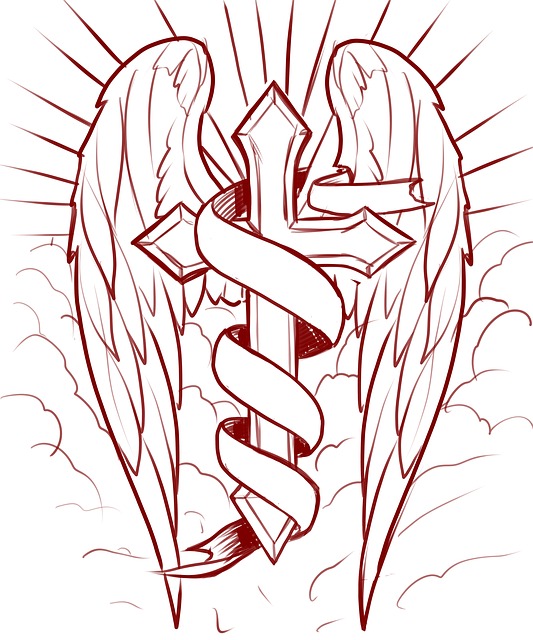
The cross. It is the most ancient and universal symbol, which in pre-erudite cultures often symbolized a duality. Associated with the horizontal beam of the cross were the symbols of the feminine, which included the characteristics of passivity, earthiness, destruction, and death. On the other hand, the vertical beam suggested its masculine counterpart, which was considered celestial, eternal, creative, positive, active, and full of life.But before the cross became a religious and holy symbol, it was used in a cruel method of execution called crucifixion, where a victim was tied and nailed by the wrists and feet to a large wooden cross and left to hang there until dead. This practice was believed to have begun with ancient Persians, and Alexander the Great introduced crucifixion throughout his empire when he crucified a general who disagreed with his campaign plans. Later, the Roman Empire adopted the custom from Carthage and used it for slaves, rebels, enemies and criminals. After Jesus of Nazareth had been put to death, Saint Helena was said to have discovered the cross that Christ died upon in the fourth century AD. Helena was instrumental in converting the crumbling Roman Empire into the Christian Holy Roman Empire, and when Christianity became the state religion, Emperor Constantine abolished crucifixion.
Now, when it comes to religious symbol body art, the cross tattoo is by far the most popular tattoo design.
What Cross Tattoo Designs Represent On A Man Or Woman
Cross tattoos have the distinction of being one of the few tattoo designs that are, for the most part, unisex. It represents that same thing for women and men, as the symbol of the cross deals with the spiritual rather than the physical.
What Type Of Person Gets A Cross Tattoo Design
People who get cross tattoos are in tune with their spirituality and they know that they’re more than just their physical bodies. Their intuition and faith factor in heavily when the solution to a problem is beyond reasoning and thinking. Most of the problems we face day to day are intangible, so in seeking answers, these people transcend physical limitations. Cross tattoos also help spiritual people be at peace with themselves, and they seldom feel alone. The cross tattoo serves as a reminder that they are loved by God all the time, and feeling this love, they are peaceful, compassionate, open and loving to all human beings. With cross body art, a special relationship with God is implied.
Different Types Of Crosses
The Crux Immissa is shaped like a lower case “t”, with the horizontal beam inserted (which is what immissa means) at right angles to the upright post. This is the most common form of the Christian cross, and it was on a cross such as this that Christ actually died (for that reason it is sometimes referred to as the Passion cross). This cross is also called Crux Capitata (“with a head”) and the Latin cross.
The Crux Commissa is shaped like a capital “T” (commissa means “joined” or “attached”) and it is more widely known as the Tau Cross or St. Anthony’s cross.
The Crux Decussata is an “X” shaped cross (decussata comes from decus, Latin for “distinction”, “honor”, “glory” and “grace”). The crux decussata is seen in the elaborate Chi Rho Cross and Baptismal Cross, and the simple St. Andrew’s cross.
The Crux Ansata, or ansated cross, is most commonly known as the Ankh (a looped Tau cross that serves as the ancient Egyptian hieroglyph meaning “life”). The hieroglyph itself is a sketch of the womb and the sexual union of male and female genitalia, which signifies zest, energy, reproduction, regeneration, and immortality. The symbol closely resembles the Hindu depiction of a Hermaphrodite standing on a lotus flower.
The Cross of Triumph is similar to the design of the Latin cross, only it adds a large circle to the base with the outline of an upside-down T inside. This cross is a symbol that testifies to the universal triumph of the Gospel throughout the world.
The Calvary Cross is like the Crux Immissa on it’s mounted on three steps (which represent the hill of Calvary or, more often, “faith”, “hope” and “love”. It is also known as the Graded cross.
The Eastern Orthodox Cross (also known as the Russian Cross and Byzantine Cross) is another cross that is similar to the Latin Cross with two additional cross beams that sit above and below the original horizontal beam. The upper is shorter in length and runs parallel to the original cross beam while the lower slopes down from left to right at an angle.The top beam bears the plaque conveying Pontius Pilate’s inscription, “INRI” (Iesus Nazarenus Rex Iudaeorum) which is Latin, Greek and Hebrew for “Jesus the Nazorean, King of the Jews”. The true meaning of the bottom beam is a little more of a mystery. One popular theory (circa the eleventh century) is that it represents a footrest and the slant symbolizes a balance scale showing the good thief, St. Dismas, having accepted Christ would ascend to heaven, while the thief who mocked Jesus would descend to hell. In this interpretation, Christ and the cross is a balance of justice.
The Templar Cross features horizontal and vertical beams of equal length, the ends of which are flared. To fully understand the history of the cross, we must go back to the year 1118, when a military order was formed by nine French noble knights, whose ranks included Hugues de Payens and Geoffrey de Saint-Omer. The founding knights of this order, known as “The Poor Knights of Christ”, took monastic vows and were devoted to the protection of pilgrims and the defense of the Holy Land. When the King of Jerusalem, King Baldwin II (circa 1118-1131), installed the order in a part of the Palace of Jerusalem called, Solomon’s Temple, for their residence and armory, the order became known as Knights of the Temple or Templars.In 1128, the Knights of the Temple were confirmed by Pope Honorius II, and they received the white vestment as a symbol of the purity of their life, to which Pope Eugenius, in 1146, added “the red cross with two bars”. Despite many years of sacrifices and rendering service to bit Christianity and civilization, Philip the Fair, King of France (who was in the Order’s debt), arrested all the Templars in 1307, and seized their goods and possessions. But Phillip was unable to judge the Order, as it was answerable only to the Pope, so he set about to coerce Pope Clement V to act against the Order. The Pope eventually yielded to pressure in 1312 and the Order was forced to revert to its original status of a Secular Military Order of Chivalry.In 1314, noted Templar Grand Master Jacques de Molay was burned at the stake near Notre Dame Cathedral, Paris. And in England, though Edward II did not take immediate action against the Order, he permitted the Inquisitors to judge the Order at the Church of All Hallows By-the-Tower, and then set about seizing the Templar lands and possessions, including the Temple in London, for himself rather than passing them on to the nominated custodians, the Knights of Saint John.
The biggest misconception regarding the Knights Templar is that they always wore the cross as part of their raiment, when in actuality it wasn’t until 1147 that the Pope Eugene III granted the Templars the right to wear a red cross, sewn above the heart on the left side of the Templar garment. Before this time the knights wore only a white coat and their sergeants wore a brown one.
The Crusader’s Cross (also called the Jerusalem Cross) is symbolized as the crux immissa surrounded by four smaller crosses and usually represents Christ’s command to spread the Gospel around the world, a mission that started in Jerusalem. Although the true meaning of this cross is unknown, the most popular beliefs are:
* The larger cross represents the Old Testament teachings and the smaller crosses incorporate the New Testament teachings. The four apostles, Matthew, Mark, Luke and John, surrounding Christ in the center Christianity (the center cross) being broadcast by missionaries to the four corners of the world * Five crosses representing the five wounds of Jesus on the cross (hands, feet and side)
It is believed that the name Crusader’s Cross came about because the symbol was on the papal banner given to the crusaders by Pope Urban II.
The Maltese Cross is comprised of four triangles who apexes meet to form an eight-pointed star that has varies shapes (blunt, curved and sharp). Originally used by the Knights of the Hospitaller Order, so known due to their charity toward the sick and poor in setting up hospices and hospitals, the symbol is still in use today by fire and ambulance services. During this time, battle armor was often extensive, covering bodies and faces and making it difficult in battle to differentiate friend from foe, so the need for an identifiable insignia for the knights became vital. Since they fought for a holy cause, they selected the symbol of the cross and when the Knights of Saint John of Jerusalem moved to the Island of Malta, the emblem inherited the island’s name. The Maltese cross represented the principles of charity, loyalty, chivalry, gallantry, generosities to friend and foe, protection of the weak, and dexterity in service. Because of its connection with the Knights of St. John, this cross is also called St. John’s Cross.
The Celtic Cross is simply a Latin cross with a ring in the center, and as is the case with most of the other crosses listed here, this cross is called different things by different people. For example, Episcopalians and Anglicans call it the Celtic cross, whereas Catholics refer to it as the Irish cross. Sometimes it’s even mistakenly identified as St. John’s Cross (see: Maltese Cross). Equally ambiguous is the meaning of the ring in the center of the cross. Interpretations range from it being a symbol of eternity that emphasizes the everlasting love of God, as shown through Christ’s crucifixion, to the symbolization of Christ’s resurrection, to the simplified explanation that it’s a halo. Then there’s the theory that when St. Patrick converted Druids to Christians, he took one of their standing stones etched with a circle that symbolized their moon goddess, and scratched a Latin cross mark over the circle, to show that Christianity had replaced their pagan beliefs.
The Celtic cross also contains plaitwork, which are patterns of interwoven cords that symbolize the “Thread of Life”, since the human soul was thought, by the Celts, to be a fragment of the divine, which would ultimately return to its divine source, after ridding itself of its accumulated, inherited impurities (see: Celtic Knots for more information regarding plaitwork).
The Anchor Cross is also known as St. Clement’s Cross, named after the fourth Pope who was banished from Rome in the first century by Emperor Trajan. Clement was forced to work in a Russian stone quarry and he caused trouble for himself when he located a spring of fresh water from the ground that quenched his fellow prisoners’ thirst (believed to be miracle, which aided in his later sainthood), and since no good deed goes unpunished, the prison governor ordered Clement’s death. He was subsequently tied to anchor and tossed into the Black Sea to prevent Christians from recovering the body. Clement later became the patron saint of anchorsmiths, blacksmiths, mariners, marble workers and stonecutters.
Which Cross Tattoo Is Right For Me?
Believe it or not, this is a difficult question to answer, because there is no logical thought pattern behind the choice (with the exception of the choosing the cross symbol that identifies your religion). The design could be a traditional Christian cross, a tribal cross, a Celtic cross, a gothic cross (being “goth” doesn’t make you a bad person), or a Latin cross with either a rosary, wings or praying hands. The only thing that matters is that the cross tattoo design you select, speaks to you spiritually. This decision is between you and God.
Though he swore to himself that he would never ever in a million years be caught dead doing it again, Clayton Jacobson wound up working late. Nearly four and a half hours past his quitting time, according to the clock, whose disinterested face stared down upon him from its lofty perch above the office door. Which made it two hundred and seventy minutes since his co-workers abandoned him without a second thought, retreating to the comfort of their homes, leaving him to pick up the slack.
Traitors, all of them.
Experts claimed that it was impossible to put a dollar value on a human life. But Clayton knew that to be a lie. He was aware exactly what his life was worth at current market value between the weekday hours of nine-to-six, or better yet, nine-to-ten thirty. He was a salaried employee that wasn’t eligible for overtime pay, so rounded up, his life was worth twenty-six dollars and fifty cents an hour. That boiled down to forty-four cents a second that he collected as he sat at his desk completely inundated with work and wasting his life away doing something that held his interest not in the least. Forty-four cents for each precious second of his life that he had exhausted and could never reclaim ever again. And as he inched ever closer to his own inevitable demise, he couldn’t help but think how cheaply he’d sold a portion of his life to a faceless entity that wouldn’t be able to recall his name in the fiscal quarter that followed his inevitable termination date.
Clayton Jacobson was a corporate cheap date.
As a reward for his continued loyalty, he had been given what was considered to be the reasonable and customary stock options package, which made him the proud owner of five thousand shares of complete and absolute boredom. Every day at approximately this very instant, he cracked his investment portfolio wide and contemplated his stock, and as always, he came to the realization that he was wealthier than he thought. He personally owned more boredom than he knew what to do with.
Cursing himself for being a corporate lackey, he rubbed his tired eyes, yawned, stretched, and began the protocol for closing up shop. It’s not like he could simply get up and leave. His position as office manager included the responsibility of backing up the entire day’s work onto the server, which would cost him another half hour, at least.
While the backup chugged away at its steady pace, Clayton impatiently packed his briefcase with files stacked in his Incoming tray under the guise of finishing the work at home. But he knew all too well that once he stepped foot into his apartment, he would ignore the work like an overdue bill or a random bit of junk mail. Physically taking work home was just a force of habit. It made him feel like he was making a dent, which was the lie he told himself every evening.
After all the computers and office equipment were shut down, he shrugged on his coat, locked the front door and tripled checked that it was secure. That was the one and only OCD that Clayton had. Is the door locked? Did I lock the door? were the questions he would ask himself every time he left the building. And he realized that this problem of his wasn’t founded in reality since never once in all his years had he not successfully locked a door upon leaving a place, but still, he found himself constantly returning to check locked doors. Tonight wasn’t a particularly bad night. He only went back and checked the door three times. His standing record was twenty-seven, which was probably due to the fact that he was not only exhausted that night but also on a heavy dose of cold medication.
Clayton Jacobson did not take sick days.
On his fourth time exiting the building, Clayton lost his footing and hit the concrete pavement like a baseball player sliding home. The briefcase slipped from his grasp during the fall and popped open, scattering files and papers over all over the sidewalk. Embarrassed, he looked around quickly to see if anyone caught his fall. Not a soul in sight. Good. He slowly got to his feet, dusted himself off and looked at the spot in front of the building where he had tripped. He half expected to see a patch of ice, grease or something, but there was nothing there.
That’s odd, he thought as he began scooping the papers back into his briefcase. Although it was a cold night, it wasn’t particularly windy, which was a good thing, since Clayton hadn’t fancied the idea of chasing paper down the street.
As he fastened the last latch on his briefcase, Clayton rose to see his bus pull away from the bus stop. He chased after it, hoping that the stoplight at the corner would turn red, giving him the chance to catch up with the bus and plead his way aboard. Usually, the bus drivers were more lenient about picking up passengers outside designated areas after ten o’clock at night. Unfortunately, the stoplight and Clayton were not in accord as it allowed the bus to escape him.
At the bus stop Clayton didn’t even bother reading the schedule because he knew the next bus was a half hour away and it was far too cold to stand out on the street and wait and if he went back into the office, he would get caught up in work and miss the next bus and most likely fall asleep at his desk. Since there were no open coffee shops at this time of night, he resigned himself to walk home. He lived close enough to his job so that walking isn’t out of the question, which was the only real perk that was associated with his employment. Twenty minutes by foot if he hustled, a half-hour if he took a more leisurely pace. Theoretically, he could have been home before the next bus arrived, so he hoofed it.
At the corner, his nemesis, the streetlight, turned red and he was forced to wait his turn against the traffic. A man sidled up to Clayton’s elbow so silently he could have been a shadow.
“Excuse me,” the man said and Clayton tried to suppress the urge to jump out of his skin. “May I have a moment of your time?”
“Sorry. I have someplace to be.” Clayton didn’t even meet the man’s gaze.
“Surely you have a moment to spare, in one of your pockets, perhaps?” the man’s manner was polite and seemed completely genuine.
“Is this about money?” Clayton shot him a glance.
“No.”
“Cigarettes? Because I don’t smoke.”
“Neither do I. Not for some time now.” A fact the man seemed to find rather amusing.
“Okay, so are you some kind of cop or something? Am I under arrest? Are you looking for sex? Are you initiating into a gang and need to cut a complete stranger? A serial killer cruising for a little late night murder?”
“No, no, no, no, and no.” the man smiled.
“Then what, for God’s sake?”
“As I said initially, a moment of your time.”
“For what?” Clayton spat.
“I think you dropped something.” The man said, pointing in the direction of the office building.
Clayton assumed it was a sheet of paper that he missed when was scooping up his papers, but what he saw instead was— well, at first he thought it was a pile of garbage. But that wasn’t right. It was a body. Strewn on the sidewalk like a rag doll.
Convinced that his eyes were playing tricks on him, he walked slowly to the body that looked strangely familiar. Well, it ought to have looked familiar, it was wearing the exact same outfit Clayton had on, identical down to the shoes. Even the open briefcase was the same.
“Who is that?” Clayton asked.
“You know who it is.” The man was suddenly behind Clayton again, but this time he didn’t jump.
“How?”
“Heart attack.”
“But I didn’t feel anything.”
“Some people never do. Perhaps you were too preoccupied?”
“Oh come on, is this some kind of sick joke?” Clayton tasted the fear in his own voice. “I slipped and hit his head, didn’t I? And now I’m hallucinating, right? Or maybe I’m still upstairs in the office asleep at his desk, or better yet at home in bed having a bad dream?”
“No, no, no, no and no.”
“Then I’m–” he couldn’t bring himself to say the word.
“Well and truly dead, I am afraid.”
“And you are?”
“Your travel companion,” the man offered Clayton another smile.
“Oh, I get it! You’re going to point out all the wrong I’ve done and give me the chance to rectify it, that’s what this is, right?” Clayton hadn’t meant it to sound so sarcastic.
The man shook his head. “You have not done any wrong.”
“Then maybe there was something I was supposed to do, some potential I was supposed to live up to that I didn’t…”
“No, you lived your life accordingly.”
“So, this is it? No ceremony? No pomp and circumstance? Just heart attack, boom, I’m dead?”The man seemed confused. “Would you prefer there be a penance? A punishment?”
The man seemed confused. “Would you prefer there be a penance? A punishment?”
“Not exactly, but something more than this.”
“Oh, but there is more. Your mind simply has not adjusted to your new reality just yet, which is perfectly normal in the beginning. You are clinging to the shadows of your old life, but all this will fade and you will begin to see anew, once you have accepted the fact that what is done cannot be undone.”
“So, what do I do now?” Clayton asked.
“Travel with me for a moment.” The man gestured at a car that Clayton could have sworn was not there before.
“You drive a car?”
“It is my conveyance. Your mind views it as a car, as that is what you are accustomed to.” The man said patiently. “For your comfort, you may wish to remove your coat.”
“But it’s freezing out here—” and as soon as Clayton heard the words, he felt foolish. “Oh, right.”
“Let me help you.” The man took Clayton’s briefcase, slid the overcoat off his shoulders, and let both items fall to the ground. As they landed, there was a deafening boom, which cracked the pavement and shattered the windows in the surrounding area. Or Clayton thought the windows shattered. When he looked up again, the windows were whole, as if nothing happened.
“I feel so much lighter now.” Clayton bounced on his toes like a little boy.
“You have just stripped yourself of your biggest encumbrances.”
“Which were?”
“Labor and haste.”
This answer made Clayton stop bouncing for some reason and he turned to look at his body crumpled on the sidewalk. “Can we do something about this?” he pointed at his former shell.
“Like what?” the man asked.
“I don’t know.” Clayton scratched his head. “Rearrange it? Move it inside the building maybe? Something more dignified than this. This isn’t how I want people to remember me.”
“Those who remember you will do so in their own manner. You cannot change that,” the man said as he opened the door for Clayton, who looked at his lifeless body one last time with a twinge of regret for not having lived a richer more fulfilling life, before he slipped into the passenger seat.
The man entered the driver’s side and took the wheel. And they drove, so slowly that it seemed to Clayton they were not moving at all, but instead, time moved around them. Not through them, Clayton noticed, around them. There was no time within this conveyance. One moment, the time the man asked of Clayton, was the same as eternity in here.
“Where are we headed?” Clayton asked.
“The next now.” The man answered and said no more. And he hadn’t needed to because somehow Clayton understood. For the first time in his life, or more accurately his death, he understood perfectly.
About The Next Now: One night I was working on a short story that I’ve been toying with for the better part of a year. I was knee-deep in the rising action stage, typing away—and even happy with most of it—when it happened: The Click.
It’s a magical moment. Your pupils dilate. Your breathing slows. The fog in your head clears. Time slows to a crawl. And for one shining moment, everything is perfect. Every sinewy thread of plot comes together. It may be a mess, but it’s all there. It can be fixed and made whole—we have the technology.
And then the world speeds back up and it’s a race against the clock to type out as much as you can before the perfect purring of a well-oiled machine becomes a sputter and you lose something—or worse—the machine takes a great big dump.
That’s this one right here. A simple story about a wage slave that dies, unappreciated. No fanfare, no glorious reward for living his life correctly and doing no harm. A simple leave your things behind and move on to the next phase of your existence, or the next now.
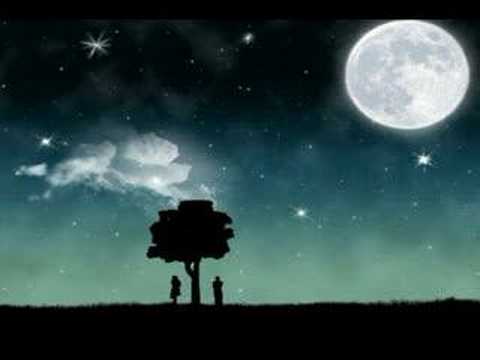
*Inspired by the song “When The Stars Go Blue” by Ryan Adams
It was a secret place, a quarter acre of Eden abandoned and erased from the mind of mankind the instant the original sin was committed, and I had stumbled upon it quite by accident.
No, that was a lie and I promised myself I would not defile the sanctity of the garden if it could be helped.
I was not proud of the actual reason of how I came to be in this place, simply because I was a stalker. In my defense, it was only the once, I hadn’t made a habit of following women around without their knowledge. Just one woman. The one I was currently spying on, crouched here in the bushes amongst the flower blossoms, berries and leaves.
Mari.
Coworkers called her Marionette behind her back and sometimes to her face, passing it off as good-natured teasing. There was nothing good-natured about it. She acquired the nickname because she was a gangly woman who moved about in a jerky fashion, as if the unseen wires that made her move were constantly in a tangle that the puppeteer hadn’t been able to sort.
Mari did as people of her ilk often do, she kept herself to herself, stared at her shoes rather than make eye contact, and accepted all the negativity heaped upon her shoulders with nary a complaint. But she couldn’t hide the fact that she was miserable, just as I couldn’t hide that I was somehow drawn to that misery.
Although I wanted to know her for a while, I was too shy to make an approach. Today, I told myself, would be the day. As I went through my daily grind, I slowly mustered all my courage and screwed it to the sticking place. Ten minutes to quitting time, I marched to Mari’s cubicle, prepared to make my intentions known…
But she wasn’t there.
I searched by the fax machine, in the kitchen near the coffee maker, I even bore the brunt of strange stares when I loitered outside the women’s restroom, but she wasn’t anywhere to be found. Completely and utterly defeated, I grabbed my coat and left for home.
Half a block before the entrance to the subway, something grabbed my attention out the corner of my eye. Across the street, Mari sat on a bench at a bus stop as the 5:17 pulled up. I wanted to run across the street, braving the crosstown traffic and hop on the bus to make my stand. Instead, I froze. All my former courage had long abandoned me.
For the second time today, my heart sank. And for the second time today it did so without merit. The bus pulled away to find Mari still seated. And she sat as bus after bus pulled up and away. She did not read a book. She did not listen to music. She simply sat patiently.
Then when sufficient time had passed, Mari stood and walked away. I couldn’t tell you what possessed me to follow her on the crooked path that weaved through narrow alleyways, towering overpasses, black as pitch underground tunnels. Eventually her journey came to a halt in front of a lot that appeared to have been vacant for centuries.
Mari stood at the perimeter of the lot and at the precise moment the evening woke and forced the daylight into hiding, a door appeared with seven locks. She stood absolutely still and waited. In the newborn evening sky, stars bloomed and seven of them twinkled blue in a sequence that repeated seven times. The locks tumbled one after the other and the door opened slowly.
Mari stepped through the door frame but hadn’t appeared in the lot on the other side. From my vantage point, she simply vanished.
I ran to the door and managed to squeeze through before it shut, but instead of finding myself in the overgrown and refuse-filled lot, I stepped into paradise. My clothes melted from my body and ashamed of my nakedness, I hid in a nearby bush.
In the very center of the garden stood a mammoth tree that bore unrecognizable fruit of various shapes and sizes, the roots of which branched out along the grass and touched two streams on either side, one that appeared to have been made of milk and the other honey.
Standing beside the tree was Mari, naked but no longer that gangly woman who was awkward in her skin and awkward in the world. Here, her jerky movements flowed gracefully, her normally dull and lifeless eyes were polished to a fine shine, and her crooked mouth straightened and nearly split her face in half when she unleashed that radiant smile.
Mari blew a kiss up to the tree and somehow that kiss became a breeze that rustled the leaves which made a sort of melody unlike any I had ever heard. A pure music played by nature itself.
She danced around the tree all night without tiring, in time with the tune, and sang in a voice that was different from her normal mousy tone, stronger now, more confident. And I watched all the sorrow and strife, all the hurt and anger, all that was wrong with her life evaporate from her body.
When she sensed it was time to leave, Mari reached up and plucked the smallest of the fruit from a low hanging branch and dipped it in the stream of honey before washing the meal down with a cupped hand from the stream of milk.
The door reappeared and her clothing was folded neatly in a pile beside it. With each layer she put on, the transformation to her old self, the Mari that people mocked, began.
I thought about following her, but how could I ever leave this place, this patch of perfection? I knew she would be back and the next time I would talk to her, for certain. Until then I was contented to wait until she returned to dance again. I would wait until the stars went blue.
Sally forth and be dancing where the stars go bluingly writeful.