Tag: indieauthor

  • Micro-Fiction Corner: Old Zack Conal Did Some Harm

    Micro-Fiction Corner: Old Zack Conal Did Some Harm

    Everyone in town had a story about him, and none of the stories agreed on the details, which was maybe the truest thing about him, that he’d become less a person over the years and more a shape people poured their fears into. Some said he’d once burned down a barn out of spite. Some said he’d broken a man’s hand in a dispute over a fence line and never showed a flicker of regret. He lived alone at the edge of the county on land nobody else wanted, farmed a little, kept to himself mostly, and let the stories do whatever they wanted without correcting a single one of them.

    The truth, when it finally came out after he’d been gone a few years and someone started going through the old county records for a historical society project, was smaller and stranger than any of the stories. He had, in fact, done harm, real and specific, decades back, the kind that had quietly ruined one particular family’s chance at owning their own land, a paperwork trick during a hard winter when nobody was paying close enough attention. It wasn’t dramatic. There was no barn fire, no broken hand. Just a signature and a debt called in at exactly the wrong moment, calculated instead of cruel, which somehow felt worse once people understood it.

    The family it had happened to had already left the county by the time anyone connected the pieces, scattered to other states, other lives, and there was no one left nearby to tell that the wild stories had been protecting the real one all along, papering over something quiet and deliberate with something loud and forgivable. The historical society published a short article about it that almost nobody read, and the barn-fire story kept circulating at the tavern anyway, because it was more fun to tell, and because by then it hardly mattered which version was true.

    ©2013 Rhyan Scorpio-Rhys
  • Micro-Fiction Corner: When She Came Round the Mountain

    Micro-Fiction Corner: When She Came Round the Mountain

    The trail had been closed for repairs, technically, but the tape across the trailhead was old and sun-bleached and half torn down already, and she figured a warning that faded was a warning that didn’t count anymore. She’d hiked this range a dozen times. She knew the switchbacks, the place where the water ran clear enough to drink without treating it, the ridge where the wind always picked up around three in the afternoon like clockwork.

    This time the switchbacks didn’t feel right. She counted six turns where there should have been five, and told herself she’d miscounted, that counting switchbacks while climbing was never as reliable as people liked to think. The water at the usual spot ran cloudy, a faint grit in it like ground stone, and she passed it by without drinking, telling herself she’d catch the next stream instead. The wind came early, an hour off schedule, cold in a way that felt less like weather and more like being looked at.

    By the time she reached the ridge the light was wrong for the hour, thin and gray when it should have been gold, and the peak ahead looked farther away than the map said it should be, as if the whole mountain had taken a slow step back the moment she’d started climbing in earnest. She kept going anyway, because turning around felt like admitting something she didn’t have words for yet, and the ground under her boots had started to feel less like rock and more like something merely shaped like rock, patient and paying close attention.

    She never told anyone the details of getting back down, only that she had, eventually, and that she’d taken a different trailhead than the one she’d started from despite never leaving the main path. She hasn’t gone back to that range since. When people ask why, she says she prefers flatter country now, and leaves it there, and they let her.

    ©2013 Rhyan Scorpio-Rhys

  • Micro-Fiction Corner: Jimmy Crack Corn and the Corn Cracked Back

    Micro-Fiction Corner: Jimmy Crack Corn and the Corn Cracked Back

    The field had been in the family for three generations, and every year the same song got sung at harvest, half-joking, half-ritual, the kind of thing nobody really believed but everybody did anyway because your grandfather did it and his grandfather before him. This year the harvest was late, the corn heavy and strange on the stalk, ears grown long and knuckled like something reaching rather than something rooted, and when the youngest hand went out at dusk to check the rows, he sang the old song under his breath without thinking about it, the way you hum something you’ve heard too many times to notice.

    The corn cracked back.

    It wasn’t loud. It was more like a held breath let go, a hundred small snaps rippling down the row in the wrong order, against the wind instead of with it. He stood there in the dark with the husking knife still in his hand and told himself it was just the temperature dropping, stalks contracting, nothing that hadn’t happened before. Then it happened again, closer, three rows over, and this time something in the sound had shape to it, almost a rhythm, almost an answer.

    He didn’t finish checking the field that night. He told the family it was too dark to see straight and left the rest for morning, and nobody argued, because everyone had grown up hearing stories about this particular field and had always assumed the stories were just a way of explaining why the yield was better on this land than anywhere else nearby.

    In the morning the corn looked ordinary again, dry and gold and patient, and the harvest went ahead as scheduled. But nobody sang that year, and nobody has since, and the field still produces more than it should for soil that tired, and everyone who works it has learned, without being told directly, to walk the rows in silence.

    ©2013 Rhyan Scorpio-Rhys

  • Micro-Fiction Corner: Zero Sugar Katey Krueger

    Micro-Fiction Corner: Zero Sugar Katey Krueger

    The vending machine showed up in the break room over a long weekend, wedged between the water cooler and the recycling bin like it had always been there. Nobody remembered ordering it, and the maintenance guy swore he’d never seen the model before, some off-brand unit painted the color of dried blood with a hand-lettered label taped over the usual soda logos: Zero Sugar Katey Krueger, ninety-nine cents, exact change only.

    The first person to buy one was an intern who wanted to seem fearless in front of the accounting department. She popped the tab, took a long pull, and said it tasted like cherry cola with something metallic underneath, like a penny dissolving on the tongue. That night she dreamed about her childhood bedroom, except the window was in the wrong wall and something was scratching to get in through the closet instead. She woke up sweating and told everyone at lunch, laughing about it, and by Thursday half the office had bought a can just to see what they’d dream.

    The dreams got more specific as the week went on. A man from shipping dreamed about a birthday party he’d forgotten he’d been to. A woman from HR dreamed about her sister’s wedding, except her sister’s face kept sliding off like wet paint. Everyone described the same metallic aftertaste, the same sense of a door left open somewhere just out of view.

    By Friday the machine was empty and nobody had seen it get restocked, and by the following Monday it wasn’t in the break room anymore, just a rectangle of clean floor where it had been sitting, and a faint smell of artificial cherry that took two days to fade. The maintenance guy checked the delivery logs and found nothing. Everyone stopped talking about their dreams around the same time, like they’d agreed to without discussing it, and the break room went back to smelling like burnt coffee and old carpet.

    ©2013 Rhyan Scorpio-Rhys

  • Micro-Fiction Corner: Whimsy Chills

    Micro-Fiction Corner: Whimsy Chills

    The antique shop sold music boxes, porcelain birds, glass mushrooms, and tiny mechanical animals that moved when nobody touched them. Most customers found the place charming. Children begged to stay. Adults bought things they did not need and later described the purchases as irresistible.

    The owner called the sensation “whimsy chills.”

    It began as a pleasant shiver behind the ears whenever someone encountered something unexpectedly delightful. A silver fox that bowed. A teacup that hummed lullabies. A miniature carousel whose horses changed color according to the weather. People laughed, rubbed their arms, and bought whatever had caused the feeling.

    Then the chills started following them home.

    A customer woke to find every framed photograph in the apartment smiling wider than before. Another discovered that the ceramic rabbit on the mantel had moved three feet closer to the bed overnight. Someone returned a wind-up clown after hearing it giggle from inside a locked drawer.

    The owner accepted every return without argument, and returned objects went behind a velvet curtain at the back of the shop.

    No one saw what happened there.

    Eventually, an employee became curious enough to look.

    The room beyond the curtain was packed floor to ceiling with rejected curiosities. Hundreds of tiny eyes turned toward the doorway. Music boxes began playing different melodies at once. Porcelain mouths opened.

    The employee felt the familiar shiver. Then another. Then dozens.

    The owner appeared behind them carrying a cup of tea.

    “You should never ignore whimsy chills,” the owner said. “They’re not excitement.”

    The room creaked softly.

    “What are they?”

    “Recognition.”

    Every object shifted slightly closer, and the employee backed toward the door.

    The owner smiled with genuine sympathy. “They know when someone belongs with them.”

    The velvet curtain fell shut.

    The next morning, a new figurine appeared in the front window: a tiny shop clerk in a blue apron, hands pressed desperately against the glass.

    Customers found it adorable.

    And several reported getting chills.

    ©2013 Rhyan Scorpio-Rhys

  • Micro-Fiction Corner: She Came Clutch

    Micro-Fiction Corner: She Came Clutch

    Nobody expected the woman from apartment 1F to save the building because nobody expected much from her at all. She missed tenant meetings, borrowed tools she forgot to return, and once set off the smoke alarm making toast. When the elevator trapped six people between floors during a blackout, she was downstairs arguing with the vending machine over a bag of chips.

    Then the emergency lights failed.

    The superintendent panicked. Someone inside the elevator started hyperventilating. A child began crying. Cell service was gone, the backup generator refused to start, and the maintenance company estimated help would arrive in two hours.

    She disappeared into her apartment.

    Ten minutes later, she returned carrying a motorcycle battery, jumper cables, a camping lantern, and a plastic storage bin labeled RANDOM ELECTRIC STUFF. Nobody asked why she owned any of it. There was no time.

    She powered the control panel long enough to reset the emergency release, then crawled halfway into the service access with a flashlight between her teeth. The superintendent protested until she reminded him that he had spent the last fifteen minutes pressing the same button.

    The elevator shifted.

    Everyone froze.

    “Keep talking to them,” she said. “If they hear people, they won’t panic.”

    Twenty minutes later, the doors opened six inches below the lobby floor.

    The trapped tenants climbed out one by one.

    The child hugged her. The superintendent stared at the improvised wiring.

    “Where did you learn how to do that?”

    She shrugged. “Bad boyfriends. Worse cars.”

    By morning, everyone in the building knew the story.

    At the next tenant meeting, someone proposed making her emergency coordinator.

    She declined immediately. “Absolutely not. I have my boundaries.”

    Then she reached into her bag, pulled out a laminated evacuation plan, and slid copies across the table.

    Nobody commented.

    Sometimes the least reliable person in the room is simply waiting for the emergency to become interesting.

    ©2013 Rhyan Scorpio-Rhys

  • Micro-Fiction Corner: The Legend of Slappy Joe

    Micro-Fiction Corner: The Legend of Slappy Joe

    Nobody agreed on what Slappy Joe actually was. The oldest version made him a cafeteria cook fired for serving meat of uncertain origin. Another claimed he was a student who ate one-too-many sloppy joes on a dare and vanished on the way to the toilet. By the time the story reached the current class, he had become some kind of saucy meat creature that lived inside the industrial freezer and came out whenever somebody wasted any sort of beef or beef byproducts.

    The rules on encountering Slappy Joe changed depending on who told them, but one remained consistent: never leave a sloppy joe unfinished on a Friday.

    And the world being full of nitwits and daredevils, naturally, someone did just that.

    Half of a sloppy joe sandwich went into the trash at 12:37. By 12:45, the cafeteria lights flickered. At 12:52, the ketchup dispenser began leaking without being touched. At 1:03, a wet handprint appeared on the freezer door.

    Nobody laughed after that.

    The janitor smartly refused to enter the kitchen. The lunch staff claimed not to know anything, though one quietly began setting aside an extra bun each Friday. Teachers dismissed the whole thing as nonsense until a tray slid across an empty counter during afternoon detention.

    Then came the smell.

    Tomato sauce, onions, grease, and something scorched drifted through the halls long after the kitchen closed. Lockers rattled. Shoes stuck briefly to clean floors. Somewhere behind the walls came a rhythmic, meaty slapping sound.

    The next morning, every trash can in the building was empty.

    In the center of the cafeteria sat a single sandwich. Perfect bun. Perfect filling. Steam rising. Beside it was a handwritten sign:

    FINISH WHAT YOU TAKE.

    After that, food waste dropped by eighty percent.

    The administration credited a successful sustainability initiative, but students knew better.

    Every Friday, one untouched sloppy joe still appeared on the back counter.

    Nobody ate it.

    Nobody threw it away.

    And nobody asked why the plate was always clean by Monday.

    ©2012 Rhyan Scorpio-Rhys

  • They Come At Night

    They Come At Night

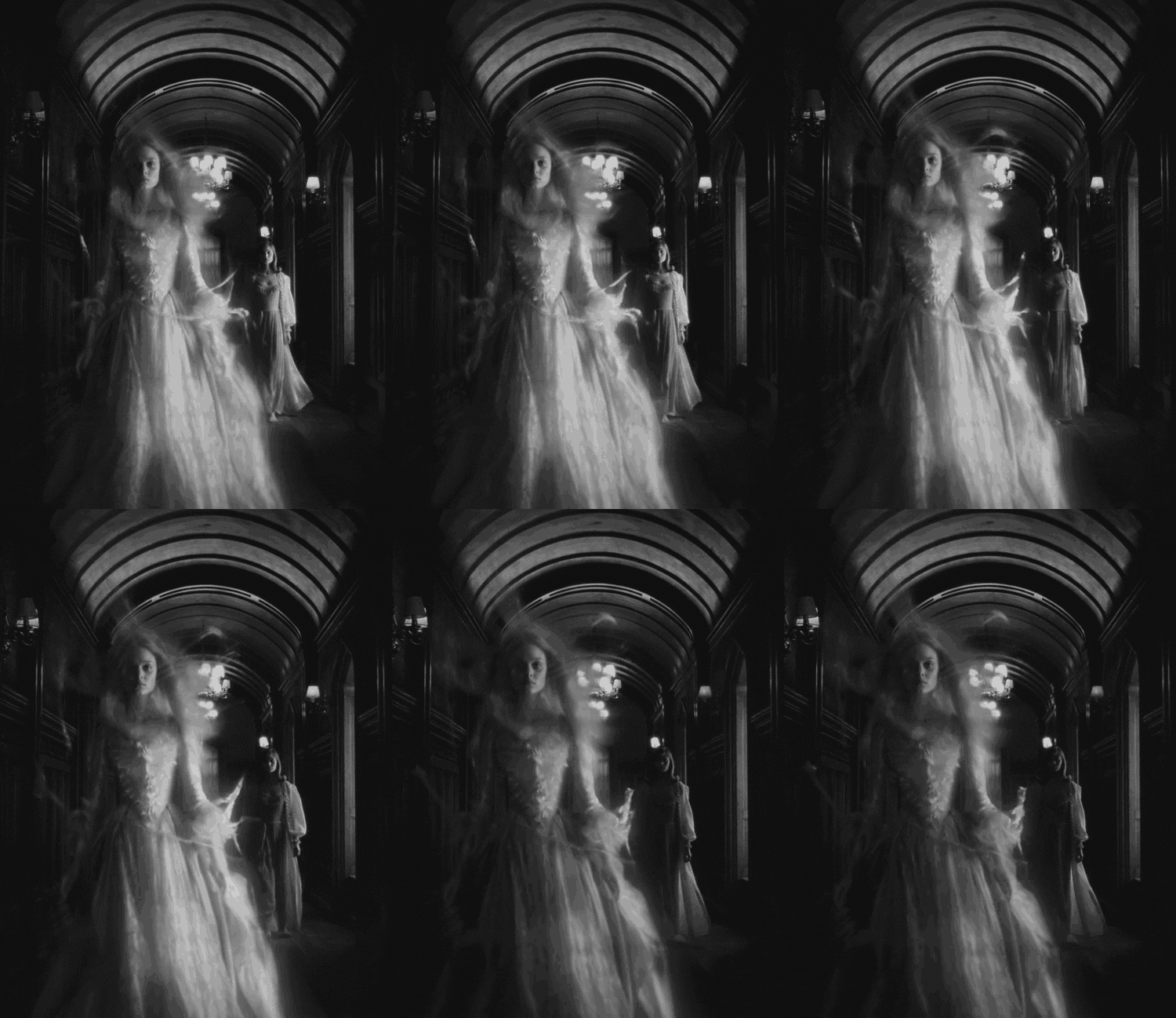
    They come at night during the Hour of the Wolf, that gap between night and dawn when most people perish, when the sleepless are haunted by their deepest fear, when nightmares become flesh, and when ghosts are at the zenith of their power.

    When they were alive they were families and neighbors who came to each other’s aid and fought for peace and tragically lost the battle before that peace had been established.

    Now, they step each pre-dawn from the void of the hereafter to remind us of how far we still must travel.

  • Tiny Stories: The Meddler

    Tiny Stories: The Meddler

    Popular belief has it that the universe is comprised of atoms. In reality, the universe is actually made up of…

    “Faith, my dear, I can assure you that there is not a misogynistic bone in my body. I fully agree that some women are born to lead, just as others are born to follow.”

    “And in which category do I fit?”

    “I cannot imagine you following a soul.”

    “Both perceptive and wise, but you failed to notice one important fact.”

    “And what might that be?”

    “I am not a woman at all.”

    “Don’t be absurd. My eyesight might not be as sharp as in my younger years, but I can see plain as day that you are most certainly a woman.”

    “The form is feminine, but I am in fact a Fatum.”

    “A what?”

    “A sort of supernatural being, born to meddle in the affairs of humankind.”

    Some women were born to lead, others to follow, but Faith discovered she wasn’t a woman at all. She was, in fact, a Fatum, a supernatural being born to magically meddle in the affairs of humankind and she was about to accomplish that on a global scale by marrying the leader of the free world.

  • Micro-Fiction Corner: Ain’t Yo Mama Mobbed Up?

    Micro-Fiction Corner: Ain’t Yo Mama Mobbed Up?

    Everybody in the neighborhood knew the bakery sold more than cannoli, although nobody could explain exactly what else was moving through the back room. Deliveries came after midnight. Men in expensive coats entered through the alley and left carrying pastry boxes far too carefully. The owner’s daughter insisted the family was legitimate, which only made people more certain something criminal was happening.

    Her boyfriend remained skeptical until the evening he arrived with flowers and found three men seated around the kitchen table discussing “the problem on Ninth Street.” They stopped talking when he entered. One of them slowly covered a ledger with a dish towel.

    Later, he asked the question he had been avoiding. “So yo mama’s mobbed up?”

    She nearly choked on her coffee. “My mother runs a bakery.”

    “Beg pardon,” the boyfriend said. “Ain’t yo mother also got a guy named Uncle Frankie who ain’t related to nobody.”

    “He delivers flour.”

    “Which explains why he carries a shoulder holster.”

    “He has back problems.”

    The explanation became harder to defend when her mother appeared at the apartment the next morning carrying a cake and asked whether anyone had been bothering him at work.

    He mentioned a supervisor who had denied his vacation request.

    That selfsame supervisor resigned by lunchtime.

    After that, small inconveniences began resolving themselves. Parking tickets disappeared. A noisy neighbor moved. A landlord suddenly remembered the security deposit. Each time he asked how any of it happened, his girlfriend blamed coincidence.

    Then he made the mistake of joking that he could use a raise.

    The following Monday, his boss called him into the office, pale and sweating, and offered thirty percent.

    That evening, he confronted his girlfriend.

    “Baby, lemme just be clear that I ain’t complaining, but I need to know whether your mom ‘n’ em is actually dangerous.”

    She considered the question carefully. “Dangerous to whom?”

    From the kitchen came the sound of her mother opening the oven.

    Dinner was a tasty lasagna. Not one single solitary soul mentioned the raise.

    On the way home, he noticed the flower shop downstairs had placed a handwritten sign in the window:

    WE DELIVER.

    And he damn sure believed it.