Tag: 13 for halloween

  • Thirteen for Halloween: Carcass Persistence

    Thirteen for Halloween: Carcass Persistence

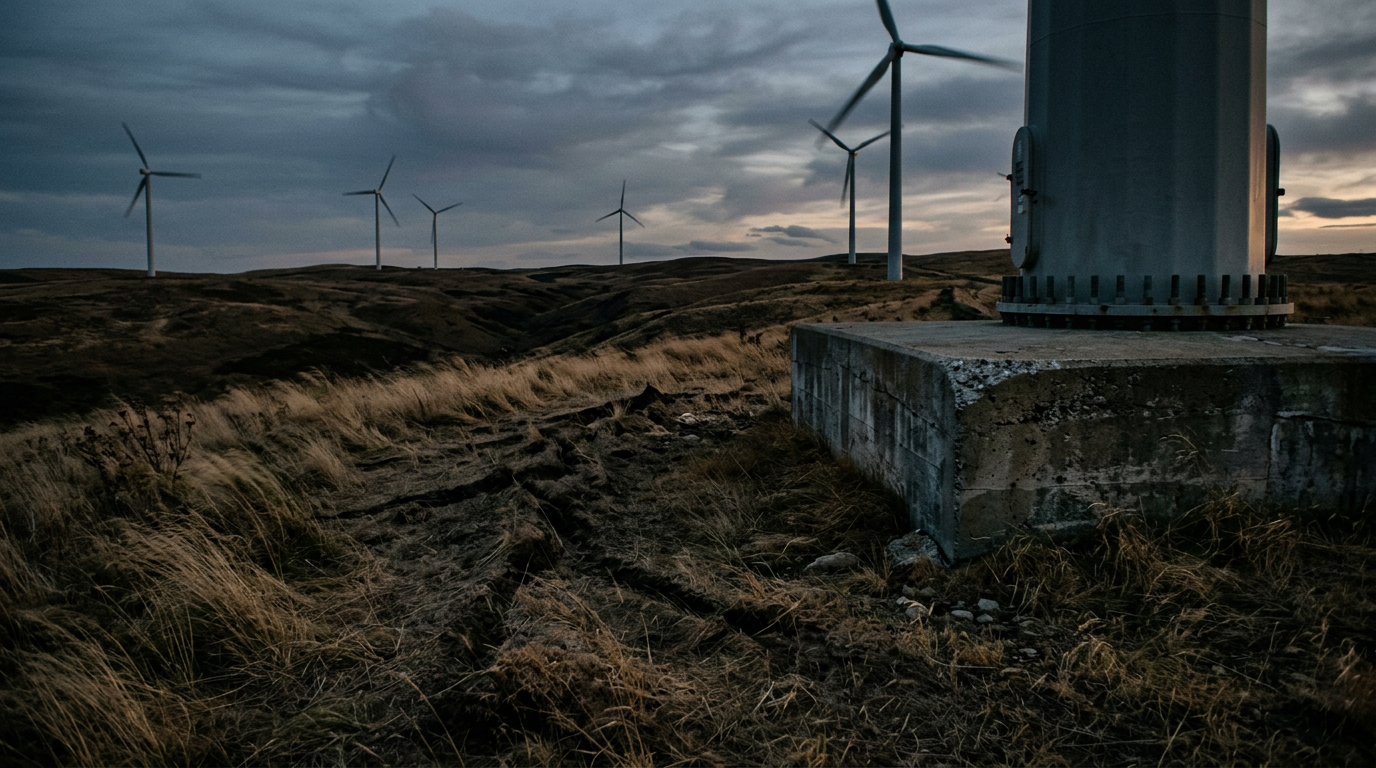
    Wind turbines across rugged grassland beneath a cloudy sky
    Carcass Persistence

    Denise Yost found the first wooden stake twelve feet from turbine C-17, its orange survey ribbon snapping above a patch of flattened buffalo grass. The stake marked a carcass location, though the carcass itself was gone. A laminated tag lay beneath the grass where something had pulled it free of the wire used to secure it.

    Maribel Soto photographed the stake before picking up the tag. “Third one this month.”

    “You sure nobody collected it?”

    “My people know these are persistence trials. They record anything they remove.”

    Denise crouched beside the depression. The ground around the stake showed no tire marks, boot prints, coyote tracks, feathers, blood, or drag marks. Wind had dried the upper inch of soil into a hard crust, and whatever removed the carcass left that crust mostly intact.

    “What was here?”

    “Quail surrogate. Placed at six twenty yesterday morning.”

    “Whole bird?”

    “Whole.”

    Denise pressed the end of a screwdriver into the soil near the stake. The crust broke over loose earth.

    Maribel photographed that too. “Camera got nothing.”

    “What kind of camera?”

    “The kind people ask that about when they hope I bought garbage.”

    “Did you?”

    “Six hundred dollars apiece.”

    “Then I’ll find another excuse.”

    Bryce Ketterman came around the concrete foundation carrying a tool bag and a handheld vibration meter. At thirty-one, he had six years on wind turbines and still possessed enough enthusiasm to climb three hundred feet before breakfast without resenting the person who assigned the work. Denise remembered possessing something similar, though she no longer trusted the memory.

    “Tower readings are normal,” he said. “Gearbox trend is clean. Generator bearing looks good. Foundation bolts aren’t giving us anything.”

    Denise rose and brushed dirt from her knee. “Maribel lost another trial carcass.”

    “Coyotes?”

    “No tracks.”

    “Badger?”

    “Maybe.”

    Maribel held up the torn tag. “A badger with wire cutters.”

    The thin stainless tie had separated close to the eyelet. Denise took it and bent the broken end between her fingers. It showed no clean shear. The metal had stretched before parting.

    “Could still be an animal,” she said.

    “That’s why I called you instead of the newspaper.”

    The three of them crossed the pad toward the service truck. C-17 turned above them at eleven revolutions per minute, the rotor making its broad sweep against a pale October sky. Denise felt the machine mostly through habit. The nacelle produced vibrations she could identify from instrument traces far better than through her boots, yet certain conditions sent a faint repeating tremor into the concrete apron beneath the tower.

    Maribel opened a tablet and showed her the monitoring map.

    C-17 sat near the center of a cluster of five turbines marked with red circles. The wildlife contractor searched designated plots beneath selected turbines during migration season, recording actual bird and bat fatalities along with controlled carcass trials used to estimate how quickly scavengers removed remains before searchers could find them. Losing a trial carcass was expected. Losing several within hours was information.

    “C-17, C-18, C-23,” Maribel said. “Everything else is within the normal persistence range. At these three, small carcasses disappear fast. Two large-bird surrogates moved between checks. One was thirty-seven feet from placement.”

    “Camera?”

    “Nothing useful. Grass moves. Image skips. Bird is gone.”

    Bryce enlarged the map. “Those three form a triangle.”

    “So do any three points,” Denise said.

    “They’re adjacent.”

    “That part matters.”

    C-18 rotated half a mile south. C-23 stood farther east across grazing land leased from a cattle operation. All three belonged to the same collector circuit, though four other turbines shared it and showed no wildlife anomaly.

    Denise asked Maribel to send the carcass data and camera footage. She promised to check foundation inspections, construction records, and maintenance history for anything the three turbines shared.

    Maribel closed the tablet. “I also need you to see something at twenty-three.”

    “Mechanical?”

    “I don’t know.”

    “That answer usually costs somebody money.”

    “It’s your company today.”

    They drove east.

    C-23 occupied a slightly lower stretch of prairie where the access road followed a shallow drainage. Cattle watched the service truck from behind a wire fence, their interest fading once nobody produced feed. Denise parked on the gravel pad and noticed the soil disturbance before Maribel pointed it out.

    A shallow furrow ran from the edge of the search plot toward the turbine foundation.

    It was eighteen inches wide in places and narrower elsewhere, with broken grass leaning inward. Denise followed it for thirty feet. No spoil pile lined either side. Whatever displaced the soil had done so from below and left the surface sagging afterward.

    Bryce planted one boot beside the furrow. “Prairie dog tunnel collapse?”

    “Too wide.”

    “Badger chasing one?”

    “Maybe.”

    Denise disliked the number of maybes already accumulating.

    Maribel led them around the foundation. Another depression appeared near a junction box, then vanished beneath gravel. She had marked the end with a flag.

    “We found a kestrel here Tuesday,” she said. “Actual fatality. Fresh. Wing injury consistent with collision. I photographed it, recorded it, bagged it, and put it in the freezer according to protocol.”

    “So this isn’t where it disappeared.”

    “No. This is where I found feathers yesterday.”

    Maribel opened a photograph on her tablet. Seven small feathers protruded from a crack in the soil. The bird in Tuesday’s photograph possessed the same barred coloration.

    “You sure they’re from the kestrel?” Bryce asked.

    “Reasonably. We’ve sent them for confirmation.”

    Denise moved toward the furrow again. “Something cached part of another carcass.”

    “Could be.”

    “You hate saying that.”

    “I hate having explanations that fit until I walk ten feet farther.”

    Maribel showed her the next photograph.

    The soil had opened around the feathers after the picture was taken. Inside the narrow cavity lay the remains of a small bird, compressed and dirty, several feet below the original ground surface.

    Denise returned the tablet. “Badger.”

    “Badgers leave excavated dirt.”

    “Sinkhole.”

    “Three of them?”

    “Burrowing animal using an old construction void.”

    “That one I’d take.”

    Denise contacted site operations and requested subsurface inspection around C-23 before anybody drove heavy equipment over the disturbed ground. Until then, she marked an exclusion area around the furrow and photographed it for the maintenance record.

    The issue would probably become geotechnical. Wind-farm foundations tolerated enormous cyclic loads, and nobody wanted unexplained voids developing beside one. Denise cared more about that than the missing birds.

    By Wednesday afternoon, she cared about both.

    The construction records showed no meaningful difference among C-17, C-18, and C-23. Their foundations came from the same design package as eleven surrounding turbines. Concrete batches differed. Installation crews overlapped. Cable trenches followed different routes. Soil borings showed variations expected across the site, with layers of silt, clay, and weathered limestone depending upon location.

    The three turbines shared one operational habit.

    They ran more consistently than their neighbors.

    A software restriction on several nearby units reduced production during certain grid conditions. C-17, C-18, and C-23 fell outside that control group because of how their collector circuit was configured. During the previous six weeks, each accumulated substantially more operating hours than the surrounding turbines.

    Denise found the correlation interesting and useless.

    Maribel found it interesting enough to call.

    “Scavengers like spinning turbines now?”

    “I didn’t say that.”

    “You called me with a spreadsheet.”

    “I’m giving you something the three have in common.”

    “Anything underneath them?”

    “Nothing in the construction records.”

    “You believe the voids are animal?”

    “I believe you found disturbed soil.”

    “That’s diplomatic.”

    “It’s maintenance.”

    Thursday morning brought a planned collector-system inspection that required C-17, C-18, C-22, C-23, and C-24 to remain offline for several hours. Denise intended to use the outage to inspect C-23 more closely after electrical isolation was established.

    She met Bryce at the operations building before seven.

    Maribel arrived carrying two hard plastic cases and a paper sack from a bakery thirty miles away.

    “You aren’t on the maintenance permit,” Denise told her.

    “I’m not climbing anything.”

    “You’re also not going inside the tower.”

    “I brought doughnuts.”

    “That gives you parking privileges.”

    Bryce took the bakery sack. “I’ll supervise these.”

    Denise signed the energy-control documentation, reviewed the shutdown boundaries with control, and drove them to C-23 after the affected turbines were isolated. The rotor overhead was motionless, blades feathered out of the wind. Several neighboring turbines beyond the maintenance group continued turning.

    The pad felt different under Denise’s boots.

    She noticed because she spent enough time around operating turbines for their absence to register physically. No rotational pulse traveled through the foundation. Wind moved over the prairie and through grass with plenty of noise above ground, while the concrete itself felt inert.

    Bryce unpacked the vibration meter.

    “You want baseline readings?”

    “Foundation and ground. Same points you did Tuesday.”

    Maribel headed toward the flagged furrow.

    Denise called after her. “Stay off the disturbed section.”

    “I’m beside it.”

    “That sentence creates paperwork.”

    Maribel moved farther away.

    Bryce placed the sensor against the foundation and began logging measurements. Denise inspected the base flange, grout line, drainage, and surrounding pad while he worked. Nothing showed settlement severe enough to explain the furrows.

    Maribel crouched twenty yards away and raised one hand.

    Denise walked toward her.

    The surface depression had lengthened.

    It extended beyond Tuesday’s flag, crossed several feet of intact grass, and ended near the edge of the gravel pad.

    “Could’ve developed yesterday,” Denise said.

    “I checked it at four thirty.”

    “So overnight.”

    Maribel pointed at the ground.

    A second narrow depression branched from the first.

    Denise measured both with her eyes. “Nobody drives here?”

    “Searchers park on the pad.”

    “Livestock?”

    “Fence has been closed.”

    Bryce joined them with the meter. “Background vibration is way down.”

    “The machine is off.”

    “I know why.”

    “Then congratulations.”

    “I mean soil readings. Tuesday I was picking up operating harmonics sixty feet out. Here, almost nothing.”

    Maribel straightened. “Do that at the furrow.”

    Denise started to tell her a vibration meter would not diagnose burrowing animals, then decided watching Bryce test it would cost less time than arguing.

    He planted the sensor beside the depression.

    The reading remained low.

    Maribel walked ten paces away and stamped one boot.

    A faint movement passed along the furrow.

    Nobody spoke for several seconds.

    Denise focused on the grass where she thought she saw it. The surface remained still.

    “Do that again,” Bryce said.

    Maribel stamped.

    This time Denise caught it clearly. Loose soil at the furrow’s end shifted toward Maribel by perhaps an inch, then settled.

    “Back up,” Denise said.

    Maribel retreated to the gravel pad.

    Bryce stared at the sensor. “That transmitted.”

    “Of course it transmitted.”

    “The movement followed it.”

    “Possibly.”

    Maribel removed a half-full water bottle from her pack and threw it into the grass.

    It struck fifteen feet beyond the depression.

    The furrow extended.

    The movement resembled a seam opening beneath cloth. Soil lifted, traveled several feet toward the bottle, and fell behind whatever passed underneath. The progression ended short of the bottle.

    Bryce said, “Prairie dogs don’t do that.”

    Denise took out her radio. “Control, Yost at C-23. I want the ground exclusion expanded around this turbine. Hold vehicle access.”

    The operator asked whether she had identified a foundation defect.

    “No. Potential subsurface void and animal activity.”

    “Animal?”

    “Put that on the temporary restriction.”

    She ended the call.

    Maribel spoke quietly. “Tuesday’s carcass was down there.”

    “Probably.”

    “What waits under an operating turbine for dead birds?”

    Denise had no useful answer.

    Bryce tossed a small wrench into the grass before Denise could prevent him.

    “Bryce.”

    The wrench struck twenty feet from the furrow.

    Two patches of ground moved.

    One followed the original depression. The other began six feet away where the surface had appeared undisturbed.

    Bryce’s satisfaction disappeared. “Okay.”

    Denise pointed toward the pad. “Nobody throws anything else.”

    They returned to the concrete foundation.

    Denise radioed control again and asked whether any operating-state changes occurred at neighboring units during the past ten minutes.

    “Maintenance group is locked out. Everything outside it normal.”

    “How close is the nearest running turbine?”

    “C-19, about eight-tenths mile northwest.”

    “Any reason we can’t bring C-22 back later if we clear the lock and maintenance release?”

    “Collector inspection includes twenty-two. Why?”

    “Checking something.”

    “You’ll need the electrical lead to release it.”

    “I know.”

    A dry snapping sound came from the grass.

    The water bottle disappeared.

    The ground opened beneath it and closed badly, leaving a shallow oval depression.

    Maribel moved several feet farther onto the concrete.

    Bryce used the vibration meter again. “Whatever it is, it’s below our range.”

    “You measured movement from the impact.”

    “I measured vibration. I can’t tell you what received it.”

    Denise called the site manager and described what they observed in plain terms: subsurface animal activity responding to surface impacts, multiple disturbances, unknown voiding near the foundation. She requested wildlife and geotechnical response and suspended their ground inspection.

    The manager agreed immediately, which Denise appreciated.

    They only needed to leave.

    Bryce gathered equipment from the pad. Maribel packed her camera cases. Denise retrieved the lockout paperwork from the tower doorway and started toward the truck.

    The ground shifted beside the access road.

    She changed direction before thinking about it.

    “Back to the foundation.”

    Bryce had taken three steps off concrete. Soil broke under his right boot, and his leg dropped to the knee.

    He shouted and fell sideways.

    Denise caught the back of his harness before his other leg entered the collapse. Maribel grabbed his shoulder strap. Together they dragged him onto gravel as the hole widened behind him.

    Something struck the underside of the crust.

    Bryce kicked free.

    A pale surface rolled through the opening, visible for less than a second: wet, segmented or folded, thick enough that Denise could not fit what she saw into any animal she knew. The cavity collapsed before a head or limb appeared.

    Bryce scrambled onto the concrete apron under his own power.

    His boot remained on his foot. Three shallow cuts crossed the leather above the ankle, parallel and clean enough to expose lighter material beneath the black outer layer.

    Denise checked his leg through the boot opening. “Skin broken?”

    “I don’t think so.”

    “You don’t think or you checked?”

    Bryce pulled his pant leg up. Red pressure marks showed above his sock, with no blood.

    Maribel took several photographs of the collapsed hole from the concrete.

    Denise keyed the radio.

    “Control, Yost at C-23. We have an employee near miss involving subsurface animal activity. Nobody injured. We are sheltering at the tower foundation and need vehicle approach suspended.”

    The operator’s response came immediately. “Do you need emergency medical?”

    “Negative. Keep vehicles out until we determine a safe approach.”

    Bryce lowered himself against the tower door, breathing hard. “I’m going to hate that phrase when I read the report.”

    “You can write your own version.”

    “Mine says the ground bit me.”

    “Put that in and safety will make you pee in a cup.”

    Maribel moved the camera lens toward the grass beyond the pad.

    Three separate tracks now marked the surface.

    All pointed toward the concrete.

    Denise watched them advance by increments when someone shifted weight.

    “Stay where you are.”

    Bryce held up both hands. “Very committed to that.”

    The foundation gave them a circle roughly twenty meters across. The truck sat forty yards away on the gravel access spur. That distance had been trivial six minutes earlier.

    Denise opened the turbine operating display on her work tablet.

    C-19 continued producing northwest of them. C-20, farther north, also ran. The five-turbine maintenance group formed a quiet patch between those machines and the crew at C-23.

    She opened historical vibration traces Bryce sent earlier in the week.

    C-23 operating.

    C-23 offline.

    The difference was obvious.

    Maribel spoke from several feet away. “You think the turbine keeps them down?”

    “No.”

    “You’re pulling up vibration data.”

    “I think the turbine makes it harder for them to find smaller movement.”

    Bryce shifted carefully against the tower. “Sensory masking.”

    Denise enlarged the operational map. “Maybe.”

    “Turn this one on.”

    “Our locks are on it.”

    “Take them off.”

    “Electrical work is still inside the collector boundary.”

    “Then one next to us.”

    C-22 sat about half a mile west. It shared the maintenance isolation and could not return until the electrical lead released it. C-21 lay farther southwest and remained operational but was producing poorly because of wind position.

    Denise radioed control.

    “I need operating status on C-21.”

    “Online, nine hundred kilowatts.”

    “Can you increase output?”

    “Wind sets that.”

    “Any curtailment?”

    “None.”

    “Give me vibration trend at the tower base if you have structural monitoring.”

    The operator needed a minute to pull it up.

    While they waited, Maribel placed her camera case on the concrete and removed a monopod.

    “Whatever you’re thinking, don’t hit the ground with that.”

    “I’m thinking I paid nine hundred dollars for a lens I left beside the truck.”

    “You’re abandoning it.”

    “I already decided that.”

    The operator returned. C-21 showed ordinary operating vibration. C-19 and C-20 did as well.

    Denise asked for C-22’s work status.

    “Electrical lead says they can clear twenty-two from the collector inspection in about fifteen minutes. Your mechanical lock still applies.”

    “We haven’t entered the tower past the base. Bryce, confirm your personal lock.”

    He pulled the key from his pocket. “Mine’s on.”

    Denise’s was beside it on the isolation point.

    Removing their locks would require leaving the concrete only briefly because the relevant isolation equipment was inside the tower base. They could clear their own maintenance scope, but energization would still wait on electrical release and the formal restart sequence.

    Denise told control to prepare C-22 for return once all authorized employees cleared.

    The tracks in the grass reached the gravel.

    Movement slowed there.

    Loose stones clicked against one another while something passed beneath them.

    Maribel heard it too. “How many?”

    “At least three.”

    “That’s encouraging.”

    “How?”

    “I was worried it was one enormous thing.”

    Bryce gave a strained laugh.

    Denise entered the tower with Bryce to remove their maintenance locks and certify their portion of the work clear. They shut the door again and remained outside on the foundation afterward because the steel tower offered no useful escape once C-22 restarted; their immediate problem involved reaching the truck rather than surviving inside a cylinder for several hours.

    Control called eleven minutes later.

    “Electrical has released twenty-two. Confirm all personnel clear of C-22.”

    Denise confirmed.

    “Restart sequence beginning.”

    C-22’s rotor blades slowly changed pitch in the distance.

    The machine aligned into the wind. Rotation began reluctantly, one blade descending before another gathered enough aerodynamic force to follow. The rotor accelerated over the next several minutes.

    Bryce monitored the vibration meter against the concrete.

    “Nothing yet.”

    C-22 increased speed.

    “Getting something.”

    The nearest track beneath the gravel changed direction.

    Denise saw the movement veer several degrees west.

    Bryce raised the meter. “Amplitude’s coming up.”

    Maribel watched the second furrow falter. Its advance no longer followed every change in their footing.

    Denise keyed the radio. “Bring C-24 back if maintenance can release it.”

    Control told her another crew still held locks.

    “Leave it. How about C-18?”

    “Same electrical group as twenty-two. Available once your site manager approves.”

    “Get approval.”

    The site manager was already listening and authorized the return.

    C-18 began its restart several minutes later.

    The effect became unmistakable.

    Movement around the pad turned erratic. One shallow ridge traveled toward the access road, paused, then curved toward the operating turbine half a mile away. Another disappeared entirely beneath gravel.

    Denise retrieved three steel nuts from the tool bag.

    Bryce watched her. “I thought nobody was throwing anything.”

    “I changed the rule.”

    She tossed one into the grass away from the truck.

    The nut struck.

    No response followed.

    She threw another farther.

    A patch of ground moved toward it, overshot by several feet, and continued in the wrong direction.

    “Masking,” Bryce said.

    “Looks that way.”

    “Service truck is going to make more vibration than we do.”

    “Which means we don’t start it until we’re inside.”

    Getting there remained the dangerous part.

    Denise radioed control and told them nobody should change the operating state of C-18 or C-22 until she reported clear. She gave Maribel the lightest camera case and made Bryce leave the tool bag. Tools could be replaced. None of them argued.

    They left the foundation together.

    Denise kept them on the gravel because it showed movement better than grass. Her boots produced crunching impacts she could feel through the soles, each one louder to her now that she knew something underneath might be listening.

    No furrow turned toward them.

    Halfway to the truck, Maribel pointed toward the south edge of the pad.

    Soil lifted.

    The movement began crossing toward their path.

    C-18 slowed.

    Denise heard the difference before control called.

    “Yost, eighteen just tripped on a converter fault.”

    “Can you reset remotely?”

    “Checking.”

    The furrow gained direction.

    “Keep moving,” Denise said.

    Bryce reached the truck first and opened the rear passenger door. Maribel climbed in. Denise followed, pulled the door shut, and slapped the back of the driver’s seat.

    Bryce was already behind the wheel.

    “Start it.”

    The diesel turned over.

    The ground disturbance vanished under a scatter of gravel as the truck’s engine vibration entered the roadbed.

    Bryce drove.

    Denise kept the radio in her hand until they reached the next operating turbine. Control restored C-18 before they entered the main service road, but by then C-22’s steady rotation remained behind them and C-19 turned ahead.

    Nobody followed the truck out of the maintenance cluster.

    The site shut ground access to five turbines for the rest of the day.

    By evening, the restricted area expanded to eight.

    Maribel’s wildlife team sent photographs from earlier carcass-persistence trials. Several missing carcasses clustered near the three turbines with the highest operating hours. Search cameras showed coyotes, ravens, beetles, one feral cat, maintenance vehicles, survey crews, and thousands of empty frames containing grass.

    None showed what removed the birds.

    A geotechnical contractor arrived the following morning and refused to drill after Denise explained what happened. The refusal saved everyone several hours of pretending a bore rig was an intelligent first response.

    State wildlife officials received Maribel’s records. The company notified occupational safety personnel and began preparing an incident report describing Bryce’s near miss. Someone higher in the organization asked whether the pale material Denise saw could have been exposed conduit wrap, geotextile, plastic drainage material, or an optical effect inside collapsing soil.

    Denise answered each possibility seriously.

    Then she sent photographs of the cuts in Bryce’s boot.

    For the next three days, the wind center operated under temporary restrictions. Adjacent turbines remained online during ground-level work whenever conditions allowed. No technician approached C-17, C-18, or C-23 alone. Cluster shutdowns required a ground-access review. Wildlife crews discontinued carcass placement in the affected area.

    The policy solved nothing about nights with insufficient wind.

    Nobody pretended otherwise.

    On Friday afternoon, Denise met Maribel at the operations building to review the week’s records. Bryce was inside writing his third version of the near-miss narrative because safety wanted him to replace “something grabbed my boot” with an observable description.

    Maribel placed a freezer inventory sheet on the table.

    “One more problem.”

    “Of course.”

    “The trial carcasses we used around those turbines came from the same freezer stock we used everywhere else.”

    Denise read the inventory numbers. “Meaning?”

    “If something learned to associate turbine sites with food, we helped.”

    “You put dead birds there.”

    “That is how persistence trials work.”

    “I know.”

    “We put them at turbines, came back on predictable schedules, replaced them in new trials, and documented what disappeared.”

    Denise returned the sheet. “You didn’t create whatever is under there.”

    “I fed it.”

    “Probably.”

    Maribel seemed relieved by the lack of reassurance.

    Bryce emerged from the safety office carrying several pages. “They changed ‘grabbed’ to ‘experienced sudden resistance at lower right leg.’”

    “Beautiful,” Denise said.

    “I feel safer already.”

    He dropped the paperwork onto the table. His replacement boots were newer and more expensive than the pair in the evidence locker.

    Denise opened the operating map.

    Wind speeds were forecast to fall after midnight.

    C-17, C-18, and C-23 would likely remain online for several more hours before output dropped naturally. No maintenance crews were scheduled nearby. The exclusion zone would remain empty until morning.

    Maribel leaned over the map. “What happens when all three quit turning?”

    Denise checked the overnight work schedule, then the ranch parcels surrounding the site. Cattle occupied the section east of C-23. A farmhouse sat more than a mile south. County Road 8 crossed the wind center along its northern boundary.

    She called operations control and requested temporary fencing around the affected access roads before dusk. She added wildlife notification, rancher contact, and a prohibition on overnight foot access.

    The operator entered the restrictions.

    Before Denise closed the map, C-17’s production dropped slightly with the weakening wind.

    On the wildlife monitor beside her, the carcass-persistence report still listed Tuesday’s missing kestrel among the fatalities whose final disposition could not be determined.

    The field contained a standard code for scavenger removal.

    Maribel left it blank.

    ©2026 Rhyan Scorpio-Rhys
  • Thirteen for Halloween: The Duplicate Address

    Thirteen for Halloween: The Duplicate Address

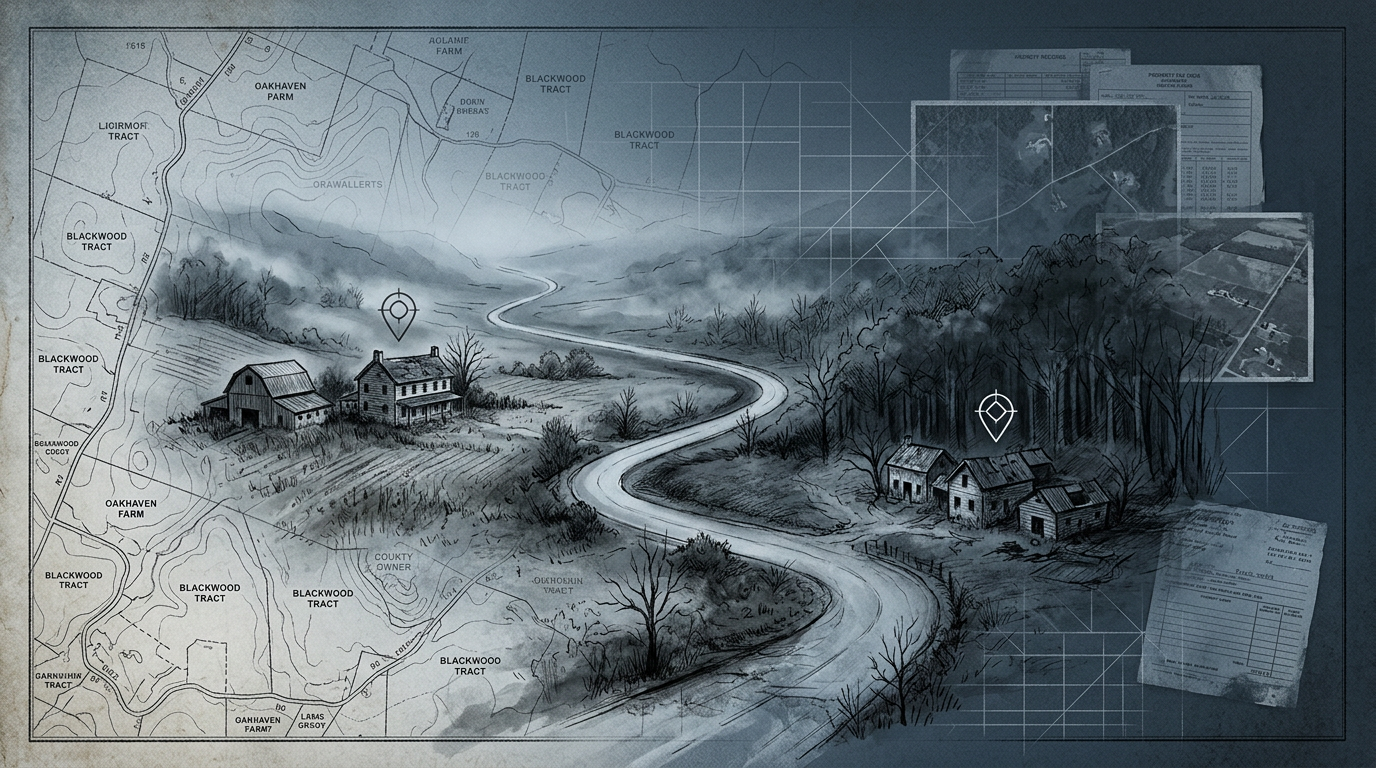
    Illustrated rural map with winding road, farms, forest, and location markers
    The Duplicate Address

    Lori Bender found the duplicate at 8:43 on Monday morning, thirty-seven records into a quality-control report that contained 1,126 errors and approximately nine hundred reasons for people to blame someone else.

    Most were harmless. A private road lacked a suffix in one layer and carried it in another. Four mobile homes shared coordinates because an old conversion placed every unit at the park entrance. A township boundary clipped the corner of a garage. Several addresses contained directional prefixes that nobody living on the roads actually used. The county’s transition work for Next Generation 911 had collected twenty years of such debris and presented it back to Lori as though every inconsistency represented a fresh discovery.

    The duplicate was different only because both records appeared clean.

    214 Harris Run Road.

    Two site points. Two occupied structures. Two parcel numbers. Two driveways separated by nearly a quarter mile. Both belonged to Wexler Township, both passed road-name validation, and neither contained the apartment, unit, rear, or secondary-structure information that sometimes explained apparent duplicates.

    Lori opened the first record. The house sat close to Harris Run Road on a narrow parcel stretching uphill toward woods. County imagery showed a two-story farmhouse, detached garage, vegetable beds, and a shed that had moved three times between aerial surveys. Assessor records belonged to Blaine Turocy, who purchased the property in 1978.

    The other 214 sat farther south, beyond a bend where Harris Run crossed under a transmission corridor. Sheryl Danner owned that parcel. Her single-story house dated from 1986, though the county did not create a separate parcel for it until several years later.

    Lori checked the road centerline ranges. The second property should never have been 214. Based on the established sequence, 226 fit cleanly between its neighbors.

    She opened the address history.

    The oldest electronic record for Turocy showed 214 Harris Run Road from the first countywide conversion. Danner’s property entered the current database during a 2004 migration, also as 214. No change order appeared in the scanned folder attached to the record.

    Lori picked up the desk phone.

    Blaine Turocy answered after enough rings for her to assume voicemail would take over.

    “Mr. Turocy? Lori Bender with Lanning County Public Safety. I work with the county addressing office.”

    “If you’re selling signs, I bought one off you people already.”

    “We don’t sell signs. I’m calling about your house number.”

    “That better not cost anything either.”

    Lori opened his parcel map while he spoke. “I’m cleaning up an address conflict on Harris Run. I need to confirm the number displayed at your driveway.”

    “Two-fourteen. Big black numbers on a white board. Been two-fourteen longer than you’ve been working there.”

    “That’s probably true. Do you remember when the county assigned it?”

    “The county didn’t assign me anything. That address was there when we bought the place.”

    “Do you still have paperwork from the purchase?”

    A chair or table scraped at his end of the call. “Lady, I got paperwork from Nixon.”

    “That could make you very useful to me.”

    Turocy laughed once. “My wife called it hoarding. You county people finally found a respectable name for it.”

    He agreed to search for an old tax notice or deed showing the address. Lori thanked him and called Sheryl Danner.

    Danner answered quickly and knew why the county might be calling before Lori finished introducing herself.

    “This is about the address again, isn’t it?”

    Lori moved her hand away from the keyboard. “Again?”

    “They tried changing it when my mother lived here. Nineteen ninety-something. She raised hell until somebody told her to forget about it.”

    “Do you remember what number they wanted to give her?”

    “No. She kept the letter, though. It should be with the house papers.”

    “That would help. The current county system shows your property and another house as 214 Harris Run.”

    “I know the other house. The old place before the bend.”

    “Yes.”

    “He gets our mail sometimes.”

    “How often?”

    “Christmas cards mostly. Once I got his new checks. He brought them down himself and told me if I spent any he wanted half.”

    Lori entered a note. “Have you ever had trouble with emergency services finding your house?”

    “Ambulance came here for my mother in 2019. They found us.”

    “Any trouble with deliveries, utilities, permits?”

    “GPS sends people up to him once in a while. Amazon figured it out years ago.”

    None of that surprised Lori. Residents often compensated for defective addresses so successfully that bad records survived for decades. They gave drivers landmarks, added instructions to online orders, learned which version of an address each company preferred, and eventually forgot they were maintaining a private correction layer around themselves.

    “I may need to assign your property a different civic number,” Lori said. “Nothing is changing today. I’m researching the history first.”

    Danner became quiet for a few seconds. “How much trouble does that make for me?”

    “Some. Driver’s license, insurance, utilities, deliveries, banks. We provide an official change notice, and there’s usually a transition period.”

    “You said nothing’s changing today.”

    “Correct.”

    “Then research away. I’ll find Mom’s letter after work.”

    Lori ended the call and created a case.

    By ten fifteen, Blaine Turocy emailed photographs of three documents taken on a kitchen table covered by a red-checkered cloth. A 1981 property-tax notice used 214 Harris Run Road. So did a homeowner’s insurance declaration from 1984 and a faded piece of correspondence from the township concerning a drainage complaint.

    Turocy’s claim was settled as far as Lori was concerned.

    At 10:28, she created 226 Harris Run Road in the staging layer for Danner’s parcel. Staging records existed for review and quality control before publication to the county’s authoritative address layer. She adjusted the point to the center of the habitable structure, checked the driveway connection, confirmed the odd-even sequence, added a note explaining the duplicate, and saved the proposed assignment.

    She did not approve it.

    At 10:51, her desk phone rang.

    Sheryl Danner did not bother with a greeting. “What did you change?”

    “I haven’t changed anything.”

    “My grocery account says 226 Harris Run now.”

    Lori reopened the case. “Which grocery account?”

    “Faber Market. I’ve used their delivery service since COVID. They emailed me twenty minutes ago asking me to confirm my corrected service address.”

    “Can you forward the email?”

    “I thought you said nothing was changing today.”

    “Nothing was supposed to.”

    “Those sound like different sentences from where I’m sitting.”

    Lori gave her county email address and kept Danner on the line while she checked the production layer. Danner remained 214. The nightly export had not run. The staging record for 226 showed Lori as creator, with no approval user and no publication timestamp.

    The forwarded email arrived.

    We’ve updated your delivery location to improve service accuracy. Please verify: 226 Harris Run Road.

    The message time was 10:46.

    Lori checked the county application logs. Nobody besides her had opened the proposed record. No public API exposed staging data. The grocery company was not among the county’s address-data subscribers anyway.

    “Mrs. Danner, did you enter 226 anywhere yourself?”

    “Why would I do that?”

    “I have to rule it out.”

    “You gave me that number for the first time just now.”

    Lori had not. She mentioned a possible new civic number during the earlier call and deliberately withheld the number because it had not been approved.

    “You’re right,” she said. “Please don’t confirm anything in that email. I’m going to find out where they got it.”

    “That was already my plan.”

    Danner disconnected.

    Lori checked the assessor’s public property search next, mostly because it was convenient. The parcel still belonged to Sheryl Danner. The parcel number, acreage, assessed value, deed reference, and structure details remained unchanged.

    The situs address displayed 226 Harris Run Road.

    Lori opened the internal assessor database. Same result.

    She called downstairs.

    A property-records technician answered and searched the parcel while Lori explained what she was seeing.

    “Shows 226 here.”

    “Who changed it?”

    “System says address refresh.”

    “From what source?”

    “County address layer, I assume.”

    “It isn’t in the county address layer.”

    Keys clicked at the other end. “Well, something fed it.”

    “When?”

    “Ten thirty-three.”

    Five minutes after Lori saved the proposed record.

    “Can you restore 214?”

    “I can overwrite the situs field manually, but if your next refresh sends 226 again, we’ll be right back here.”

    “My next refresh won’t send it. We never sent the first one.”

    The technician gave a small, uncertain laugh. “Then I’ve got nothing useful for you.”

    By eleven thirty, Lori had enough useful information to become deeply annoyed.

    The staging server showed no outbound transaction. The production database showed no change. The county integration logs contained no reference to 226 Harris Run Road. The GIS administrator checked replication jobs and found nothing. Assessor staff restored Danner’s situs address to 214 manually.

    At 11:42, the county utility liaison called Lori directly.

    “I’ve got Penn Allegheny asking whether you renumbered something on Harris Run.”

    Lori pinched the bridge of her nose and immediately became irritated with herself for doing it. “Which address?”

    “Two-fourteen to two-twenty-six.”

    “We haven’t issued the change.”

    “They have a service-location update dated this morning.”

    “Who sent it?”

    “That’s what they’re asking us.”

    Lori pulled Danner’s utility-service map onto a second monitor. The meter identifier remained attached to the correct parcel.

    “Tell them to hold the existing address.”

    “I already did. You want the request ticket?”

    “Yes. Send the whole thing.”

    The service-location update showed a source category Lori did not recognize. It did not name Lanning County. It did not name the utility. A generic field labeled ADDRESS AUTHORITY contained the county’s standard jurisdiction code, but the format belonged to neither organization.

    The timestamp was 10:36.

    Lori printed the page.

    At noon, she ate half a turkey sandwich while comparing system logs. By twelve twenty, she had forgotten where she placed the other half and found it beneath a road-centerline printout. She threw it away rather than decide whether toner dust counted as seasoning.

    A building-code clerk called shortly afterward.

    “You doing something with Harris Run?”

    Lori lowered the receiver slightly before answering. “Apparently everybody is.”

    “We got an online permit inquiry for 214. System attached it to the Turocy parcel, but the applicant lives at the Danner property.”

    “What kind of permit?”

    “Deck repair. Nothing submitted yet. He searched the address, and the parcel lookup gave him the other house.”

    “That has happened before.”

    “Probably. The weird part is the alternate-address field. It lists 226 for Danner now.”

    “Where did it get that?”

    “If I knew, I’d be telling you instead of asking.”

    Lori opened the countywide address QC report again.

    The duplicate error remained.

    She refreshed.

    The two 214 points vanished from the duplicate list.

    Her first reaction was relief. Then she searched the map.

    Both structures remained visible. Turocy’s point existed exactly where it belonged. Danner’s point existed exactly where it belonged. Each record still displayed 214 Harris Run Road.

    The QC application now treated them as one feature.

    Lori opened the raw geometry table. Two unique identifiers remained. Two coordinate pairs remained. Two parcel links remained. The quality-control system returned a single record count.

    She exported the features into a local project disconnected from the county network.

    Two points appeared.

    She ran her own duplicate query.

    Two records.

    The enterprise QC tool returned one.

    Lori called the GIS administrator and asked him to run the same check from his workstation. He got one.

    “Could be indexing corruption,” he said.

    “Only on these two records?”

    “Weird things happen.”

    “They usually happen in batches.”

    “I can rebuild the index tonight.”

    Lori closed the report. “Leave it alone for now.”

    She withdrew 226 Harris Run Road from staging at 1:07.

    The proposed record disappeared cleanly.

    At 1:19, Faber Market emailed Sheryl Danner again and restored her delivery address to 214.

    At 1:31, the assessor’s situs field changed from 214 to 226 a second time.

    At 1:38, Penn Allegheny’s service record reverted to 214.

    At 1:46, the building-code system removed 226 from its alternate-address field and attached Danner’s pending inquiry to Turocy’s parcel permanently.

    Lori called the building department and asked them to delete the inquiry.

    “We can’t delete an applicant session,” the clerk said. “He has to abandon it or submit it.”

    “Can you detach the parcel?”

    “I tried.”

    “What happened?”

    “It attached again.”

    Lori considered another round of logs, calls, and screenshots. None would tell her why a deleted staging record continued to exist elsewhere or why independent systems were choosing different versions of it.

    She took the county vehicle keys instead.

    Harris Run Road left the borough fringe behind within five minutes and narrowed between hills covered in second-growth woods. October had reached the stage when half the trees were bare enough to show houses previously concealed by leaves. Lori passed 188, 196, and 202 before finding a gravel drive marked with black numerals on a white board.

    Blaine Turocy’s farmhouse sat thirty yards from the road. He was in the garage when she arrived, wearing work pants and a sweatshirt with the sleeves shoved toward his elbows. He came down the drive carrying a yellow folder.

    “You’re younger than I pictured.”

    “I’m fifty.”

    “So’s my daughter. I picture her young too.”

    Turocy handed over the folder before she could answer. “That’s everything I found with the number on it. You taking my address away?”

    “No. Your assignment fits the road sequence and predates the other record.”

    “Good. I already memorized this one.”

    Lori photographed two older documents, thanked him, and continued south.

    The second 214 appeared after the bend exactly where the map placed it. A green reflective plate displaying the number stood beside a paved driveway. Sheryl Danner’s house occupied a shallow rise behind several mature maples, close enough to the road that no ambulance crew could confuse it with Turocy’s farmhouse unless somebody gave them the wrong coordinates.

    Danner came out carrying a clear plastic document envelope.

    “I found Mom’s letter.”

    Lori took it on the hood of the county vehicle.

    The paper carried the old Lanning County Public Safety letterhead and a date from May 1998. The text informed the property owner that, as part of the county’s enhanced emergency addressing project, the residence formerly identified by a rural-route box number would thereafter be recognized as 214 Harris Run Road.

    “So the county assigned it,” Danner said.

    “Yes.”

    “And now the county says it shouldn’t have.”

    “It appears we assigned the same number twice.”

    “My mother told them that.”

    Lori lifted her attention from the page. “In 1998?”

    “She knew the Turocys. Everybody out here did. She called whatever office sent that letter and said there was already a 214. Somebody came out. After that, she never heard another word.”

    “Do you have anything from the follow-up?”

    “That’s all I found.”

    Lori turned the letter over.

    A faded routing stamp occupied the lower corner on the back. Most of it was illegible. A handwritten case number remained visible beside an abbreviated status.

    SUSP

    Lori knew the value.

    She had seen it in old records during the current cleanup, usually attached to addresses carrying incomplete geometry or unresolved road information. The current software translated the field as Suspended. Nobody used it anymore because the NG911 workflow offered more precise exception categories.

    “When did your mother die?” Lori asked.

    “2021.”

    “Did she ever mention this after 1998?”

    “She complained whenever somebody’s package showed up here. Otherwise, no.”

    Lori photographed the back of the letter.

    Before leaving, she drove both approaches again. Turocy’s mailbox, Danner’s reflective marker, the spacing of neighboring numbers, and both driveways matched county imagery. Nothing on Harris Run itself had become uncertain.

    Back at the office, she searched the legacy table for SUSP.

    There were forty-three address records carrying the value.

    Most belonged to places she expected to be troublesome: seasonal camps, properties reached through neighboring municipalities, houses on private lanes, old industrial parcels, structures demolished before an addressing case closed. Eight were occupied residences.

    Lori sampled them.

    One had conflicting municipality names between postal and civic records. Another shared a number with a detached structure that later became a separate residence. A third sat on a road renamed in one township and left unchanged in the next.

    None had generated a duplicate-address complaint during the NG911 cleanup.

    She checked their migration history.

    The records survived the 2004 conversion. They survived the 2011 GIS rebuild. They survived a database replacement in 2018 and the current NG911 staging process.

    Their data was ugly.

    It was also stable.

    Lori reopened the Harris Run records.

    The modern system offered several ways to resolve duplicates. Retire one point. Renumber a structure. Merge records. Mark an approved exception. Each choice demanded that somebody define which record represented the authoritative condition.

    The old SUSP field demanded nothing beyond admitting that the county had not settled the question.

    She restored Danner’s point to the authoritative layer, confirmed both parcel relationships, and changed the status on each record to SUSP.

    The application displayed a warning:

    LEGACY STATUS. RECORD EXCLUDED FROM AUTOMATED PROVISIONING.

    Lori accepted it.

    Both address points remained on the map.

    The duplicate counter increased by one.

    For the first time all day, nothing else happened.

    At 3:12, she checked the assessor. Danner remained 214.

    At 3:28, Penn Allegheny still showed 214.

    At 3:51, the grocery account had not changed.

    Lori scheduled an address-verification test with the county 911 center for the following morning. She also opened a formal readdressing case for Danner’s property. Whatever else was happening, two occupied houses on one road could not permanently share one emergency address.

    Sheryl Danner called at four.

    “My grocery people haven’t emailed me again. Is that good?”

    “For today.”

    “You changing me to 226 eventually?”

    “Probably. You’ll receive a written notice before anything becomes official.”

    “Can I fight it?”

    “You can request review.”

    “My mother would.”

    “I gathered that.”

    Danner laughed. “All right. Send me whatever I have to complain about.”

    The next morning, Lori joined a 911 addressing technician for the scheduled verification. Sheryl Danner placed a test call according to the center’s procedure while Lori monitored the GIS display from the county office.

    The call plotted on Harris Run.

    A warning box opened beside it:

    DUPLICATE CIVIC ADDRESS — VERIFY SITE ACCESS

    Below the warning were two separate location points.

    The call-taker asked Danner which driveway responders should use. Danner described the green reflective marker beyond the transmission crossing. The technician selected the southern point and confirmed the coordinates.

    Nothing merged. Nothing renumbered itself. No outside account changed while they watched.

    After the test, Lori prepared the field-verification packet for the formal readdressing. She attached photographs of both number signs, copies of Turocy’s historical documents, Danner’s 1998 assignment letter, the road-range map, and screenshots documenting the systems that acquired 226 before publication.

    The screenshots created the worst part of the file because Lori could explain every field on them except how the information arrived.

    She wrote no theory.

    The proposed number remained 226. Turocy remained 214. Danner remained 214 pending notice, review, and final assignment. Both records carried the same legacy status until the county could coordinate the change with public safety, property records, utilities, postal services, and the residents themselves.

    Lori saved the case and returned to the quality-control report.

    There were 1,089 errors left.

    Harris Run no longer appeared among the items demanding automatic correction. It had moved into the exception queue, where the two houses remained separately mapped, separately owned, separately occupied, and temporarily allowed to disagree with the county’s desire for one clean answer.

    Beside each record, the status column contained four letters.

    SUSP.

    ©2026 Rhyan Scorpio-Rhys

  • Thirteen for Halloween: Switchboard, 1954

    Thirteen for Halloween: Switchboard, 1954

    Telephone operators connect calls beneath a sign reading “CRITICAL OVERLOAD—ALL HANDS ON DECK.”
    Switchboard, 1954

    It was only Monday and not even lunchtime yet and Thelma Keener had connected a bomb-damage report to payroll, sent an imaginary ambulance to the machine shop, and listened to a shipping clerk announce three fictional dead men with enough relish that Mrs. Tipton at the message desk told him to try again without enjoying himself so much.

    Operation Alert had given Darnell Fibre & Paper permission to rehearse catastrophe during regular business hours, and half the mill seemed determined to make an occasion of it. The company switchboard occupied a narrow room on the administration building’s first floor, separated from the temporary exercise desk by a waist-high partition and an aisle that forced people carrying message slips to turn sideways when they met. Thelma worked the left-hand position, headset against one ear, cord pairs hanging in orderly loops beneath the board. Signal lamps blinked across the panel faster than they did on an ordinary Monday. Beside her, Marjorie Kitts handled internal traffic while a sixteen-year-old office boy named Hollis carried handwritten messages between Mrs. Tipton and the men running the exercise down the hall.

    A lamp came on. Thelma inserted the answering cord and pressed the key. “Darnell Fibre.”

    “Extension forty-two for purchasing.”

    She connected the call. Before the supervisory lamp cleared, another signal appeared two rows above it. A bleaching-department foreman wanted the exercise-control desk and told Thelma, while she worked the cord into place, that Warehouse Two had been flattened in the attack.

    “You can tell them yourself, Mr. Bledsoe.”

    “Thought you girls were supposed to make this thing efficient.”

    “If we did everything for you, they’d have to close the mill.”

    He laughed as she transferred him. Drill calls belonged to Mrs. Tipton’s side of the room unless they entered through the wrong extension, which they frequently did. Darnell Fibre circulated two typed pages before the exercise explaining how simulated emergency traffic should be identified. Within fifteen minutes, several men had misplaced the instructions, one had forgotten the prescribed wording, and another had reported imaginary burns so convincingly that the infirmary sent an orderly halfway across the grounds before somebody caught the mistake.

    Thelma expected the afternoon to deteriorate.

    The nationwide exercise began at eleven. Radios in offices around Darnell carried reports concerning hypothetical attacks and civil-defense activity elsewhere in Tennessee. Management had volunteered the mill for more participation than the minimum because Darnell Fibre maintained its own fire brigade, infirmary, trucks, internal telephone system, emergency pumps, and enough dangerous material to justify rehearsal even without Washington’s encouragement. Exercise control occupied a conference room usually reserved for production meetings. Mrs. Tipton and Hollis converted reports into message slips and sent them down the hall, where supervisors decided what imaginary equipment and imaginary personnel should be committed to imaginary destruction.

    The real mill continued beneath the exercise. Maintenance needed stores. Sales needed long distance. A driver at the east gate lacked a signature on his bill of lading. Two secretaries tied up an internal line discussing whether the cafeteria’s chicken salad tasted different because somebody new had begun making it. Thelma separated routine traffic from drill traffic with the same patience she used when department heads forgot extension numbers or salesmen insisted their calls deserved priority because Chicago was waiting.

    At eleven twenty-three, extension seventy-one lit.

    “Darnell Fibre.”

    “Infirmary.”

    The call came from the bleach plant. Thelma recognized the caller by his flattened consonants and his habit of making every request sound like the continuation of a conversation nobody else had heard.

    “Putting you through.”

    She joined seventy-one to the infirmary and moved on. Bleach-plant men called there often enough. Chemical splashes, pinched fingers, steam burns, cuts, headaches, strained backs and irritated eyes came through the board without ceremony.

    Three minutes later, extension seventy-four signaled.

    “Fire brigade,” the caller said. Machinery hammered somewhere behind him, swallowing parts of his voice. “Two men down by the chlorine siding. Tell ’em bring masks.”

    Thelma’s fingers stayed above the fire-brigade jack for a moment while she listened to the background noise.

    “Is this exercise traffic?”

    “What?”

    “Are you reporting this for Operation Alert?”

    “Get the brigade over here.”

    The receiver struck something hard. The line remained open.

    Thelma connected him to the plant fire station and raised a hand toward Mrs. Tipton. “Bleach plant reports two men down at the chlorine siding. Caller didn’t identify the report as drill traffic.”

    Mrs. Tipton pulled a fresh message blank toward her. She was a broad woman in her early fifties who wrote compact block letters and wore a pencil on a string around her neck whenever paperwork threatened to multiply. “Extension?”

    “Seventy-four.”

    “Name?”

    “He didn’t give one.”

    Mrs. Tipton wrote the extension, time, and substance of the report. Hollis carried the slip toward exercise control while Thelma returned her attention to the board. Seventy-four remained engaged. She listened long enough to hear no one near the instrument. Farther away, somebody shouted. Metal struck metal, followed by coughing from more than one person.

    She restored the listening key and left the circuit in place.

    Hollis returned with the slip pinched between two fingers. “They want safety to verify it.”

    Mrs. Tipton took the paper, wrote four letters in one corner, and clipped it beneath three messages awaiting follow-up.

    Thelma could read the notation upside down: SUSP.

    One of the other messages concerned a simulated bridge collapse. Another described a fictional water-main break. The third was a routine fuel request from stores that somebody routed through an exercise number by mistake.

    Extension twenty-nine called for the infirmary. Thelma completed that connection, and the infirmary almost immediately requested Central Supply. Before either line cleared, the south gate signaled.

    “Do you know if the bleach road’s closed?” the gate man asked.

    “Who told you it was?”

    “Somebody from fire. I got six trucks stacked out here.”

    “I haven’t received an order from traffic control.”

    “Well, I can’t keep ’em sitting across the gate.”

    She put him through to security.

    Mrs. Tipton began another message slip.

    The accumulation irritated Thelma before it frightened her. Men down, road closure, fire brigade, infirmary traffic—exercise control spent the morning filling the mill with the same language. Real trouble could arrive through the switchboard and resemble somebody else’s scenario closely enough to earn a pencil notation and a place beneath a clip.

    Another internal lamp came on.

    “Darnell Fibre.”

    “This is paper machine three. We got chlorine down here. Who do we call?”

    Thelma moved immediately to the safety-office extension. No answer. She tried the bleach superintendent. No answer there either.

    The fire station line remained occupied. So did the infirmary. She connected paper machine three to exercise control and took another cord pair to call the conference room directly.

    “Kitts,” a man answered.

    “This is Keener at the board. Paper machine three reports chlorine. Bleach plant called two men down at the siding. The infirmary’s taking more traffic.”

    “Has safety confirmed a release?”

    “I can’t reach safety.”

    “Keep the original report in suspense until they do.”

    “The bleach road may already be closed.”

    “On whose authority?”

    “I don’t have that information.”

    He spoke to someone away from the telephone, then returned. “We’ve got evacuation injects scheduled this morning. We can’t put a chemical alarm through the plant on an unverified report.”

    Thelma could follow his reasoning. Exercise control possessed messages on paper, several already contaminated by employees who treated drill procedure casually. A false chlorine warning could send hundreds of workers moving through an operating mill for no cause.

    “What do you want me to do with infirmary requests?”

    “Route ordinary traffic normally. Send actual status reports here.”

    He rang off.

    Marjorie Kitts worked three cords at once beside her. “Bleach side?”

    “Mostly.”

    “I’ve got accounting complaining nobody answers in maintenance.”

    Mrs. Tipton tried safety again. “Still nothing.”

    The infirmary lamp flashed.

    Thelma answered. “Darnell Fibre.”

    “County hospital.”

    The nurse’s request changed the practical problem immediately.

    “Are you asking for an outside trunk?”

    “I need County Memorial.”

    “Has outside assistance been cleared?”

    “I don’t know what anybody cleared. I have four men here and more coming.”

    Thelma turned toward the message desk. “Infirmary wants County Memorial. Four casualties there, more expected.”

    Mrs. Tipton pushed back from the desk. “Send the report to control.”

    “The nurse wants the hospital.”

    “Thelma—”

    “She’s on my line now.”

    Mrs. Tipton reached for the telephone beside her while Thelma took an outside trunk. Central office answered with the familiar flat efficiency of an operator who expected numbers before explanations.

    “This is Darnell Fibre. County Memorial Hospital, please. Emergency traffic.”

    The central-office operator repeated the destination and built the connection outward. Thelma held the nurse until a woman at County Memorial answered.

    “Darnell Fibre infirmary calling.”

    Thelma joined them and withdrew from the conversation. The nurse was already speaking.

    “Chemical exposure. Chlorine. Four here now, possibly more.”

    Mrs. Tipton spoke into the exercise-control telephone behind her. “Yes, sir. She put them through. The infirmary requested the call directly.”

    Two internal signals lit almost together. Thelma handled them in sequence. The west yard needed instructions about moving a switching crew away from the bleach siding. A secretary wanted to know whether the noon executive luncheon would still be served in Conference B.

    Marjorie took the luncheon question.

    Thelma sent the switching crew to the yardmaster.

    Central office signaled on the outside trunk. “Darnell Fibre, county sheriff’s office wants your plant manager concerning emergency access.”

    She connected the sheriff to administration. Another outside call followed from County Memorial, asking which entrance the ambulance should use. Then central office asked whether the mill wanted incoming calls restricted while emergency traffic occupied the trunks.

    The confusion now extended beyond Darnell Fibre’s own paperwork. County offices and a hospital were acting on information that exercise control still treated cautiously.

    Mr. Kitts called the board directly.

    “Keener, who instructed you to call County Memorial?”

    “The infirmary requested the hospital.”

    “You were supposed to clear external emergency traffic through control.”

    “The nurse asked me for County Memorial.”

    “You know the procedure.”

    “I know what she requested.”

    Voices overlapped behind him. Somebody wanted a road map. Another man asked whether the south approach could take an ambulance.

    “Route all plant emergency traffic through us from this point forward.”

    “I’ve got County Memorial, the sheriff and central office calling in. If everything comes through your desk, somebody there needs to stay on the telephone.”

    He covered the mouthpiece or moved away. When he returned, his tone carried less certainty. “Use your judgment on incoming calls. Outgoing requests come through control.”

    Thelma cleared the connection and answered the bleach superintendent’s extension.

    A hoarse voice asked for the plant manager.

    She recognized Mr. Harker only after he identified himself. “Are you injured, Mr. Harker?”

    “Get Pruitt.”

    Thelma connected him to the safety director’s office, received no answer, then tried exercise control. Harker stayed on while she found someone who could take him.

    The next forty minutes gave her too much work for fear to organize itself into anything useful. Outside trunks filled. Calls crossed. The fire brigade wanted maintenance. Maintenance wanted power. Power wanted instructions concerning ventilation in one section. The infirmary requested another ambulance. Security asked for county help keeping vehicles away from the south approach. Shipping tried to place a long-distance call about a rail delay and complained when Thelma refused to release an emergency trunk.

    The crisis altered the shape of the board as people learned pieces of it.

    Early calls asked whether anything had happened. Later calls concerned what could still be moved, shut down, opened, counted, fetched or sent. The bleach superintendent stopped asking for management and began asking for the fire-brigade chief. The infirmary needed names of workers from the siding. The south gate quit requesting instructions and started telling drivers where they could turn around.

    Thelma remained inside the telephone room and knew the plant only through those changes. She could not tell how large the release was. She knew fewer calls originated from the bleach plant itself, which might mean improvement, evacuation, or damaged instruments. She knew County Memorial sent another ambulance because the hospital told her before anyone inside the mill did. She heard the plant whistle once, then again several minutes later, and the second sounding brought a new rush of internal calls.

    At twelve eighteen, safety finally came onto the board.

    “Exercise control,” Mr. Pruitt said.

    His breathing rasped near the transmitter.

    “Putting you through.”

    Before she completed the circuit, he added, “Tell them we’ve got the release isolated.”

    Thelma joined him to the conference room and moved to the next signal. No announcement followed. The calls changed again, moving toward transportation, worker accountability, damaged equipment and cleanup. That was sufficient.

    Lunch came and went. The cafeteria sent coffee to the fire brigade and sandwiches to the infirmary after somebody in administration finally answered the question Marjorie routed earlier. Ordinary business began pressing back into the board around the emergency. Purchasing needed a supplier. Payroll wanted personnel. A secretary requested long distance and apologized when Thelma told her both outside trunks remained occupied.

    Operation Alert disappeared from conversation before anyone officially canceled it.

    Its paperwork continued growing.

    Mrs. Tipton and Hollis accumulated stacks across the message desk: genuine emergency reports, drill reports, routine business misrouted into exercise channels, duplicate messages, corrected messages, and slips whose first classifications could no longer be defended. Men from the conference room carried folders back and forth. One instructed Mrs. Tipton to separate chlorine-release traffic from Operation Alert material for management review.

    “Easy instruction,” Mrs. Tipton said after he left. “He should come sort it.”

    Thelma flexed her fingers below the board. Cord work usually left her hands stiff by late afternoon, but the continuous plugging and clearing of the past two hours had brought the ache early. Marjorie removed her headset briefly and pressed one palm against her ear.

    “Think they’ll start the drill again?”

    “They can try.”

    “That observer from Nashville was supposed to stay through the afternoon phase.”

    “He got plenty to observe.”

    Marjorie let out a tired breath that carried the remains of a laugh.

    At one thirty-seven, Mr. Kitts entered the switchboard room.

    Thelma knew his voice better than his face. He was narrower than she pictured when speaking to him by telephone, with damp hair combed away from a high forehead and one shirt sleeve rolled higher than the other. He spent several minutes with Mrs. Tipton, reading message slips and asking about times, before approaching Thelma’s position.

    “You stayed on the board throughout?”

    “Yes.”

    “You contacted County Memorial directly.”

    “The infirmary requested them.”

    “I’ve spoken to the nurse.”

    A signal appeared on the lower right portion of Thelma’s board. She placed one finger near the corresponding jack without answering yet.

    “The sequence will be reviewed,” Kitts said.

    “I expected that.”

    He rested two fingers against the wooden edge below the panel, well away from the cords. “The first ambulance arrived before the plant’s formal outside request was logged.”

    The signal continued glowing.

    “Do you need anything else from me, Mr. Kitts?”

    He followed her attention to the board. “Stay on your position.”

    Thelma answered the waiting call.

    Mrs. Tipton made no comment after Kitts left. Marjorie kept working. Thelma preferred both women for their restraint.

    By midafternoon, most bleach-area calls concerned cleanup, inspections, damaged equipment, and the accounting of workers transported to the hospital or sent home. The switchboard received no report of a death. Thelma treated that absence as incomplete information and continued routing calls.

    Mrs. Tipton began separating the papers in earnest. Operation Alert material went into one cardboard records box and chlorine-release messages into another. She worked slowly, drawing single lines through incorrect annotations so the original writing remained legible, adding times from the switchboard log, clipping related slips together, and consulting Hollis when she could not remember which runner carried a message first.

    Several slips remained on the desk between the boxes.

    Mrs. Tipton picked up the earliest report from extension seventy-four.

    TWO MEN DOWN CHLORINE SIDING. FIRE BRIGADE REQUESTED. CALLER UNIDENTIFIED.

    Time received: 11:26.

    The four penciled letters remained in the upper corner.

    “Where are you putting that one?” Thelma asked.

    Mrs. Tipton turned the message over, checked the serial number, and compared it with another slip. “That’s what I’m trying to decide.”

    “Chlorine file.”

    “It went to exercise control before anybody confirmed it. They held it as possible drill traffic.”

    “The men were real.”

    “So was the way the message got handled.” Mrs. Tipton tapped the serial number with her pencil. “If I move the original into the accident file, the Operation Alert record loses the message they actually received.”

    “Make a carbon for one box.”

    “They want originals kept by serial.”

    Another lamp came on before Thelma could answer.

    She connected the call while Mrs. Tipton considered the two boxes, then the slip in her hand. After a few seconds she returned the paper to the metal suspense clip above the desk. Its station number and time remained readable from Thelma’s chair, along with the routing initials and the penciled notation that had kept it outside both files: SUSP.

    ©2026 Rhyan Scorpio-Rhys