We Live and Breathe the Power of Words

I just watched the above trailer for the upcoming documentary “Salinger” on YouTube without meaning to. It was one of those ad-thingies that pop up before the content you actually want to watch. Normally I click SKIP AD, but this time I’m glad I didn’t. The doc professes to be “An unprecedented look inside the private world of J.D. Salinger, the reclusive author of The Catcher in the Rye.” and while I’m not the hugest fan of documentaries (a good deal of them are padded waaay too much to meet feature length requirements, in my opinion) I’ll probably give this one a go when it hits a theater near me.

But I digress…

The reason I brought this trailer up was because it spoke to me on the power words have to manipulate our emotions, provide the motivation to become better people and do great things, and sadly, sometimes to take us by the hand and lead us down darker paths.

You can never truly predict how someone will interpret your work, as words offer unique triggers in each of your readers’ minds. Ideas, concepts, situations, memories, actions, circumstances, feelings and thoughts vary as they flow from the subconscious mind to the corresponding emotional responses of the subject at hand.

In honor of Labor Day, I’d like to take a moment of your precious time and acknowledge the labors of wordsmiths by having them share their opinions on the power written words have over us all:

“Sometimes, you read a book and it fills you with this weird evangelical zeal, and you become convinced that the shattered world will never be put back together unless and until all living humans read the book.” ― John Green, The Fault in Our Stars

“We live and breathe words. It was books that made me feel that perhaps I was not completely alone. They could be honest with me, and I with them. Reading your words, what you wrote, how you were lonely sometimes and afraid, but always brave; the way you saw the world, its colors and textures and sounds, I felt–I felt the way you thought, hoped, felt, dreamt. I felt I was dreaming and thinking and feeling with you. I dreamed what you dreamed, wanted what you wanted–and then I realized that truly I just wanted you.” ― Cassandra Clare, Clockwork Prince

“I spent my life folded between the pages of books. In the absence of human relationships I formed bonds with paper characters. I lived love and loss through stories threaded in history; I experienced adolescence by association. My world is one interwoven web of words, stringing limb to limb, bone to sinew, thoughts and images all together. I am a being comprised of letters, a character created by sentences, a figment of imagination formed through fiction.” ― Tahereh Mafi, Shatter Me

“There is something about words. In expert hands, manipulated deftly, they take you prisoner. Wind themselves around your limbs like spider silk, and when you are so enthralled you cannot move, they pierce your skin, enter your blood, numb your thoughts. Inside you they work their magic.” ― Diane Setterfield, The Thirteenth Tale

“If I read a book and it makes my whole body so cold no fire can warm me, I know that is poetry. If I feel physically as if the top of my head were taken off, I know that is poetry. These are the only ways I know it. Is there any other way?” ― Emily Dickinson, Selected Letters

“But if thought corrupts language, language can also corrupt thought.” ― George Orwell, 1984

“We seldom realize, for example that our most private thoughts and emotions are not actually our own. For we think in terms of languages and images which we did not invent, but which were given to us by our society.” ― Alan Wilson Watts

“There exists, for everyone, a sentence – a series of words – that has the power to destroy you. Another sentence exists, another series of words, that could heal you. If you’re lucky you will get the second, but you can be certain of getting the first.” ― Philip K. Dick, VALIS

“Words… They’re innocent, neutral, precise, standing for this, describing that, meaning the other, so if you look after them you can build bridges across incomprehension and chaos. But when they get their corners knocked off, they’re no good any more… I don’t think writers are sacred, but words are. They deserve respect. If you get the right ones in the right order, you can nudge the world a little or make a poem which children will speak for you when you’re dead.” ― Tom Stoppard, The Real Thing: A Play

“It doesn’t matter if you and everyone else in the room are thinking it. You don’t say the words. Words are weapons. They blast big bloody holes in the world. And words are bricks. Say something out loud and it starts turning solid. Say it loud enough and it becomes a wall you can’t get through.” ― Richard Kadrey, Kill the Dead

“To see evil and call it good, mocks God. Worse, it makes goodness meaningless. A word without meaning is an abomination, for when the word passes beyond understanding the very thing the word stands for passes out of the world and cannot be recalled.” ― Stephen R. Lawhead, Arthur

Sally forth and be Labor Dayingly writeful.

— Rhyan Scorpio-Rhys

Snatched From the Heart of Stars: What’s Your Creative DNA?

“People they come together, People they fall apart,
No one can stop us now , ‘Cause we are all made of stars” — Moby

Ideas spark ideas, as I’m sure you well know, and while contemplating a previous post on the message I would send to my younger self, I was hit with another thought along similar lines, but the scenario requires a little theater of the mind setup first:

It begins with the SETI (Search for Extra-Terrestrial Intelligence) Institute detecting a radio signal that finally confirms the existence of extraterrestrial life. How did the aliens learn of our existence, you ask? You know the deal: Voyager 1 and 2 get swallowed up by a singularity and spit out in the middle of uncharted space and intercepted by a curious and as-yet-thought-to-be-benign alien race. Now quit bogging down my back story with unnecessary questions.

Top minds–including astrophysicists, cryptanalysts, linguists and mathematicians–are called in to decipher the message and after an exhaustive code-breaking session, the oddest thing is found imbedded in the communique: my name. Uh-uh, no questions, remember?

After being properly vetted—they’d have to make sure I’m not some wackadoo that’s gonna build himself an Interocitor using off-world schematics or sell the Earth off to the highest bidder—I’m brought in to begin a controlled dialogue with the alien. During the exchange my new intergalactic pen pal asks the question: “Who are you?” I answer with my personal history and the reply I get back is, “No, who are you?

We’re all stumped at this point.

Over a pint and some pub grub, me, Neil DeGrasse Tyson, Brian Cox, and Michio Kaku (let’s face it, they’re all my buds at this point) are trying to puzzle this out when I’m struck with an idea, “What if the extraterrestrials are utilizing fourth-dimensional, or higher, level thinking and need broader definitions in which to extrapolate the answers they seek?” The astro-brainiacs think I might be onto something.

[I need to pause the post at this point because I can hear your laughter and it’s a bit disruptive. And rude, if I’m honest. Out of everything so far, the only problem you have is that I offered a solution in an astrophysics think tank? Really?]

And now we get to the meat of the nutshell:

If I had to encode myself into a relatively short information sequence, what sources would I pick?

Since mathematics and I feud constantly and are court-ordered to remain at least 500 yards apart from one another at any given time, I know I can’t make this work on a fundamental science level. My only option is to go the artistic route.

Now, the chore becomes one of selecting 10 works that once read/viewed/listened to/etc., would allow an absolutely non-terran life form to know the essence of me. This is what I came up with:

1. Movie: The Lion in Winter

The film takes place in the year 1183 AD and tells the story of King Henry II’s three sons all of whom want to inherit the throne, but Henry won’t commit to a choice, so they and his wife, Eleanor of Aquitaine, variously plot to force him.

I’ve chosen this to illustrate the relationship between me and all my families (both birth and extended). It speaks to the complexities of familial love and how I tend to love what I destroy and destroy the things I love.

View The Trailer

2. Book: Stranger in a Strange Land by Robert A, Heinlein

In not so subtle Christ analogy, the book tells the story of Valentine Michael Smith, a human who comes to Earth in early adulthood after being born on the planet Mars and raised by Martians. It explores his interaction with—and eventual transformation of—terrestrial culture.

This was chosen to illustrate my social anxieties–that wax and wane in an unpredictable manner–and the fact that I never feel I properly fit in with any crowd that isn’t one of my making. There truly exists no place on Earth where I feel at home.

3. Poem: Desiderata by Max Ehrmann

Go placidly amid the noise and haste, and remember what peace there may be in silence.
As far as possible without surrender be on good terms with all persons.
Speak your truth quietly and clearly; and listen to others, even the dull and ignorant; they too have their story.
Avoid loud and aggressive persons, they are vexations to the spirit.
If you compare yourself with others, you may become vain and bitter;
for always there will be greater and lesser persons than yourself.

Enjoy your achievements as well as your plans.
Keep interested in your career, however humble; it is a real possession in the changing fortunes of time.
Exercise caution in your business affairs; for the world is full of trickery.
But let this not blind you to what virtue there is; many persons strive for high ideals;
and everywhere life is full of heroism.

Be yourself.
Especially, do not feign affection.
Neither be critical about love; for in the face of all aridity and disenchantment it is as perennial as the grass.

Take kindly the counsel of the years, gracefully surrendering the things of youth.
Nurture strength of spirit to shield you in sudden misfortune. But do not distress yourself with imaginings.
Many fears are born of fatigue and loneliness. Beyond a wholesome discipline, be gentle with yourself.

You are a child of the universe, no less than the trees and the stars;
you have a right to be here.
And whether or not it is clear to you, no doubt the universe is unfolding as it should.

Therefore be at peace with God, whatever you conceive Him to be,
and whatever your labors and aspirations, in the noisy confusion of life keep peace with your soul.
With all its sham, drudgery and broken dreams, it is still a beautiful world. Be careful. Strive to be happy.

Chosen to represent my attempt at zen thoughts. These are the inner things I strive for that always seem to exist just beyond the reach of my higher consciousness fingertips. One day, though. This and the lottery. Hope springs eternal.

4. Art: The Scream by Edvard Munch

In his diary in an entry headed, Nice 22 January 1892, Munch described his inspiration for the image:

One evening I was walking along a path, the city was on one side and the fjord below. I felt tired and ill. I stopped and looked out over the fjord—the sun was setting, and the clouds turning blood red. I sensed a scream passing through nature; it seemed to me that I heard the scream. I painted this picture, painted the clouds as actual blood. The color shrieked. This became The Scream.

This piece represents the insanity that lies just beneath my cool surface. The things I see and hear that apparently no one else acknowledges. But it’s real, dammit. It better be.

5. Sculpture: The Thinker by Auguste Rodin

The Thinker was originally meant to depict Dante in front of the Gates of Hell, pondering his great poem. This is precisely why I have chosen this, as I am well aware that I am the cause of most of the disasters that have occurred in my life and have often sat and pondered how I let things get to their current state.

6. Photography: Tank Man by by Jeff Widener

The iconic photo of Tank Man, the unknown rebel who stood in front of a column of Chinese tanks in an act of defiance following the Tiananmen Square protests of 1989. This is an obvious one as it represents my personal autonomy and contemptuous behavior/attitude towards authority figures to the point of appearing as a provocateur or just plain anti-social.

7. Music: Ágætis byrjun by Sigur Rós

This album is 72 minutes of sonically rich, emotionally pulverizing perfection. From the orchestral splendor of “Starálfur,” to the transcendent ache of “Ný batterí.” each decayed synth tone and cymbal splash conjures a world of endless possibilities. Jón Þór “Jónsi” Birgisson wrote the following mission statement:

“We are not a band, we are music… We are simply gonna change music forever, and the way people think about music. And don’t think we can’t do it, we will.” 14 years after the fact — Spin presented Birgisson with that quote. He responded with laughter, “You’re young and full of energy and have this cockiness,” he said. “I think it’s beautiful.”

This represents my initial mindset when I first began to write again.

View The Music Video for “Starálfur”

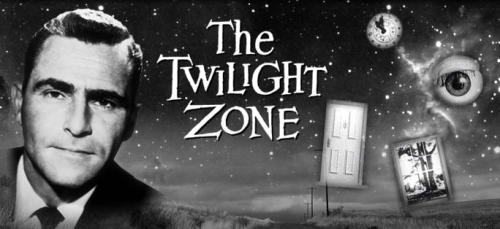
8. Television: The Twilight Zone (1959 series) by Rod Serling and various

This science-fiction/fantasy anthology series consisting of unrelated stories depicting paranormal, futuristic, kafkaesque, or otherwise disturbing or unusual events (typically featuring some sort of plot twist and moral), represents my imagination as it shaped the way I view fiction.

View The Episode, “Time Enough At Last”

9. Play: Sweeney Todd: The Demon Barber of Fleet Street by Stephen Sondheim

A 1979 musical thriller set in 19th century England tells the story of Benjamin Barker, aka Sweeney Todd, who returns to London after 15 years transportation on trumped-up charges. When he finds out that his wife poisoned herself after being raped by the judge who transported him, he vows revenge on the judge and, later, the whole world. He teams up with a piemaker, Mrs. Lovett, and opens a barbershop in which he slits the throats of customers and has them baked into pies.

This speaks to my scorpio nature of quietly holding a grudge with untold patience until the chance prevents itself to sting back. Not so much anymore, though. I’ve mellowed in my old age. Stop looking at me like you don’t believe me.

View The Original 1979 Commercial

10. Performance art: The invisible man: Liu Bolin’s camouflage artwork

Liu uses paint to camouflage him to make himself invisible in public. This represents the fact that I was born invisible and the only time I’m ever seen is when I write.

View The Video

Before you start nitpicking the logic of sending earth-logic/culture-bound works of art to an alien, I refer you to the Moby lyrics quoted at the top of the post and if we are all truly made of stars, there surely must be some commonality that binds us together, yes? Why can’t art be the universe’s language?

Sally forth and be creative DNA writeful.

–Rhyan Scorpio-Rhys

The Audience Has Spoken: They Want Stories

Kevin Spacey delivered the keynote James MacTaggart Memorial Lecture at the Edinburgh Television Festival, in which he challenged TV channels to give “control” to their audiences or risk losing them. Using as a model his recent foray into television, House Of Cards — a commercial and critical hit after it was released on streaming service Netflix – he warned there was a danger of “thinking that something which is working now will necessarily work a year from now.”

If you weren’t aware, Netflix released the entire season of House Of Cards at once, which in the actor’s words, “demonstrated that we have learned the lesson that the music industry didn’t learn — give people what they want, when they want it, in the form they want it in, at a reasonable price, and they’ll more likely pay for it rather than steal it.”

When you watch the clip you’ll notice that it’s heavily geared toward television content distribution but there’s a message for you, the writer, in there as well that isn’t limited to TV writing, and your inspirational takeaway from this should be:

“The audience has spoken. They want stories. They’re dying for them. All we have to do is give it to them.” — Kevin Spacey

Sally forth and be writeful.

— Rhyan Scorpio-Rhys

The Island of Misfit Posts #2: No Enemy But Time

Like its predecessor, Discouraged by Discouragement, this pesky fella here is another one of those posts that didn’t quite turn out as expected and ended up on the cutting room floor (though a part of its sentiment made its way into You’re Where You Are). Caught somewhere between my musings of growing older while still struggling with the craft and my intent of advising impatient writers to slow down, the post started taking the shape of something neither fish, flesh, nor good red herring:

“Do you think, I have not just cause to weep, when I consider that Alexander at my age had conquered so many nations, and I have all this time done nothing that is memorable!” — Julius Caesar

When you reach a certain age, you become acutely aware of time, how much you’ve squandered on things you swore were important at the moment, and how little you still have left in your account. Whenever I get the time brain bug, I’m always brought back to the line from Delmore Schwartz’s poem, Calmly We Walk through This April’s Day (quoted in that horrendous film Star Trek: Generations), “Time is the fire in which we burn.” I love that line. It resonates within me.

But I digress.

Many aspiring authors feel the pressures of time, either believing because of their age that they’ve gotten a late start in the writing process and need to play catch up, or simply haven’t got the proper time to devote to a writing regime, so they attempt to bang out herculean writing tasks without bothering to first learn the rules. They assume because they’ve taken on board the advice to write everyday that their skill set automatically improves and mistakes auto-correct themselves. They read, as instructed, but fail to apply storytelling rules–plotting, story goals, scenes and sequences, the purpose of characters, effective use of dialogue–to their own work.

That’s not to say their writing is bad, it simply lacks a consistent quality. A beautiful bit of prose or a dynamic character can easily get lost in the quagmire of weak grammar, poor pacing, and a meandering plot. Recognizing it can sometimes be hard to turn an objective eye on your own writing, here are a few questions to ask yourself, to see if you need to go back to writers boot camp:

1. Do you tell a story?

I assume you’re familiar with the phrase, “You can’t see the forest for the trees.” This applies to your writing as well, especially when you’re concentrating on your piece at the word choice and sentence structure level. Sometimes it helps to take a step back and get a big picture view of what you’re attempting to do, what it is you’re really trying to write about. The answer isn’t always as clear cut as you’d imagine.

2. Is your writing concise?

This one’s a toughie, because it calls on you to chuck out everything you learned in school about the proper way to write an essay. Well, this ain’t about writing essays, bub (or bubette, no gender discrimination here) and the rules of pacing language are different in fiction. The first rule you need to learn is: Never use a long sentence when a short one does the same job.

3. Are you addicted to adjectives and adverbs?

Adjectives and adverbs are among the more hotly debated issues in the writing community, and while opinions vary, the common rule of thumb is less is more. It can be hard to spot over usage while writing so when you’re done with your piece, look for chains–a string of adjective and adverb two or greater–and whittle it down until you’re left with one or two essential ones. Also worth bearing in mind, when you feel the need to modify a noun or a verb, make sure they need to be modified. If they do, select the best word to convey your meaning.

4. Are you familiar with the word “subtle?”

Your audience is smarter than you realize. There’s no need for you to spell everything out in exacting detail. And, believe it or not, some folks actually enjoy interpreting things for themselves.

5. Should you be shifting viewpoints?

Hopping from one character’s head to another without causing audience confusion requires a certain level of skill, and I’m certainly not suggesting that you shouldn’t be doing it (and if I told you not to, you’d rush out and do it anyway) but why not baby step your way towards it? Work on mastering the one character viewpoint first.

6. Do you show too much?

Yes, the standard rule is “show, don’t tell” but you don’t need to show everything. When in doubt, refer to Elmore Leonard’s rule,”Try to leave out the part that readers tend to skip.”

7. Do you create apathetic characters?

You’re an artist, your work is all about the truth, even in fiction. I get it. I’ve been there. But creating a realistic character based on your current bout of apathy, depression, or (heaven forbid) suicidal thoughts, often doesn’t make for good reading. Your characters must have wants and needs to push the plot forward. Audiences have no need to read stories where the characters have no desire to live or accomplish something.

8. Is your antagonist one dimensional?

Villains that are evil for evil’s sake are boring. Flesh them out with wants and needs like you would your main character. And remember, every villain is a hero in their own mind.

9. Does your dialogue matter?

Yes, leaving white on the page is a good thing as no one like slogging through dense blocks of description, but are you breaking up paragraphs with bits of meaningless chatter? Dialogue should be used as a communication between characters that evokes reaction. One characters says something that another character reacts to, which sparks a reaction, and so on, until the scene concludes. If you have no idea what your character has to say, then you don’t know your character well enough.

10. Can you write an ending?

Some people excel at writing beginnings, and that all they’re good at. Each chapter is a new beginning, with no middle to be found and as for an ending? I’m sure you can work out the answer to that. Other people get off to a slow start in the beginning, come into their own in the middle and peter out at the finish line. Let’s face it, endings are tough. Not only must you keep it clear and simple while you deliver on the promise of the premise (without being didactic), but you have to tie up all your story’s loose ends, and if you’re planning to surprise your audience, it shouldn’t be with an inappropriate twist, added for shock value. Keep in mind that writing the words “The End” doesn’t finish a story if it has no resolution.

In truth, I couldn’t finish it because I wasn’t in the proper frame of mind at the time. Although it might not be visible in the post, that damned time brain bug kept nagging at me, not with words, but with a feeling – the feeling of being left behind in the race for achievement. Before you say a word, I know better. In fact, one of my favorite quotes on this matter comes from the now famous commencement speech, Ladies and gentlemen of the class of ’97:

“The race is long and, in the end, it’s only with yourself.”

But we’re human, aren’t we? And sometimes knowing a truth doesn’t prevent you from feeling the exact opposite.

Sally forth and be writeful.

— Rhyan Scorpio-Rhys

The Island of Misfit Posts #1: Discouraged by Discouragement

When I sit down to write these posts, I never know what they’ll be about beforehand. It’s a first-thought-that-hits-me-stream-of-consciousness sort of thing. Sometimes they’re on point, other times they meander a bit, but as stated in the About This Blog section, the posts are less about me attempting to appear clever or knowledgeable (what are the odds, really?), and more about getting myself into a proper writing frame of mind with a warm up exercise. Mental calisthenics, if you will.

As you might imagine, it doesn’t always go to plan. Case in point: the post below. Inspired in part by Susannah Breslin’s Forbes article, Why You Shouldn’t Be A Writer, and Martin Levin’s, You Suck And So Does Your Writing–which is more about petty squabbles between notable literary figures (how I would have combined the two ideas is anyone’s guess)–it was meant to be a discouragement piece, you know, separating the wheat from the chaff, and all that, that started out like this:

Of All the Things You Could Do With Your Life, Why On Earth Would You Purposely Choose To Be A Writer?

Don’t worry, it’s not a trick question, but one you should be prepared to ask yourself and answer before undertaking writing in any fashion as a serious profession. Among the more common reasons I’ve come across in my travels are:

1. No commuting and every day is Pajama Friday!

I can’t fault your logic here because commuting is generally a nightmare and what’s better than tooling around your house in a onesie all day long like an agoraphobic superhero? Sadly, it isn’t a good enough reason to want to be a writer, especially since there other telecommuting positions that offer more stability and better chances at becoming a career.

2. What better way is there to make a ton of dough and roll around in my piles of cash?

Well, you could try your hand at playing the lottery or betting the ponies, for starters. Rich writers are the exception to the rule. The majority of people who claim writing as a profession, work their mental fingers to the bone, producing material for years before they even get a glimpse at recognition, let alone a healthy paycheck. Instead of rolling in piles of cash, you’ll most likely be rolling up your coins, praying your landlord accepts pennies for rent.

3. Nothing better than being my own boss with flexible hours!

Flexible hours? Been writing long? Writing is a huge commitment that commandeers your entire life with absolutely no guarantee of any sort of financial gain. As stated earlier, there are other work-from-home opportunities that are far more secure and come equipped with a steady payday. And being your own boss isn’t the sipping Mai Tais under a beach umbrella fantasy you imagine it to be. First off, there’s no one to delegate all the donkey work to, and your brain doesn’t simply punch out when the working day has ended. Writing–and the guilt of not writing–never leaves you in peace until the article/book/screenplay/project has been completed.

4. It would be amazing to see my best-selling book in a bookstore/my script turned into a blockbuster feature film/win the Pulitzer Prize for my groundbreaking article series.

Who wouldn’t want any of those things? While we’re daydreaming, I’d also like to be an astronaut so that I can save the planet from extraterrestrial threats, be the smartest man in any room I’m in so that I can solve all the world’s problems and become Earth President, and build a safe-box time machine–that protects me from any sort of injury–equipped with a high end movie camera in order to jump back and forth in time to make the ultimate series of historical documentaries.

Now that my feet have touched terra firma and I’m once again grounded in reality, I can tell you that while it’s great to dream big, fame is one of the worst reasons to choose writing as a profession.

But the post wasn’t really working for me because I could feel myself getting snarkier as the piece went on, which wasn’t my intent going in. So, I decided to step off my soapbox and kill the post. And there it sat in my trash for days, forgotten like Charlie-In-The-Box, Dolly, Spotted Elephant, and King Moonracer. But it miraculously survived deletion during my numerous trash emptying sessions. This had to be a sign. What sign, I hadn’t the faintest, but I decided to attempt recycling it into a less judgmental, more positive message:

Writers are born critics who will criticize any and everything that crosses their paths, especially fellow writers. They will issue their assessments and commentary with the righteousness of having had their opinions validated by the Mount Horeb burning bush. These are the writers who cut open veins and bleed for love of the craft, whose skulls ring with haunting voices that cannot be silenced until exorcized onto the page, who believe in their heart of hearts that the only words that deserve to be written are the truths that need to be told.

I can’t lie, sometimes I feel the same way.

But I’m not as bothered by it anymore, because I know first hand that the writing process has it’s own way of weeding out the fly-by-night scribblers, posers and pretenders with the obstacles it scatters on the long and winding path to a completed project. Whether your driving force is money, fame. to impress a person/people, burning need, or love of the artform, you will still experience your fair share of procrastination, anxiety, writers block, time crunches, lack of motivation, fear of rejection, judgement of peers, and impatience of selling a piece.

If you can repeatedly bash your head into these walls, get up, dust yourself off and continue to write, who am I to question your motives? That, my friends, is the best I can do fer ya, today.

Sally forth and be writeful.

— Rhyan Scorpio-Rhys

15 Further Reasons You Might Be A Writer

“You get ideas from daydreaming. You get ideas from being bored. You get ideas all the time. The only difference between writers and other people is we notice when we’re doing it.” ― Neil Gaiman

You very well might be a writer if…

  1. You recognize the tropes when friends tell you about a movie they’ve just seen and annoy them by correctly guessing the surprise twist ending.
  2. You fire off irate emails to professional critics who obviously lack the ability to comprehend even the most basic elements of the book they’re critiquing. Stupid critics.
  3. To you, Goodreads is the newer, better Facebook.
  4. When a boring person is speaking to you, your thoughts turn to something in the neighborhood of: “She stood amazed at this man, gifted with features so unremarkably plain as to render him virtually invisible amongst the crowd. More fascinating was how a mouth could move with such dexterity–the working of tongue against palate and teeth in complete choreography with lips glistening with the spittle of excitement–yet let slip content of no consequence.
  5. Your common review of most of the films that your friends have recommended is, “The book was much better.”
  6. New pens make you happy, especially the clickable kind. Click-click-click… joy.
  7. The aroma of an old book is your preferred air freshener scent.
  8. You have to piece your current story together from bar napkins, matchbook covers, toilet paper roll (hopefully unused), old (unpaid) parking tickets, business cards, or any other paper-esque scrap you can lay your hands on at the moment. And when no paper is available, your non-writing hand (and arm) becomes a suitable substitute.
  9. You suppress your rage in a physical argument with a colleague, only to recreate the argument in a story, filled with all the witty and biting things you could have/should have said.
  10. You find jokes of this ilk funny: I have a pet dinosaur named Roget. Roget the Saurus.
  11. You have an unnatural affection for lists. More than just clicking on Buzz Feed and Huff Post list links, even though the topic doesn’t interest you in the slightest. I mean really unhealthy to the point you begin viewing the physical world as a series of lists.
  12. Despite the internet and the built-in spelling/grammar tools in your word processing program(s), you still own a hard copy dictionary and thesaurus, and possibly a set of encyclopedias.
  13. Your blog contains several posts that will forever remain drafts because they’re either too brilliant or too frightening to share with anyone. The outside world would never understand.
  14. You consider your writing to be your better half.
  15. And finally, you might be a writer if you write, edit, rewrite, edit and finally delete emails to friends and family constantly because you’ve played the entire conversation of their response in your head and didn’t like the way it ended.

Sally forth and be writeful.

— Rhyan Scorpio-Rhys

A Penny For Your Thoughts: My Two Cents on Internal Monologue

I was talking to a friend yesterday about one of the housemates in this year’s Big Brother UK (how dare you judge me!) who had the annoying nonstop habit of thinking aloud in a random, babbling manner that made me sometimes feel as if I was reading her unfiltered thoughts. This, naturally, brought the topic of internal monologue to mind.

Whether you refer to it as verbal stream of consciousness, internal speech, or inner voice, internal monologue occurs when your characters engage in conversations with themselves, thinking in words at a conscious or semi-conscious level.

When used properly, making your audience privy to your character’s thoughts and internal struggles can add levels of emotion and intrigue that deepen your story nicely. But it’s not an easy skill to master, and in the hands of an inexperienced writer, the piece can quickly become a quagmire of unnecessary narrative.

Here are a few things you might want to bear in mind:

  • Mind your thoughts. The first thing to keep in mind–which should be obvious–internal monologues are always written from a character’s point of view, and the thoughts should match their personality and speech patterns.
  • Act first, think later. Avoid the temptation of beginning your story with expositional monologue. Sure, you’re eager to set the scene and establish characters, location, time period, etc., but you should consider capturing your audience’s attention from the onset by thrusting them into a riveting bit of dialogue, intrigue or action, before introducing the necessary exposition.
  • Don’t tip your hand, but don’t wait too long, either. You should never let a character’s thoughts introduce vitals details before they’re relevant to your story. Also, make sure you’ve provided your audience with everything they need to know before any tense scenes and definitely before you reach the climax. Never put a pitstop in your action sequence to sandwich in a bit of explanatory monologuing. Ick. Makes me shiver just thinking about it.
  • Back the right horse. If you have a choice between using dialogue or internal monologue, go with the dialogue–if, of course, it can properly explain pertinent information or convey the internal battles of your character. When doing this, however, there’s a trope you need to avoid, affectionately known as the dreaded “As you know, Bob” where one character tells another character something they already know.
  • Show, don’t tell still applies… somewhat. If you utilize enough internal monologuing in your writing, you’ll come to realize that sometimes, despite your best efforts, you’ll need to tell what a character’s thinking instead of showing it. Just don’t make a habit out of it.
  • Everything you know, not everything I know. I watch a lot of martial arts flicks, especially the old Shaw Brothers chop socky ones, and a recurrent theme was of an undeserving young student turning his newly acquired martial arts skills on the old master. I only bring this up because of a line I heard during a showdown where the young buck is boasting that he not only knows all the old man’s techniques, but he also has the advantage of youth on his side. The old master shakes his head and corrects the younger aggressor, “I taught you everything you know, not everything I know.” This should be the same with your character. There is no reason on this green earth for your audience to know everything your character knows. Everyone likes a little bit of mystery and in your audience’s case, it’s what keeps them turning pages.
  • Thoughts do not drive a story. Chiefly because they’re a poor substitute for conflict. This is another one of those things that should be evident, since I assume you’re an avid reader. So think on the last book that really held your attention, I’m talking about the one you continued to read even though your eyes were burning because you were fighting off sleep. What kept you invested in the book? The character’s thoughts? The answer you’re searching for should be conveniently located in the “Hell, no” aisle. More likely than not, the things that held your interest–writing style aside–were the story’s action and dialogue, because they’re what defines your character best.

In closing, interior monologue is one of the more useful writing tools at your disposal, and if you economically pepper it amongst action sequences, and dialogue, it should serve you and your story well.

Sally forth and be internal monologue writeful.

— Rhyan Scorpio-Rhys

Words of Encouragement From Them What Know Better’n You

I promised myself that I would set at least one day a week aside for some quality reading time, and that day happens to be today. In my absence, I invite you to soak in a few words of encouragement from people who understand your plight better than you realize and are far more eloquent, blunt and knowledgeable than I could ever hope to be.

Sally forth and be writeful, but don’t forget to be readful, as well.

— Rhyan Scorpio-Rhys

Nobody ever got started on a career as a writer by exercising good judgment, and no one ever will, either, so the sooner you break the habit of relying on yours, the faster you will advance.

People with good judgment weigh the assurance of a comfortable living represented by the mariners’ certificates that declare them masters of all ships, whether steam or sail, and masters of all oceans and all navigable rivers, and do not forsake such work in order to learn English and write books signed Joseph Conrad.

People who have had hard lives but somehow found themselves fetched up in executive positions with prosperous West Coast oil firms do not drink and wench themselves out of such comfy billets in order in their middle age to write books as Raymond Chandler; that would be poor judgment.

No one on the payroll of a New York newspaper would get drunk and chuck it all to become a free-lance writer, so there was no John O’Hara. When you have at last progressed to the junction that enforces the decision of whether to proceed further, by sending your stuff out, and refusing to remain a wistful urchin too afraid to beg, and you have sent the stuff, it is time to pause and rejoice. — George V. Higgins

Always dream and shoot higher than you know you can do. Don’t bother just to be better than your contemporaries or predecessors. Try to be better than yourself.

—————————————————————————-

Everything goes by the board: honor, pride, decency . . . to get the book written. If a writer has to rob his mother, he will not hesitate; the “Ode on a Grecian Urn” is worth any number of old ladies. — William Faulkner

“One of the few things I know about writing is this: Spend it all, shoot it, play it, lose it, all, right away, every time. Do not hoard what seems good for a later place in the book, or for another book, give it, give it all, give it now.” — Annie Dillard

Sometimes people say to me, “I want to write, but I have five kids, a full-time job, a wife who beats me, a tremendous debt to my parents,” and so on.

I say to them, “There is no excuse. If you want to write, write. This is your life. You are responsible for it. You will not live forever. Don’t wait. Make the time now, even if it is ten minutes once a week.” — Natalie Goldberg

I have never understood why “hard work” is supposed to be pitiable. True, some work is soul destroying when it is done against the grain, but when it is part of “making” how can you grudge it? You get tired, of course, but the struggle, the challenge, the feeling of being extended as you never thought you could be is fulfilling and deeply, deeply satisfying. — Rumer Godden

“Don’t market yourself. Editors and readers don’t know what they want until they see it. Scratch what itches. Write what you need to write, feed the hunger for meaning in your life. Play at the serious questions of life and death.” — Donald M. Murray

“No one put a gun to your head and ordered you to become a writer. One writes out of his own choice and must be prepared to take the rough spots along the road with a certain equanimity, though allowed some grinding of the teeth.” — Stanley Ellin

What Has Two Thumbs and Just Got Nominated For a Shine On Award?

http://letmereach.files.wordpress.com/2013/08/shine-on-award.jpg

First, I’d like to thank the Academy, and all the little people for being littler than me…

Yeah, I know, my humor needs work. In all seriousness, however, thank you, Kim Raya, for nominating me for the prestigious Shine On Award. I’ll do my best to make my family and the rest of the blogosphere proud.

Rules of the Award:
1. Display the award logo on your blog.
2. Link back to the person who nominated you.
3. State 7 things about yourself
4. Nominate 15 other bloggers for this award and link to them.
5. Notify those bloggers of the nomination and the award requirements.

Now for the bit you couldn’t care less about:

Seven Things About Me
1. As far as meals go, nothing beats a medium double bacon cheeseburger, steak fries and a nice cold pint of Guinness. Health concerns? What health concerns?
2. I’m convinced my muse is a practical joker because she always blindsides me with inspiration, forever catching me with my pants down and nary a pencil or paper in sight. I’m currently trying to talk Ashton into helping me punk her.
3. I physically bumped into Burt Lancaster in a fitting room in Saks Fifth Avenue. Last of the old school gents, he couldn’t have been a nicer man. Whaddaya mean, “Who’s that?” Ya got internet, dontcha? Look ‘im up.
4. My favorite karaoke tune to belt out is Billy Idol’s “White Wedding.” And when I say belt it out, I mean I go whole hog and scream-sing it. Not a pleasant sensory experience, trust me.
5. The three writers I’d most like to invite to my relative-time-pocket-dimensional dinner party are: William Shakespeare, Ernest Hemmingway, Johann Wolfgang von Goethe, Harlan Ellison, and Paddy Chayefsky. Okay, so that’s more than three but I’m hosting a dinner party in a pocket dimension for crying out loud, so cut me some slack here. Besides, I think Hemmy’s gonna be a no-show.
6. The top item on my Bucket List is: Live forever. Yup, I plan to live forever before I die. Let’s see how that works out.
7. I am a firm believer of never letting the truth get in the way of a good story.

And last, but certainly not least:

My Nominees For the Shine On Award

  1. http://laraschase.com/
  2. http://lanivcox.wordpress.com/
  3. http://macabrebutsweet.wordpress.com/
  4. http://cassandracharles.com/
  5. http://kristaquintana.blogspot.com/
  6. http://robakers.wordpress.com/
  7. http://insearchofmymuse.wordpress.com/
  8. http://300stories.wordpress.com/
  9. http://amandalemming226.wordpress.com/
  10. http://rachaelstanford.wordpress.com/
  11. http://bottledworder.com/
  12. http://cbmccullough.wordpress.com/
  13. http://charlottecarrendar.com/
  14. http://thejennymacbookblog.wordpress.com/
  15. http://christinajoneswriter.com/home/

An Idea is Great, But it Ain’t a Story… Yet.

Don’t you just love the feeling when a thought or concept tickles your mind in the right way and the longer you contemplate it, the greater the potential it has for existing as a piece of writing? And it always blindsides you, doesn’t it? On some idle Thursday whilst you’re hip-deep in work or chores and too preoccupied to be overly critical of it. And in its purest form, untested by experts, it’s a thing of beauty–this idea of yours–but as the title of this post suggests… it doesn’t even live in the neighborhood of being a story.

So, despite the fact that you were clever enough to have jotted the idea down on paper–preventing it from pulling a Papillon-esque escapeand attempted to workshop it somewhat, tacking on the odd bits of reality to make it less ethereal, in the end all your efforts amounted to were pages of writing that eventually found their way into a file folder or a desk drawer.

That’s because you haven’t moved your idea into the development stage yet. What you’ve done up to this point is commonly referred to as seat-of-your-pants writing. It’s all fun and loosey-goosey and noncommittal and some writers are actually able to complete stories in this fashion with nary a problem. The rest of us, however, tend to run out of steam, write ourselves into a corner, or worse yet, discover that our idea lacks staying power.

The workaround is to create an outline for your idea. This is where some writers begin to whinge that outlining is boring, it locks the brain into rigid thinking, it creates too much anxiety, and makes your story sound just plain silly. If you’re that writer, there’s nothing more I can offer you here other than a good luck handshake and a pat on the back. I wish you well.

For everyone remaining, before we get to the outline, I’m going to tear a page out of the screenwriters’ bible and suggest you create a logline (for more details see: At Loggerheads With Loglines) which in this case will be a single sentence synopsis of your story’s plot with an emotional hook to stimulate interest.

Why a single sentence? I think Albert Einstein summed it up best, “If you can’t explain it simply, you don’t understand it well enough.” It’s really not that hard once you get the hang of it and to prove it to you. I’ll create loglines right here on the spot, from the first three ideas that pop into my head, so that you can better understand what I’m talking about:

“After her parents die in a tornado that destroys her isolated small farm, an agoraphobic girl struggles to survive in the harsh wilderness as the frost approaches.”

“A wife returns home from grocery shopping and finds that her husband is married to another woman and her own children no longer recognize her.”

“A twenty-something virgin with a week left to live races to fulfill her dying wish to find true love in her small town.”

These representative concepts aren’t the best, granted, but they serve their purpose in showing how your idea would look explained in a concise manner that would plant recognizable images in your audience’s mind.

The first concept sets up not only the tragedy but also the protagonist’s weakness and the ordeal she must overcome in order to survive. The second is more in the speculative fiction vein, as normal events take a sharp left turn and create a reality-bending mystery for the protagonist to solve. And the third, while seeming a bit unrealistic and extreme, introduces the notion of a ticking clock which implies a sense of urgency.

You’ll notice that character names and details are missing from the above sentences, and that’s because they have no place here. Your goal is to introduce the protagonist (by gender and sometimes following an adjective and/or job title if absolutely essential to the story), establish their goal and set up an obstacle, preferably with a hook to answer the unspoken yet ever-present audience question, “Why should I read this?

If your initial attempts fail to net the desired results, rework the sentence, and keep reworking it until your idea sounds like a solid story. Once you’re satisfied, you’re ready to begin the precursor to building an outline by examining the overall structure of your story. The easiest way to accomplish this is by answering:

  • Who is the protagonist and what is their goal?
  • Who is the antagonist and what is their goal?
  • Who are the supporting cast and what are their main wants.
  • What are the major events and sequences and in what order should they appear to properly convey the story?

With these answered, you can safely move onto plotting your concept by applying the five stages of dramatic structure (see: Climbing the Freytag Pyramid), which are:

  1. Exposition – Where you introduce the setting of your story, the characters, their situation, the atmosphere, theme, and the circumstances of the conflict.
  2. Rising action – Difficulties arise that intensifies the conflict while narrowing the possible outcomes at the same time.
  3. Climax – The turning point of your story, where your protagonist has changed and their hidden weaknesses are revealed.
  4. Falling action – The conflict finally unravels and your protagonist either wins or loses to your antagonist. Also where the final suspense is usually located when the final outcome of the conflict is in doubt.
  5. Dénouement – The satisfying ending to your story in which the conflict is resolved—or not.

The great thing about this stage is you don’t have to fill these stages in any particular order. Not really sure what your rising action is yet, but have a lock on your dénouement? Jot it down. In fact, feel free to move around and provide details as they come to you. And give your inner critic a little free reign as you get in the habit of asking yourself a ton of questions, because each answer you give is a baby step towards fleshing the whole megillah out.

After that’s done, congratulations, your idea is now a plot. In order to turn it into a story, all you need to do is…

Sally forth and be writeful.

— Rhyan Scorpio-Rhys

PS. For anyone still reading this that felt the off-the-cuff writers got short shrift in this post, allow me to apologize and offer this one quick piece of advice:

Start your story off with that touchstone moment–a powerful situation–something that thrusts your character(s) into the deep end of the problem pool of an injustice or imbalance, something that possibly pisses you off in real life (allowing your rage to carry you through to the end), something that signifies there’ll be plenty of conflict and tension coming down the pike. And deny your character(s). No easy solutions. Let them wrestle with the problems in their own unique manner. And toss additional problems in their path for good measure.

(This is where you accept the good luck handshake and pat on the back).

I wish you well.