I Watched: Isolation Stories

As we continue to wade through conflicting reports of plans to reopen or reopenings gone horribly wrong thus forcing an immediate shutdown, production studios have been finding ways to provide programming for our viewing pleasure. One such attempt is Isolation Stories, four 15-minute dramas created under lockdown that reflect the trials and tribulations families are going through after weeks of isolation brought on by the coronavirus pandemic crisis. The series is the brainchild of Jeff Pope (writer of Stan & Ollie), whose entire family contracted the coronavirus and luckily were able to come out on the other side in good health without the need for hospitalization.

First up, we have “Mel” written by Gaby Chiappe, directed by Paul Whittington and starring Sheridan Smith in which we find the titular Mel heavily pregnant and absolutely alone in her apartment. To say she’s fed up with life would be an understatement. The father of the baby is a married man who decided to stay with his wife and family, leaving her having to go through the birth of her first child without any support. She even feels estranged from her own family who are all holed up at her Mum and Dad’s house.

Boredom, fear and maybe even a touch of cabin fever causes her to go down the list of people on her phone, desperate to make a connection, even reaching out to a person she hasn’t spoken to in years. Later that evening, Mel is awakened by a call from a stranger. It turns one of the old numbers she dialed belongs to someone new. The female voice on the other end of the line is kind and soothing as Mel gives voice to all her fears and woes. The voice reassures Mel that she’ll be a great Mum but the call is interrupted when a male voice begins shouting and the call is abruptly cut off.

I have a problem with this. Obviously, the woman on the other end of the phone is in an abusive relationship and Mel does attempt to call back but the phone number has been withheld. The story simply moves on from there with Mel having a new appreciation for her situation. What happened to the selfless woman who, despite her own situation, reached out to offer comfort to someone in need? Yes, her number was withheld, but Mel still had the number of the old friend on her phone and could have, should have, called to check on her.

In “Ron & Russell” written by Jeff Pope, directed by Louise Hooper and starring Tom Glenister and Robert Glenister, we find ex-convict Russell who is none too pleased to be isolated with his father, Ron, who believes his son has brought shame on the family. Ron is ill but it’s too early to tell if it’s related to Covid-19 and added to that is the fact that he might have a touch of dementia as he’s convinced he’s not in his own home. Russell doesn’t carry that care-giver gene but as the only healthy person in the house, he’s forced to become his father’s keeper. Things do not go smoothly, especially one time during a feeding when Ron mistakes Russell for his older brother and confesses what a disappoint his son is and calling him a compulsive liar. Russell decides to use his proclivity for lying to do some good for once in order to keep his father’s spirits up. The outcome is heartwarming.

In “Mike & Rochelle” written by William Ivory, directed by Paul Andrew Williams and starring Angela Griffin and Darren Boyd, we meet Mike, an utterly self-absorbed, paranoid hypochondriac who’s living his worst fear of being surrounded by an undetectable, untreatable, silent killer virus. Rochelle gives in to his insistence of an emergency online session, prepared to try and talk him down from the precipice, despite the day being the anniversary of a personal day of hardship for her. Of all the stories, this is the most character driven and a perfect example of role reversal done properly. My personal favorite of the lot.

In “Karen” written by Neil McKay, directed by David Blair and starring Eddie Marsan and David Threlfall, Stephen is isolated in the house with his two sons but his father-in-law, Brian, stops by outside the sliding glass doors leading to the back garden every day to mess about and make boy smile. But Stephen is still bitter and hurting after being left by his wife, the titular Karen, and is annoyed by the daily visits. He’s also ignoring Karen’s request to come see the boys, that is, until he and Brian have a private heart to heart about infidelity and forgiveness.

There’s also a fifth instalment, Isolation Stories: Behind the Scenes, that shows the process of the actors and their family members setting up equipment and shots to film themselves with the directors viewing the footage via smartphones in order to ensure the best takes possible.

So, would I recommend Isolation Stories? Most assuredly. And I wouldn’t mind seeing an additional, expanded series showcasing the various experiences that families and individuals are going through during these difficult times. I’m sure there are hundreds of unique stories just waiting to be told.

Ciao til next now.
I Watched: The Iron Mask

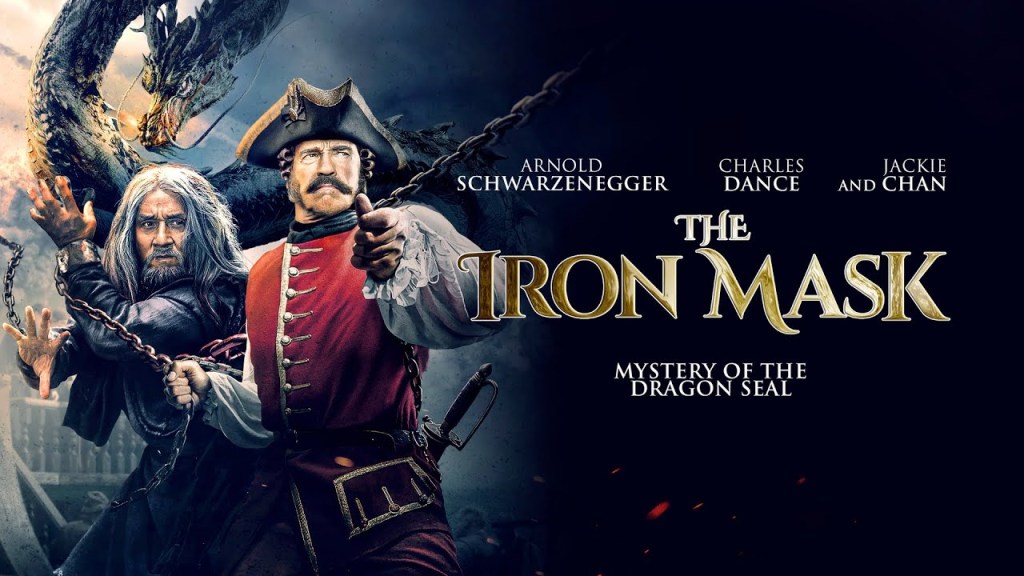
In this sequel to the 2014 Russian dark fantasy film, Forbidden Empire, Jason Flemyng reprises his role as Jonathan Green, an English traveler and cartographer who receives orders from Peter the Great to map the Russian Far east, which sets him on a long, long, long (seriously, it feels like forever) journey full of lukewarm misadventures including badly choreographed fight scenes, distractingly terrible CGI, and a potpourri of mismatched, head-scratching subplots that eventually lead him to China. Oh, and there’s a dragon near the end but don’t get excited, it’s not worth the wait.

The story, boiled down to its essence, is during the cartographer’s travels, he comes across a boy being flogged and negotiates his release in the guise of needing an assistant. Meanwhile, Arnold Schwarzenegger as Captain James Hook has Jackie Chan and the Man in the Iron Mask (and no, I have not memorized any of the character’s names nor will I waste any more of my time going to look them up, so you’ll just have to deal with it) prisoner in the Tower of London. Iron Mask inadvertently interrupts a homing pigeon’s flight path by luring it to the cell window with breadcrumbs left over from their measly rations and begins a secret message communication between the cartographer and his love interest where the prisoners discover the the boy travelling with the cartographer is actually Chan’s daughter in disguise. Chan and Iron Mask attempt to escape the tower but Chan must do battle with Arnold to buy Iron Mask time to get away. Before they part company, Chan gives Iron Mask a “dragon seal” that must reach his daughter’s hands. Chan and Arnie have a bit of a punch up and Chan lands back in chains again. As it turns out, Chan’s daughter is actually a princess living in exile who is the rightful heir to the throne that has been usurped by some black magic woman with the ability to slip on a Mission Impossible mask to impersonate the princess. Chan’s daughter eventually gives the cartographer the slip, meets up with a handful of loyal subjects, runs into Iron Mask, gets the dragon seal that allows her to communicate with the Dragon King (an actual dragon) and she fights to get her throne back. Yes, other things happen but we’re talking essentials here.

I can’t really get too angry at this film because I knew going in it was going to be rough viewing. The biggest draw for me was getting to see two action legends go toe-to-toe, Jackie versus Arnie which turned out to be so disappointing and such a wasted opportunity. That, and I thought the film’s 2014 predecessor was visually impressive, even if the plot was a bit wonky. So, I entered this with low expectations and the film immediately let me know I set the bar waaaaay too high. It’s a complete and utter mess and not even in an it’s-so-bad-it’s-good sort of way.

So, would I recommend the 2019 Russo-Chinese fantasy adventure film, directed by Oleg Stepchenko and written by Stepchenko, Dmitry Paltsev, and Alexey A. Petrukhin, and featuring guest appearances by Charles Dance and Rutger Hauer? What do you think? I think I’ve done my civic duty for the day, so, you’re welcome. No applause, please, just throw money.

Ciao til next now.

I Watched: We Hunt Together

It’s the first day of DI Jackson Mendy’s (Babou Ceesay) new assignment in the Homicide Division when he meets his new partner DS Lola Franks (Eve Myles) at a murder scene. From the onset, it’s apparent the pair will get on like chalk and cheese. Mendy’s an affable fellow with an almost zen-like nature to remain cool under pressure and Franks, well let’s just say she’s the complete opposite. Their relationship isn’t helped by the fact that Mendy transferred from Anti-Corruption (the British version of Internal Affairs) and just like it is stateside, coppers aren’t exactly fond of working with anyone associated with the rat squad.

The murder itself appears sexual in nature when they discover the body of a naked man strapped to the bed face down in his apartment with a butcher’s knife buried deep in the base of his skull and the wall safe open and empty. Don’t be so quick to put on your Sherlock Holmes deerstalker cap because this show isn’t interested in being a simple whodunit, it’s a game of cat and mouse and we’re introduced to our killers straightaway in a flashback leading up to the murder.

Baba Lenga (Dipo Ola) is a former child soldier and refugee who works as a restroom attendant at a nightclub. In the club’s alley, Baba saves Freddy Lane (Hermione Corfield) from a sexual assault, which forges a bond between the pair. Freddy works as a telephone sex operator by day with the occasional dalliance in escorting by night. Here again we have a mismatched pair, Baba is compassionate, vulnerable and haunted by his past, while Freddy, also haunted by her past, is a charming, conniving psychopath.

To be honest, I’ve had my fill of police procedurals and I would have given this series a miss if not for Eve Myles (I’ve got a thing for potty-mouthed Welsh women, what can I say?). Created and written by Gaby Hull and directed by Jon Jones and Carl Tibbetts, We Hunt Together has some interesting elements like the chemistry between Myles and Ceesay which is fantastic, and the reasons for why they are the way they are makes for good character development. I also find Ola’s performance compelling. My problem is with Freddy.

This show has been compared to Killing Eve and Freddy to Villanelle but take my word for it, they ain’t close by a country mile. I know it’s not fair to compare shows and We Hunt Together should be judged on its own merits but I lack the ability to describe just how weak and uninteresting Freddy is as the show’s main antagonist without giving a slight comparison. Villanelle is remorseless and guilt-free in the killing of her victims, which is when she’s at her happiest. She has an eccentric, infantile sense of humor and the emotional maturity of a petulant child which makes her a delightful psychopath. Freddy, on the other hand, is a one-trick pony who uses seduction to manipulate men in the most unconvincing manner possible. I’m not sure if it’s the way the character was written or a testament to Corfield’s acting ability but Freddy comes across as a child playing at adult things. It might be amusing for some, but it’s just not my cup of tea.

So, would I recommend We Hunt Together? Honestly, I’m not sure. My best suggestion is to sample the pilot and see if it’s to your taste. Will I be back for series 2? I guess that would depend on whether there were more interesting things to watch. This is a show that I can easily see getting lost in the sauce of more interesting video content. And before you complain about the lack of story breakdowns and spoilers, realize that I’m doing you a favor and I’ve probably said too much already. Go watch it for yourself.

Ciao til next now.

I Watched: Trigonometry

Meet Gemma (Thalissa Teixeira), a bisexual independent café owner and Kieran (Gary Carr), her risk-taking paramedic boyfriend who’s constantly getting injured on the job. They work opposite shifts and the only time they have for intimacy is the tiny window between when one comes home exhausted from work and the other has to get ready to go to their job. Not the best recipe for a successful relationship. Added to their woes is the fact that they live in the small, overpriced London flat above Gemma’s struggling café and are forced to take on a renter.

Enter Ray (Ariane Labed), a French Olympic swimmer who retires after sustaining an injury during a performance. Her entire 30-year existence has been training and practicing for Olympic competitions and with that gone, she’s looking to move out from under the protective wing of her parents and experience the world.

When Ray arrives at the address, she sees Kieran rushing to get inside (he and Gemma are trying to sneak in a quickie before interviewing their prospective tenant). Unaware that their interviewee is early for their appointment, Gemma hops out naked from the waist down to surprise Kieran and is instantly mortified upon seeing Ray.

Arguably my favorite line in the series is delivered by Kieran when he tries to defuse the situation by saying, “Probably a good icebreaker, seeing your prospective landlord’s vagina.”

Gemma and Kieran like Ray, offer her the room and after she moves in, Ray likes Gemma and Kieran, so what could be the problem? The fact that both Gemma and Kieran like-like Ray and she like-likes them back. Our thruple then begins walking the path of jealousy, acknowledgement and acceptance, which is fine in the microcosm they create but not-so-fine when they introduce their unique relationship to friends and family.

Similar to my last review, I should point out that I’m not the target demographic for Trigonometry and the show is definitely not in my wheelhouse. So, why am I talking about it? Simple. I like it. Despite the fact that it is absolutely not what I look for in a television show, I actual enjoy this drama/comedy series is written by Duncan Macmillan and Effie Woods and directed by Athina Rachel Tsangari and Stella Corradi. It’s been described as “warm, funny and emotionally truthful” to which I wholeheartedly agree and the undeniable chemistry between the three main characters is a joy to behold. More than just sex, this show explores the emotional complications that arise between three people in a committed relationship.

So, would I recommend Trigonometry? Definitely (as if that comes as a surprise). And before you complain about the lack of story breakdowns and spoilers, realize that I’m doing you a favor and I’ve probably said too much already. Go watch it for yourself.

Ciao til next now.

I Watched: “Beastars”

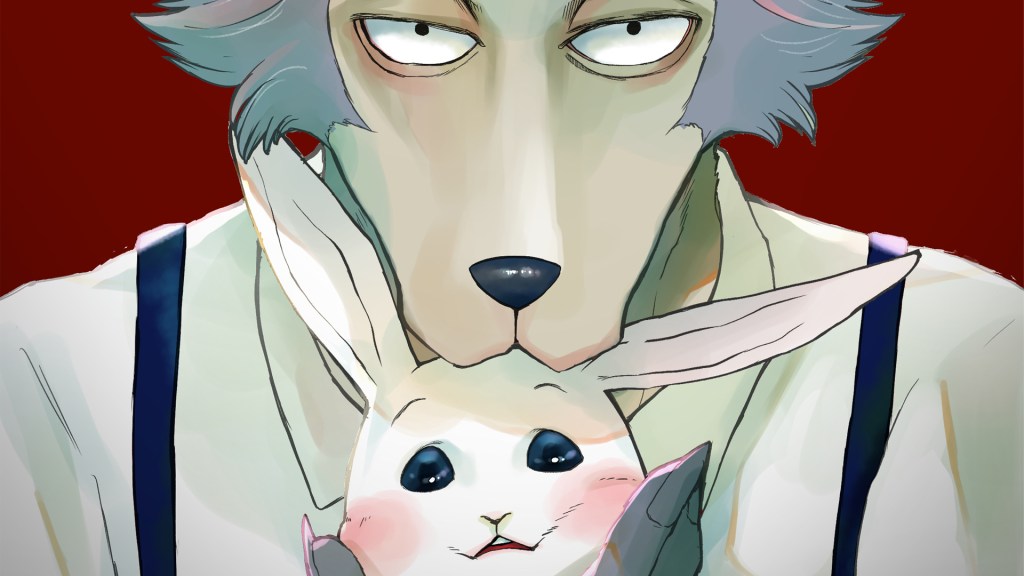
Beastars is an anime series (available on Netflix) based on the manga by Paru Itagaki which is set against the backdrop of a high school where anthropomorphic carnivore and herbivore students coexist in harmony and mainly focuses on a drama club where members compete to attain the rank of Beastar, an individual of great talent, service, and notoriety.

The series opens with a bloody alpaca, Tem, fleeing for his life from a classmate whose identity is hidden from us by shadows yet is known to Tem. The alpaca tries to reason with his assailant to no avail, and his murder causes a cultural divide between the carnivores and herbivores, as it becomes clear that the campus is no longer a safe place for any creature considered prey who is foolish enough to be traveling outside alone once the sun sets.

We follow the struggles of three main characters whose lives intersect and form an unusual love triangle:

  • Legoshi, an introverted large gray wolf with the gentle, contemplative heart of a monk, struggling to suppress not only his carnivore nature but his sexual desire for someone who by all rights should be prey.
  • Haru, an isolated, cheerful, adventurous, and sexually promiscuous dwarf white rabbit who is never afraid to stand up for herself amidst constant shaming and bullying from her classmates.
  • Louis, an intimidating red deer lead actor who lords himself over the drama club, who I absolutely hate, though I respect his plight. He has the heart and soul of a predator, trapped in the body of prey. Though his will is strong enough to dominate all who step into his sphere of influence, his herbivore body can’t go toe to toe with a carnivore. But like I said, I can’t stand him. He has that type of anime face just begging to be punched.

Since there is currently more content available than any sane person can keep track of, this means a lot of movies, tv and anime fly completely under my radar and Beastars would have been one of those shows if a good friend of mine hadn’t recommended it. She knows my taste in anime so I trust her judgment and I went into this series blind, no trailer, no synopsis, no reviews, no nothing. And as soon as I streamed the first episode, I thought Chance the Rapper was going to jump out screaming “You’ve been Punk’d!” because my friend knows there are two things I’m not a fan of in my anime:

  • The first is anthropomorphism. Furries and animals acting like humans no longer holds any interest for me. Not that there’s anything wrong with it, it’s just not in my current entertainment wheelhouse.
  • The second is slice of life school kids romance. If that’s your thing, good on you, I’m simply not the target demographic for that sort of thing.

And as I am no spring chicken, the thought of investing my limited time on this planet suffering through a number of episodes of a boy too shy to tell a cute girl he has feelings for her despite the numerous occasions fate forces the pair together…well, ain’t nobody got time for that.

And I was ready to punch out of the series, when this happened:

What the holy hell was I watching?

Don’t get me wrong, I may be old, but I’m not a prude. I have no problem with women taking charge and owning their sexuality and sexual experiences. There’s no slut-shaming here. In fact, take your clothes off, tiny bunny (sung to the tune of “Tiny Dancer”). It’s all good. You do you. (Do the kids still say that?). The scene simply caught me off guard and it was enough to make me curious about the direction the show was heading in.

I know it’s popular these days to recap events episode by episode, provide thoughts and theories and even pose questions to elicit reader response but that’s a bit too spoilery for me so I won’t be doing any of that. I will, however, point out the moment that made up my mind about this series. It’s the scene where after navigating through a string of hardships, Legoshi and Haru are finally about to connect romantically when this happens:

The bits of text you may not be able to read are:

“A rebuke from my rabbit instincts: loving each other is a terrible mistake. A predator has its own instincts, so does a prey.”

And the line that cinched it all for me:

“Their bodies know what their relationship should be.”

It’s a damned heady line that made me ponder not only their relationship but the biological roles we’re meant to play during the mating process, long after the episode ended. And if a show can make my rusty brainbox think and not simply sit idly and absorb content, well then, it’s got a viewer for life.

Looking at this, I realize that I’ve only showcased intimate scenes but Beastars is far more than a randy animal school romance. Characters struggle with the confines of societal roles, fight to rein in their desires, try to outwit the destinies written on their foreheads, and so much more.

I quite liked the character designs and the animation remained smooth and consistent from episode to episode with no dip in quality. The series juggles several storylines effortlessly and I didn’t experience that midpoint slump which often occurs when binging a show whose plot has been stretched thin in order to fill a preset number of episodes.

So, would I recommend Beastars? Definitely. Will I come back for the second season? Most assuredly. And before you complain about the lack of story breakdowns and spoilers, realize that I’m doing you a favor and I’ve probably said too much already. Go watch it for yourself.

Ciao til next now.

If You Can’t Blind Them With Brilliance…

Image

Fair warning: Thar be mild spoilers ahead, so if you plan on seeing Star Trek Into Darkness and wish to go in fresh, turn back now.

Let me begin by saying I didn’t have high expectations for this film, so I wasn’t disappointed at how much I really didn’t like it. Wasn’t a fan of the first film either. Truth to tell, I’m not big on reboots or reimaginings in general. And that’s all this is. A poor reboot of the far superior film, Star Trek II: The Wrath of Khan.

Don’t mistake my meaning, this isn’t a bash on J.J. Abrams. The man does what he’s paid to do. He puts asses in seats, like a professional carnival huckster. He’s under no obligation to provide a solid, well thought out plot or three-dimensional characters. It’s all about bang for the buck, which this movie has in spades. It meets its quota of fisticuffs, phaser fights, explosions, space battles, and winks and nods to the original series to appease actual fans of the franchise. Abrams certainly knows his way around a popcorn movie, living by the old adage, “If you can’t blind them with brilliance, baffle them with bullshit.”

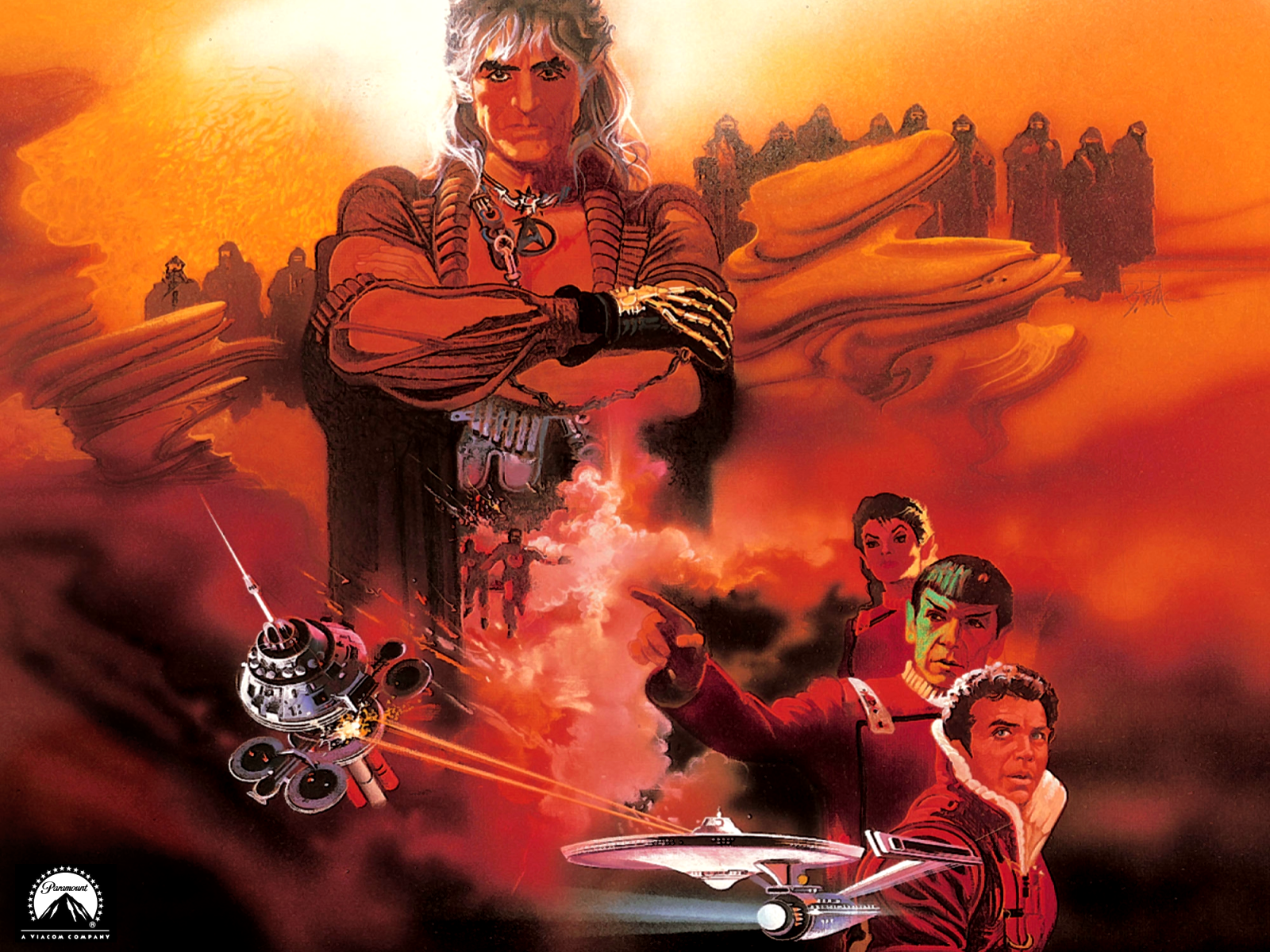
But instead of dissecting Into Darkness (enough fan sites are doing that already), I’d rather talk about what made Wrath of Khan work. It’s one of two films that I can think of off the top of my head that has a near perfect set up. The other is the first Back To The Future film.

statrek-ii_-the-wrath-of-khan-wallpapers_16772_1600x1200

Wrath of Khan begins with the Star Fleet Academy final exam, The Kobayashi Maru, a no-win scenario simulation designed to test the character of cadets before unleashing them into the harsh realities of interplanetary relations. Kirk is now an admiral relegated to training cadets after giving up his starship command. It’s his birthday, so he’s feeling old. His life lacks adventure, so he feels put out to pasture. He has no family, so he feels alone in the universe. The man is miserable, making him the perfect character in desperate need of an arc.

Come to find out Kirk is the only cadet to beat The Kobayashi Maru, but he did it by rigging the test. He cheated because he doesn’t believe in a no-win scenario. And that’s what the entire film is, Kirk’s Kobayashi Maru. An adversary emerges from his past, hellbent on revenge for being stranded on a planet that turns hostile. He’s reunited with an old flame and discovers he has a son. And he’s pitted in a battle of wits against a far superior opponent. Even in his most desperate hour, Kirk is enjoying this. It’s what he was born to do. The only thing he’s ever been good at.

And finally, he’s forced to face The Kobayashi Maru consequences. He’s encountered his no-win scenario. He’s at the end of his tether, with no more cards left to play. He’s not only put himself in the line of fire but his crew and new found family as well. They’re dead. Or they would have been, had Spock not sacrificed himself, quoting the Charles Dickens novel, A Tale of Two Cities (a present he gives to Kirk on his birthday), “the needs of the many outweigh the needs of the few“.

Kirk finally faces devastating loss, the death of his closest friend, but as he mourns, he witnesses the creation of a world, has reconnected with a family he never knew he had and is once again in command of a starship. At the beginning of the film, he was feeling old, but as the film wraps, he stares at the Genesis Planet and tells Carol Marcus that he “Feels young.”

That’s a proper character arc.

And you won’t find any of that in Into Darkness. It’s a poor photocopy that lacks the richness of history, the depth of character, or a plot that can bear the weight of scrutiny.

— Rhyan Scorpio-Rhys


Every Picture Tells A Story, Though Not Always A Good One

It’s easy to put the boots to M. Night Shyamalan whenever he debuts a new film, but the fact of the matter is as long as Lady In The Water, The Happening and The Last Airbender exist, After Earth will never be considered his worst film.

The story, conceived by Will Smith while he was watching an episode of I Shouldn’t Be Alive, was originally meant to tell the tale of a father and son crashing their car in some remote region, and the son having to venture into rough terrain to get rescue for his father. Will later changed it to:

after-earth-1a

A crash landing leaves Kitai Raige and his father Cypher stranded on Earth, 1,000 years after events forced humanity’s escape. With Cypher injured, Kitai must embark on a perilous journey to signal for help.

It’s a simple story, which is what you should strive for when creating fiction. So, why doesn’t it work (apart from the wooden acting and bizarre futuristic southern military accents)? What storytelling lessons can you learn from After Earth?

1. When good exposition goes bad – Avoiding exposition is nigh-impossible when dealing with science fiction set in the future. In the case of After Earth, the audience needs to be brought up to speed on why humans fled the planet one thousand years ago, as well as being introduced to the new homeworld, Nova Prime. And that’s where it should end. Everything else the audience needs to know should be introduced organically. The one thing you should not use your opening expository scene for is telegraphing the solution for the climax of the story. It’s lazy and a cheat.

2. The protagonist/antagonist relationship – Even with coming of age stories, which After Earth is—–well, that and a motivational speech dressed up as a sci-fi actioner—–the strength and audience interest lies in the conflict found in the relationship between the protagonist and antagonist. The reason After Earth doesn’t ring true isn’t because the protagonist, Kitai, is weak—possessing a weakness that must be overcome is exactly what any good story needs.

The first problem is the antagonist. The thing that combats Kitai in the film is nature—which is filled with its fair share of animal and insect nasties (plus one blast from Kitai’s past, conveniently placed to help him arc properly)—but it doesn’t oppose him. There isn’t one beast that stalks him with animal cunning and outflanks him at every turn, with the ultimate goal of turning him into a tasty morsel. The wilderness isn’t planting snares and death traps in his path to prevent him from reaching his destination.

Not that either of those scenarios are particularly original or great, but something else is needed than to have Kitai stumble and bumble his way through unfamiliar and dangerous terrain. I would have been more invested if he actively tried to outwit the environment and was constantly met with defeat. At least then he would have gained some insight. We learn from mistakes.

Which is the problem I had with the resolution. At the all is lost stage, Kitai suddenly masters the gimmick that allows him to prevail in the end. Without obtaining the wisdom or acquiring the experience to properly do so. And again, it’s a cheat and lazy storytelling.

3. Telegraphing – Some writers mistake this with foreshadowing—the act of dropping hints about certain plot developments that will come to be later in the story. The difference between them? Telegraphing is giving away too much, too soon, thereby ruining the suspense, or the impact of the event.

Before using foreshadowing, have a good think. Is it necessary to heighten the tension? It can be difficult knowing which side of the line you’re on, so if you’re attempting to foreshadow, you should ask yourself if there’s any chance the audience can predict what you’re hinting at? If the answer is yes, take a good look around. You’re standing in telegraph territory. Try a subtler approach.

4. Flashbacks – It’s amazing how many screenwriters still get this wrong by thinking flashback sequences serve the purpose of filling in plot holes in the past. A well-constructed flashback should always move the story forward. Always. If your flashback doesn’t accomplish this, you need to rework your story and find a way to introduce whatever bit of information is missing from your plot.

In After Earth, we have dueling flashback sequences, one set belonging to Cypher which explains his estrangement from his son and the other set telegraphing Kitai’s final obstacle. Nether of these string-of-past-event-sequences impact the present day story, nor do they escalate the conflict. The just provide information that could have be delivered during the Act 1 set-up.

Naturally, there are other problems I had with this film, but delving into them would reveal too many spoilers, so I’ll just end the post here. If you happen to see the film and want to discuss it, feel free to comment below or drop me a line.

Sally forth and be writeful.

Project Greenlight Review

NE51PySKhbvW8e_1_b

I’ve never been much for reality programming, even before studios got busted for reenacting events and creating fake situations for content, forcing them to minimize their liability by coining the term assisted reality, but when HBO first announced a show focusing on first-time filmmakers being given a chance to write and direct a feature film… I was hooked. Aside from being an aspiring filmmaker, I’m also the type of guy who loves all those wonderful DVD featurettes showing the behind-the-scenes goings on from tv and movie sets, and in most cases, find them to be far more interesting than the actual movie itself. The added value to Project Greenlight is it ran an online script contest, which meant I could actually be a part of the show, if my screenplay survived the brutal peer review stage.

It didn’t.

But I was still very much interested in the show. I can’t describe my disappointment as I watched winner Pete Jones stumble his way through shooting Stolen Summer, a humdrum period piece snorefest about a Catholic boy who tries to help his Jewish friend get into heaven. Had I not watched the tv series, I wouldn’t have bothered seeing this film even if it played on the insides of my eyelids.

Season Two rolled around and this time the contest was split into two categories: writing and directing. I didn’t bother submitting for either category, but because I was still fascinated by the behind-the-scenes aspect, I watched Erica Beeney’s script, The Battle of Shaker Heights (a 17-year old WWII reenactor decides to put his battlefield knowledge to work in real life against his high school enemy), win with Kyle Rankin and Efram Potelle landing the coveted directing prize. I figured the showrunners learned from the previous season’s debacle and made the effort to put together a superior show this time around.

Sadly, this was not the case.

The show was such a stinkpot, it got booted from HBO and found a new home on Bravo for Season Three. This time the genre was horror, and a script titled Feast by Marcus Dunstan and Patrick Melton, won with winner John Gulager as the director. Even though I thought this season was particularly horrible, Feast (folks trapped in a bar, fending off creatures trying to eat them) turned out to be the most lucrative product the show produced both in box office and DVD sales (hell, it even spawned two sequels).

But the writing was on the wall and the show disappeared into obscurity… or so it seemed.

Nearly ten years after the last season, Matt Damon and Ben Affleck resurrected the series, this time focusing on comedy with a ready-to-shoot Farrelly brothers script on hand. All the mix needed was a first-time director. Once again, my thinking was, come on, it’s been ten damned years since the last run surely the producers have gotten their act together and they wouldn’t bother exhuming a turd and try to pass it off as art, would they? So, out of curiosity (and a bit of hopefulness) I tuned in.

And was pleasantly surprised. The pilot opened with Matt and Ben confessing that the Project Greenlight series had nearly wrecked their careers and their friendship. Great! Now, maybe we would get to go behind the behind-the-scenes to get the scuttlebutt on what really transpired on the show. Maybe this time the Good Will boys would open up and speak candidly about what went wrong with the past seasons and address how the current season would travel more in the true direction of the show’s original vision.

But that never came.

I watched with anticipation as the semi-finalist directors were whittled down and the finalists faced the interview process with a judges panel that included Matt and Ben and a line producer the press would soon come to know, Effie Brown. Each one of the contestants were pleased as punch to be there, expressed an eagerness to work on a Farrelly brothers script, discussed what they could bring to the project… all except one, Jason Mann. From the moment he walked into the interview room, Jason acted like he’d rather be anywhere else in world. He showed no real interest in shooting a comedy, stating in no uncertain terms he’d much rather shoot his own screenplay (a feature length version of the short that landed him a finalist position in the contest). Way to talk yourself out of job there, buddy, I thought.

I will never learn.

By swimming against the supposed stream of the show, Jason made himself a controversial figure, and since this was a reality TV show and we all know these assisted reality shows thrive on conflict, guess who won the contest?

What followed next was a series of staged Hollywood fights (indirect confrontations) where new kid on the block Jason did end runs around all the seasoned professionals. The squabbling and inability to resolve any of the preproduction hurdles led to the quitting of the Farrellys and the fake deliberation over whether Jason got to shoot is own screenplay. Yeah, I called it. It was a setup. The intention was to shoot Jason’s screenplay from the get-go. It was also the worst job of creating drama I’ve ever witnessed. I mean, these guys shoot fantasy-as-reality everyday and are able to elicit rage, instill happiness, or bring audiences to tears, so why the blazes couldn’t they make this scripted nonsense look and feel more authentic? If you’re going to go carny, go full out. I’ll gladly be a rube as long as I can’t see the puppet master manipulating the strings.

And Jason Mann was such and uninteresting and one-dimensional character they had to beef up Effie Brown’s role, putting her at odds with everyone (especially Matt Damon) as she fought for gender and racial diversity. Noble causes, both. Too bad it was wasted on this nothing project. This will be the first time I won’t bother viewing the finished product, The Leisure Class. I’m done. I’m out. Project Greenlight and I are parting ways for good.

I give Project Greenlight, the entire series, Zero Homeless Shopping Carts, but trust me when I say it’s me, Greenlight, not you. I’m the one who hung all the extra tinsel on you, expecting you to live up to my expectations instead of accepting you as you truly are. You’re a second rate reality show that hasn’t been fully thought out and you deserve a viewer with indiscriminate tastes. Truly my bad.

See ya at the concession stand.

Bone Tomahawk Review

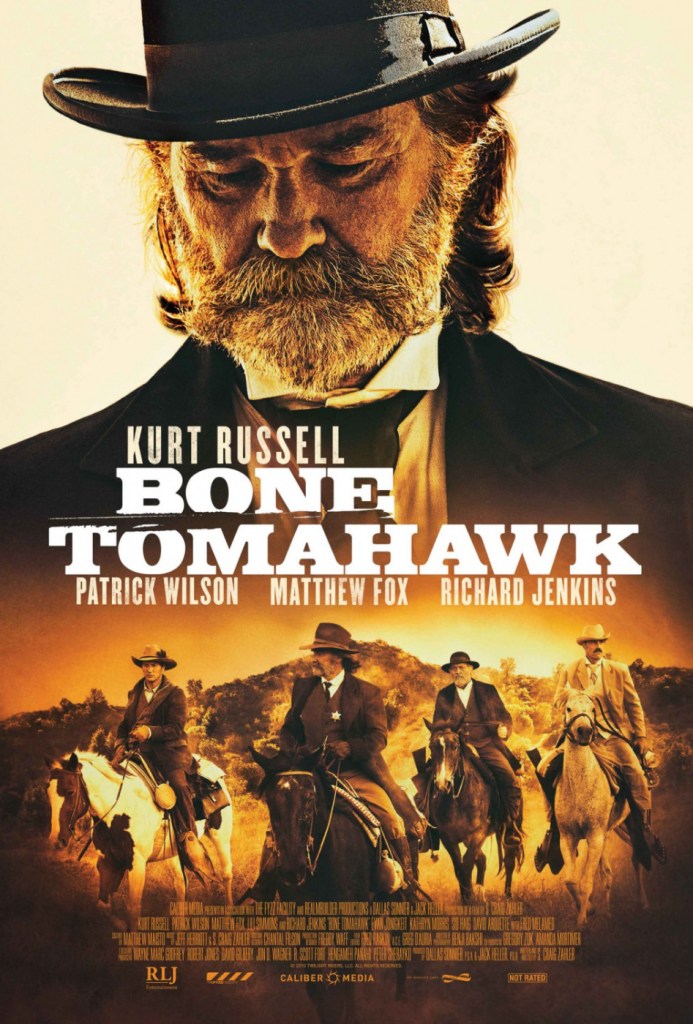
Set in the Old West, Bone Tomahawk opens with two bandits (Sid Haig and David Arquette) murdering a camp of sleeping men, who decide to take cover in the high ground upon hearing the approach of horses. In the process, they desecrate a bizarre burial ground and are beset by troglodytes. Arquette manages to escape and inadvertently leads the cave-dwelling cannibals to the small town of Bright Hope, where they abduct several townsfolk. The town sheriff (Kurt Russell), his elderly back-up deputy (Richard Jenkins), an educated gunslinger (Matthew Fox), and the crippled husband of one of the kidnap victims (Patrick Wilson), ride out on a hopeless rescue mission.

Marketed as a western/horror this plays out more as a straightforward western that happens to contain a few scenes of graphic violence, which is in no way gratuitous given the nature of the story. But you can’t really go by my insensitivity towards screen gore as I cut my teeth on horror films as a wee lad.

The casting is near perfect. Kurt Russell proved he’s still the man as he struts his stuff, which really should come as no surprise since he demonstrated his cowboy chops in Tombstone. Patrick Wilson once again held his own. A reliable actor, he took on the role of the average man who suffers injury and setbacks, yet stepped up to the plate when the situation called for it (in fact, his nickname should be Clutch, because he always comes through). Richard Jenkins? What can I say about the man besides he tossed himself into the role of the well-intentioned back-up deputy with his usual aplomb. Never a disappointing performance from this man. Even the smaller roles were well cast. Sid Haig and David Arquette as the bandits, Sean Young as the mayor’s domineering wife, Lili Simmons as Wilson’s doctor wife. Yup, not a bad performance in the lot… except for Matthew Fox.

I make no secret of my dislike for Mr. Fox, who has never really impressed me from his Party of Five days, through his six-season stint on Lost, up to his roles in Vantage Point and Alex Cross. He’s a wooden actor with limited range who took the role of the town badass (more educated that the rest of his posse-mates and the killer of more indians) and turned it into something rather dull.

If I’m honest, I approached this film with some hesitation. I read an early version of the screenplay while the project was caught in preproduction hell and my greatest movie viewing downfall is knowing the story beforehand. It’s the same with books. I can read a book or screenplay after I’ve seen the film with no problem, it’s the reverse that spoils the experience for me. I have friends that will read the screenplay for a film they’re about to see, only up to the third act so the movie still holds a surprise for them. I’ve tried this trick and it still doesn’t work.

I mentioned the above because I wanted to like this film better than I did. While I definitely do not hate it, I can’t really rave about it, either. For me, there was something missing from the screenplay I read, a touch of character development that I hoped would have been addressed in a subsequent draft. The story opens with a graphic and bold introduction to this world, which sets the bar high, but then it’s followed by a slowly drawn out series of events. And make no mistake, I have no problem with a film setting its own pace, and I’m not calling this film boring by any means (it is peppered with its fair share of violent scenes) but usually with slower paced projects the script takes advantage by establishing its characters a bit better to create empathy should some unfortunate event befall them later on. But because we’re dealing with stoic cowboys, old-fashioned manly men, that doesn’t quite happen, which may be rightly so, but I think it’s a shame. It affects the film’s rewatchability factor for me. And I know the screenwriter is more than capable of handling this because there are other dialogue interactions between townsfolk, quick, sharp exchanges that lets you know just how characters feel about each other and relate to one another. It’s a minor quibble, but one that nags at me.

So, should you spend your hard earned and see it? If westerns are your thing, sure, why not? This directorial debut of screenwriter S. Craig Zahler features solid performances, the violence is swift and brutal, the dialogue has an authentic ring to it (one interaction between Wilson and Fox: “If you make any flirtatious remarks in my wife’s presence… they’ll be a reckoning.” They just don’t make warnings like that anymore) and as mentioned before, it’s a simple story told simply. No complicated twists or story logic problems to cause you to scratch your puzzler as you leave the theater.

And hang around for the closing theme song, co-written by Zahler, “Four Doomed Men Ride Out.” It’s a hoot.

Bone Tomahawk gets 3.5 Homeless Shopping Carts for a solid, straightforward story and believable performances.

See ya at the concession stand.

Every Picture Tells A Story, Though Not Always A Good One

It’s easy to put the boots to M. Night Shyamalan whenever he debuts a new film, but the fact of the matter is as long as Lady In The Water, The Happening and The Last Airbender exist, After Earth will never be considered his worst film.

The story, conceived by Will Smith while he was watching an episode of I Shouldn’t Be Alive, was originally meant to tell the tale of a father and son crashing their car in some remote region, and the son having to venture into rough terrain to get rescue for his father. Will later changed it to:

after-earth-1a

A crash landing leaves Kitai Raige and his father Cypher stranded on Earth, 1,000 years after events forced humanity’s escape. With Cypher injured, Kitai must embark on a perilous journey to signal for help.

It’s a simple story, which is what you should strive for when creating fiction. So, why doesn’t it work (apart from the wooden acting and bizarre futuristic southern military accents)? What storytelling lessons can you learn from After Earth?

1. When good exposition goes bad – Avoiding exposition is nigh-impossible when dealing with science fiction set in the future. In the case of After Earth, the audience needs to be brought up to speed on why humans fled the planet one thousand years ago, as well as being introduced to the new homeworld, Nova Prime. And that’s where it should end. Everything else the audience needs to know should be introduced organically. The one thing you should not use your opening expository scene for is telegraphing the solution for the climax of the story. It’s lazy and a cheat.

2. The protagonist/antagonist relationship – Even with coming of age stories, which After Earth is—–well, that and a motivational speech dressed up as a sci-fi actioner—–the strength and audience interest lies in the conflict found in the relationship between the protagonist and antagonist. The reason After Earth doesn’t ring true isn’t because the protagonist, Kitai, is weak—possessing a weakness that must be overcome is exactly what any good story needs.

The first problem is the antagonist. The thing that combats Kitai in the film is nature—which is filled with its fair share of animal and insect nasties (plus one blast from Kitai’s past, conveniently placed to help him arc properly)—but it doesn’t oppose him. There isn’t one beast that stalks him with animal cunning and outflanks him at every turn, with the ultimate goal of turning him into a tasty morsel. The wilderness isn’t planting snares and death traps in his path to prevent him from reaching his destination.

Not that either of those scenarios are particularly original or great, but something else is needed than to have Kitai stumble and bumble his way through unfamiliar and dangerous terrain. I would have been more invested if he actively tried to outwit the environment and was constantly met with defeat. At least then he would have gained some insight. We learn from mistakes.

Which is the problem I had with the resolution. At the all is lost stage, Kitai suddenly masters the gimmick that allows him to prevail in the end. Without obtaining the wisdom or acquiring the experience to properly do so. And again, it’s a cheat and lazy storytelling.

3. Telegraphing – Some writers mistake this with foreshadowing—the act of dropping hints about certain plot developments that will come to be later in the story. The difference between them? Telegraphing is giving away too much, too soon, thereby ruining the suspense, or the impact of the event.

Before using foreshadowing, have a good think. Is it necessary to heighten the tension? It can be difficult knowing which side of the line you’re on, so if you’re attempting to foreshadow, you should ask yourself if there’s any chance the audience can predict what you’re hinting at? If the answer is yes, take a good look around. You’re standing in telegraph territory. Try a subtler approach.

4. Flashbacks – It’s amazing how many screenwriters still get this wrong by thinking flashback sequences serve the purpose of filling in plot holes in the past. A well-constructed flashback should always move the story forward. Always. If your flashback doesn’t accomplish this, you need to rework your story and find a way to introduce whatever bit of information is missing from your plot.

In After Earth, we have dueling flashback sequences, one set belonging to Cypher which explains his estrangement from his son and the other set telegraphing Kitai’s final obstacle. Nether of these string-of-past-event-sequences impact the present day story, nor do they escalate the conflict. The just provide information that could have be delivered during the Act 1 set-up.

Naturally, there are other problems I had with this film, but delving into them would reveal too many spoilers, so I’ll just end the post here. If you happen to see the film and want to discuss it, feel free to comment below or drop me a line.

Sally forth and be writeful.