“Of course it hurt that we could never love each other in a physical way. We would have been far more happy if we had. But that was like the tides, the change of seasons–something immutable, an immovable destiny we could never alter. No matter how cleverly we might shelter it, our delicate friendship wasn’t going to last forever. We were bound to reach a dead end. That was painfully clear.” ― Haruki Murakami, Sputnik Sweetheart
They say you find friends in the damnedest places. Once I found a friend in the reflection of a mirror. No, not my reflection, this person, this girl, this Alice, stood beside the mirror version of myself, to the left. Always left of center. I should have taken that as a sign, but you never see the glaringly obvious without the benefit of hindsight.
Before you mistake Alice for an imaginary friend, know that were I in a mirrorless room, I wouldn’t be able to communicate with her because she simply wouldn’t be there.
How she came to be trapped within mirrors is anyone’s guess and I doubt she truly knew herself, though whenever asked, she would always blame her fractured memory, splintered like shards of glass that held incomplete images of her past.
She was fascinating in her way, Alice was. A brain filled with dark matter. Insecure to a fault. A high maintenance friend if ever there was one. Not only was she needy, self-absorbed to the exclusion of all else, devoid of a funny bone (despite the fact she claimed to have an excellent sense of humor), but she was also passive aggressive and more than slightly obtuse when it came to rules of the world that existed outside her own head. But as I said, fascinating in her own right.
It’s a shame that fascination wasn’t enough. I was determined in the beginning to plant our relationship in the soil of time, water it with patience and let it bask in the rays of understanding.
What sprang from the dirt wasn’t the flower of friendship, but the weeds of unwanted advice. It’s what broken people do, you see, they have an undying need to give others advice on how to fix themselves. I am by no stretch of the imagination a Bible scholar, but I am familiar with the passage:
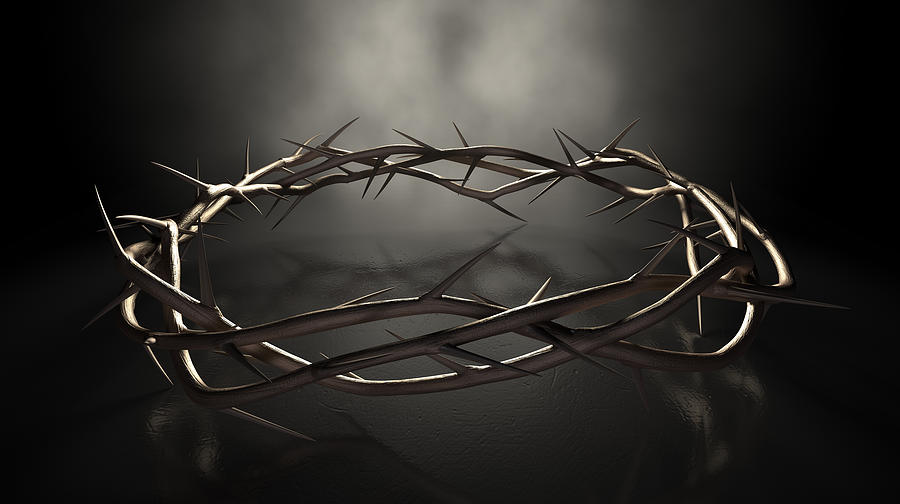
“And why beholdest thou the mote that is in thy brother’s eye, but considerest not the beam that is in thine own eye?”
But I endured it. Ask me why? I couldn’t tell you. That’s what friends are for, I reckon. But then I started to notice that her reflection was dwarfing my own. She began taking up the majority space in the mirror, and I, trying to keep the peace had ignored the signs and allowed it to happen. My own fault, I plainly admit it.
But no more.
As a brand new year rolls around and I reevaluate my life choices and take stock of my friends, I see with regard to the Alice matter that I will never get a decent return on my investment. Some people are a bad fit within their own skin as well as with other people.
Not long after I noticed she wasn’t simply trapped in a mirror. Alice was actually trapped in a glass box of her own construction, caught within a mirror pocket dimension. And to add insult to injury, she was attempting to trap my reflection, and thereby me, inside one as well.
In the end, I did the only thing I could do, for she gave me no other choice. I placed her reflection in the only fitting place I could think of — my rear view mirror. The very last time I ever laid eyes on Alice, she was shrinking in the distance until she was little more than a dot on the horizon.
My sincerest wishes for her are to find her way out of her glass cage and strive to be more than a visual echo in the reflectors of others. But that first step begins with her. She has to want to be a real person, and I’m not sure she knows how.
In any event, adieu, Looking Glass Girl. Here’s not looking at you, kiddo.
The rest of you, sally forth and be reflectively writeful (and be mindful of mirror-lurkers).
Tins were a wonderful thing to me. They were a depository where the things a boy kept precious could be secreted away and tucked into the backs of closets or under loose floorboards. Mostly the contents of tins included stamps, coins, marbles, smooth and colorful stones and the bits of refuse that could viewed as treasure to the furtive imagination of a young mind.
I collected snow.
Not just any snow, mind you—-I wasn’t some type of frozen vapor hoarding lunatic—-I collected the flakes from the first snow fall and packed little rectangular bricks in the back of the freezer. Why? Because of Frosty the Snowman who came to life after being imbued with the magical properties of first fall snow. But I wasn’t going to build some ratty old snowman, no sir, not me. My goals were slightly loftier than that.
I was going to build a griffin. Agrippa the Griffin.
I’d be the envy of my neighborhood when Agrippa and I went for a walk, and since I read somewhere how griffins have the ability to sense and dig gold up from the earth, I knew we’d be financially sorted for life. And we would totally rule the airways. That went without saying.
Yup. I saw it all clear as day and my plan was foolproof. I traced pictures from books in the New York Public Library so I’d know how to sculpt Agrippa accurately, and knowing he’d be curious about his heritage, I constructed a fascinating family history that would have made any newly birthed mythological creature proud.
As I collected tins of first snow and carefully hid them in the freezer, I knew the world was finally mine and I was destined to live the most incredibly awesome life ever imagined, and nothing could have prevented it…
Until I discovered the hard way that refrigerators came equipped with a thaw feature. All my carefully stacked magically imbued briquettes had been reduced to not-so-magical freezer run-off that dripped impotently into a catch tray.
Needless to say, I have yet to bring Agrippa into existence. And life, well, it hasn’t quite reached that most incredibly awesome high water mark yet.
But where there’s hope…
In the meantime, sally forth and be Merry Griffinmasly writeful.
“You have a messiah complex, got to save the world.” — Dean Koontz, Odd Thomas
I’ve never been much for crowds, not even as a child. People huddled en masse tended to embrace a hive mind of boorishness, which was why I tended to do all my necessities shopping early on Tuesday mornings. Fewer people and less hassle as I collected my weekly provisions, zipped through the express lane, out of the market and on to the next chore on my list that required social navigation. But something wasn’t quite right today. Tuesday? Of course. Early morning? Naturally. Empty supermarket? Not by a long shot.
The aisles were crawling with miscreants of every possible variety. Attention deficit disordered shoppers who treated their shopping cart like cars out of a Fast and Furious film, crashed into other carts and shoppers with reckless abandon in search of the ever elusive sale of nearing-their-sell-by-date items they probably had no practical use for; forsaken carts parked in the middle of aisles blocking throughways and creating bumper to bumper trolley traffic; and coupon carrying cretins stalling checkout lines because they hadn’t quite mastered the simple art of having payment in hand for their items and beating a hasty retreat out into the open plains of the parking lot.
I contemplated pivoting on my heels and leaving the shopping for another morning or possibly next Tuesday—surely I could have survived a week on basic rations. But had I left, I wouldn’t have run into Tatum.
It was seventeen years since I laid eyes on her last. She was still attractive, more so now, a slender Honduran with mocha skin, shoulder-length dreadlocks, and a disarming smile that tended to pull a bit to the right side of her face. Unlike previous times when I randomly encountered someone from my past on the street and immediately began flipping through my mental card catalog for any excuse to walk away, I was actually pleased to see her. In that moment of reciting the usual social pleasantries by rote, all the negative history hadn’t existed. We waded in a pool of heart-warming nostalgia.
Her smile never wavered as she told me how her life hadn’t turned out quite the way she planned. When we were together, she studied to be a lawyer. Now, she worked as a marketing senior manager for a cosmetics firm, was the mother of two, a girl and a boy, seven and nine years old respectively, who were fathered by a deadbeat boyfriend who ditched both the wedding and his kids in one fell swoop.
I had no idea how long we stood there blocking the aisle much to the ire of the other shoppers nor did I care. For the first time in quite a while, I honestly enjoyed exchanging words with a person who wasn’t trapped within the confines of a television set. But all good things, as they say—so, we exchanged numbers, promised each other we’d call and went our separate ways.
And on the way home, the strangest nagging notion crept up from the back of my mind: had we been able to work things out all those many years ago, her life might have turned out differently. Better. Then came the guilt as if my absence was somehow responsible for the direction her life took. And on the tail end of that guilt came the shame for not being a better boyfriend to her and a better person in general.
I promptly crumpled up her number and kicked it down a storm drain. Neither she nor I needed to be reminded of what might have been.
Less than a week later, once I had time to regret trashing her phone number, she called me out of the blue with an invitation to have lunch and meet her children. I wasn’t particularly keen on the latter, but I definitely wanted to see her again.
We met at a faux Italian restaurant, a fast food chain done up in dime store décor to give the eatery a stereotypical taste of Italy, and I had to admit that I didn’t mind her kids all that much. They were a bit unruly, but what children weren’t at those ages? Although I felt a little awkward being interrogated by her brood, it was nice being in Tatum’s company. I experienced a level of comfort in her presence that oddly felt like home.
That was, until her daughter, Tracie, asked, “Did you and Mommy have S-E-X?” as if spelling the word somehow made the question safe to ask.
Confirmed bachelor that I was, I wasn’t comfortable chatting with a nine-year-old about sex. I had no idea what the proper protocol was, so I turned to Tatum and with a look, asked, Did we have S-E-X, Mommy?
Without batting an eye, Tatum answered, “Yes. We had sex.”
Was that how it’s done nowadays? Was it the norm for ex-boyfriends to be brought to lunch with the kiddies to openly discuss their sexual history? I was still reeling from that exchange when her son, Lee, chimed in, “You could be our Dad!”
The old one-two punch. These kids worked me over like a speed bag. They laughed at my embarrassment and I tried to play it off, but it unnerved me on a deep level. The rest of the conversation was downhill after that in terms of my personal discomfort. We got on well enough, the four of us, better than expected and when we said our goodbyes after lunch, I was hit with another weird sensation—jealousy. Because her children weren’t our children and in her family, there was no place setting for me at the table. It only lasted an instant but long enough to have registered.
I tried to put things into perspective, tried to remember why our relationship ended in the first place, it wasn’t a build up of all the minor things, the petty annoyances that masked the underlying truth that people simply grew apart. If I was honest, it was the Santería, the Afro-Cuban ritualistic and ceremonial worship of saints her family practiced religiously that rubbed me the wrong way. She asked how I felt about it and I told her I didn’t believe in things like that and it was the truth, but the other truth, the deeper truth, was that it scared a part of me that I didn’t want to acknowledge.
To be clear, it wasn’t Tatum practicing rituals so much as her mother. That woman hated me from the moment she clapped eyes on me, no rhyme, no reason, just pure unadulterated hatred. For some reason, I hadn’t measured up to her exacting standards of what constituted a proper boyfriend for her daughter and she never bothered hiding that fact. She visited our apartment constantly and after she left, I would find things hidden around the house, under the bed, in the refrigerator. Little Santería objects tucked away everywhere.
One day when I arrived home early with the intention of whipping up a surprise dinner for Tatum when she got off from work, I walked in on Tatum’s mother and sisters in the middle of a Santeria ritual. There were others with them, perhaps family members I hadn’t met or just fellow practitioners, all clad in white. Drummers talked to the saints, playing their specific beat, eyes closed in a trance while robed dancers chanted in ancient Yoruba as they spun and shook off the evil eye.
And in the center of the living room, Tatum’s mother stared at me like I was a burglar, like I was the thing that didn’t belong in my own home. Before I knew it, the last of my resolve evaporated and I began yelling for her and everyone else to get the hell out of my apartment, jabbing my finger in the air at her for emphasis. The old woman ignored me and she walked in ever-expanding circles while smoking a cigar that smelled of things I’d never smelled before and blew smoke in my face as she spoke in tongues. It made me gag and start to cough. I clutched at my throat and lost consciousness to the sight of Tatum’s mother and sisters laughing at me.
When I came to, Tatum was home. I told her what happened and she called her mother on the phone. After a lengthy conversation, she said she understood how things must have seemed and apologized for not telling me she allowed them to use the apartment while we were out but ultimately she sided with her family over me.
That was all it took. I moved out of the apartment that night and never looked back. Depending on how you looked at it, if her mother was casting a spell to get rid of me, it actually worked because I was out of her daughter’s life.
I kept this firmly in mind when Tatum phoned and invited me around hers for dinner. I accepted the invitation, mind you, but I kept the incident with her mother firmly in mind. It had been a month of Sundays since I had a proper home-cooked meal because no one in their right mind would have called what I did cooking.
Tatum greeted me at the door, apron on, dusted with flour and seasonings, happy homemaking in full effect. The kids were in the kitchen and to my astonishment were finishing up washing the dishes. They dried their hands before they ran up and hugged me. I looked into their faces and something seemed off. Their smiles were too wide, teeth too white and there was something unnatural about the intensity in their eyes. And their faces looked different. They still possessed features that were reminiscent of Tatum but the rest was somehow different, incomplete, like faces in transition. I chalked it up to being overly tired and thought no more of it.
Dinner went well. Who knew Tatum could have been such a gracious hostess? The kids made the meal a pleasant experience, as well. They stopped bickering and playing with their food when I asked them to, laughed at my jokes and listened with rapt attention as I talked about the time I met their mother.
When dinner was over we sat in the living room. The apartment was too small for two growing kids but Tatum arranged everything in a way that made it feel roomy, as though it was a real house.
We sat on the sofa, all of us, Tatum paging through a family photo album on her lap. Pictures of vacations with the deadbeat boyfriend, of her during various stages of her pregnancy, of her and deadbeat holding a newborn Lee and later with Tatum holding a newborn Tracie while deadbeat lurked somewhere in the background. A life well documented.
Tatum told me how difficult things had been. Deadbeat had developed a drug habit and came around under the guise of seeing his children only to beg off some money to score and if that hadn’t worked, he stole things to sell or threatened to take the kids.
One time when Tatum refused to give him any more money, he made good on his threat and Stacie and Lee were taken from her by Child Services because of alleged abuse charges. She described the hell she had to go through to get her family back.
As if on cue, there was a knock at the door. It was deadbeat, whose Christian name was Oscar, most likely coming around again to score. She spoke with him in hushed tones through the space in the door allowed by the security chain. When his shouts turned to raged kicks on the door, I stepped up behind Tatum so that he could see me. “Everything all right, Tate?”
It was like trying to put out a fire with gasoline. Oscar lost his mind and no manner of reasoning calmed him. I showed him my cell phone, made sure he had seen me dial 911 and only then as he weighed the options in his mind did he leave, but not before he made his threats. He would be back, to kill me, get his kids and make Tatum pay.
Tatum convinced me not to involve the police but only after she agreed to let me stay the night in case Oscar decided to return. We tried to salvage the rest of the evening for the sake of Tracie and Lee but deadbeat’s presence lingered in the air.
The sofa was made up for me as comfortable as she could manage, but sleep was the furthest thing from my mind. I was afraid that Oscar would return, afraid that I wouldn’t be much use since I wasn’t a violent man. All I could have done was to block his attack while Tatum grabbed the kids and made their way to safety. And if that was what it took, then so be it.
When the tension of the evening finally loosened its grip and I began drifting off, Tatum came to me. Without uttering a word, she slid her nightgown off her shoulders and let it fall to her ankles. Why hadn’t I ever noticed just how perfect she was before? She stood there, naked and beautiful in the moonlight that poured in from the living room window, and I knew then and there that I would have done anything for her. Smiling, she climbed on top of me and it was paradise.
After we were done, after all the love I was capable of making had been made, after the pillow talk in which things were said that were sweet and emotional and ultimately meaningless, Tatum gathered her nightgown and went back to her bed. I understood her not wanting the children to find her in my arms in the morning, but a small piece of me was gutted.
My head swam with a million thoughts, my heart filled with far too many emotions, and that, combined with the feeling that something still wasn’t quite right, meant there was no sleep for me this night. And so preoccupied was I that I hadn’t heard it at first. The sound. The jingling of keys.
I strained my ears, trying to locate the noise again. After a few moments of silence, I wondered if it had just been my overactive imagination. It couldn’t have been him with a set of keys, surely Tatum would have changed the locks. Then it happened again. The sound of a key sliding into a lock. I sat bolt upright on the sofa, eyes scanning the darkness for a weapon. Remote controls, game console controllers, DVDs—the candy dish! It was no gun, but the glass was solid enough to crack a skull.
I stared into the dark hallway from the living room entranceway and heard the front doorknob turning. The door opened a crack and light spilled in from the apartment building’s hallway. An arm slipped in through the crack holding a hooked wire, perhaps a piece of a clothes hanger, that scratched at the door until it found purchase in the handle of the security chain which it then dragged along the track slowly until the chain fell away.
I should have acted then. I should have rushed the door, slammed his arm in it, put my full weight against the door, held him there and called the police for them to cart him away. But I was held in place by a tension that locked inside of me. Instinct had taken over. So had the fear.
The intruder’s silhouette appeared in the doorway before the door clicked shut behind him, plunging the hall back into darkness. Footsteps, slow and deliberate. The floorboards creaked as if they were screaming a warning. I threw the candy dish with all my might into the darkness and knew that I missed my target completely when I heard it crash off the front door and glass rained down on the floor.
Then I heard a rustling come from the kids’ room, obviously awakened by the noise. Were they coming to investigate? Something snapped inside me. This bastard wasn’t going to harm those kids!
I charged into the darkness until I collided with the intruder. But as angry and determined as I was, I was no match for his explosive violence. He heaved me into the air and threw me onto the floor, unleashing a hail of punches and kicks that knocked me senseless. I put my arms up to protect my face and instinctively curled into a ball but my defensive position blocked none of his attacks.
He must have sensed how weak I was, what a uselessly pathetic man he was dealing with because he stopped hitting me and chose instead to wrap his hands around my throat. I flailed spastically to get him off as I gasped for air but the intruder was having none of it. He slammed my head against the floor in a violent demonstration of his control over me as I gasped my last remaining breaths.
Then light flooded the room. Tatum and the children stood at the end of the hall, staring at me. My emotions were mixed. I wanted them to go away, I didn’t want them to see me like this. I wanted them to get to safety, but on the other hand, I wanted them to help me. I didn’t want to die.
But there was something in the way they looked at me, something that told me things weren’t right. And I looked up at the intruder—
Who was no longer there. And now I understood why they were staring at me. Here I was lying on the floor with my own hands wrapped around my neck. It took some effort for me to loosen my own grip. I staggered to my feet and tried to explain how Oscar had come back, how he had a key and he broke in and was going to do something terrible to them, but they didn’t understand.
“Who’s Oscar?” the kids asked and, “What’s wrong with Daddy?”
“Stop that! It isn’t funny anymore!” I tried to yell through a raw throat. “I’m not your father!”
A genuine look of pain danced across Tracie and Lee’s faces as they turned to Tatum, asking, “Why is he saying this, Mommy? Why is he acting so strange?”
And I was feeling strange like my entire world had suddenly shifted on its axis.
“I can prove it,” I said as I ran past them into the living room and grabbed the photo album for proof and flipped through the pages of—
Tatum and I on vacation. Me posing with her during various stages of both her pregnancies. The pair of us cradling a newborn Lee and later with us holding a newborn Tracie while Lee lurked in the background pulling a silly face.
These weren’t the pictures I had seen earlier and I had no recollection of having taken these photos, yet they existed.
And I looked at Tracie and Lee and they were different again, now a mixture of Tatum and I thought I actually saw bits of myself in their faces. The kids asked Tatum what was wrong and she explained that I, Daddy, just had a nightmare, that’s all. She told them that everything would be all right in the morning, everything back to normal.
After Tatum swept up the shattered candy dish, she began to usher me to the bedroom, grabbing the pillow off the sofa when something fell to the floor, something that had been resting under the pillow. It looked like a figure made of red-tinged folded palm leaves, bound together by hair but I couldn’t see it properly because she quickly brushed it under the sofa with her foot. I asked her what it was and she said it was just one of the kids’ toys and she would talk to them about picking up their things, or she suggested maybe I should do it, after I got back from Tuesday morning shopping, because she wouldn’t have time since she was staring at a monster of a day down at the law firm tomorrow.
“Art to me is an anecdote of the spirit, and the only means of making concrete the purpose of its varied quickness and stillness.” —– Mark Rothko
They come from miles around, my characters do, traveling the great distance from the fringes of my minds eye, some even making the long and arduous haul from my childhood, just to sit and talk. They do this whenever I’m alone.
As they gather ’round, I cast an eye upon their many and various faces and can’t help but feel the slightest twinge of remorse. Being in my company, locked within the confines of my imagination, is not wholly unlike a purgatory for them. A holding pattern, a waiting room, where they converse amongst themselves in voices audible only to myself, trying to catch my attention in the slimmest hope of being set free. Birthed into a story.
Some are fresh meat, the rest lifers, each easily spotted by the differences in their appearance and the strength of their voices. Fresh meats are gossamers—newly formed characters, little more than a stack of traits—who shout in whispers. Lifers, on the other hand, are as fleshed out as you or I, perhaps even more so, who have acquired the proper pitch and turn of phrase to catch me unawares during the times when my mind idles.
Before the talks begin–serious conversation, not the normal natterings they engage in–a flying thing the size of a butterfly, jewel toned blue stripes, greenish gold spots, with flecks of silver on the wings, lands in the palm of my outstretched hand.
“What is that, then?” a childlike voice asks from somewhere deep in the crowd, low to the ground. I recognize it instantly.
“It’s an anecdote, Duchess. Come see for yourself.” I reply, as the creature’s wings beat softly on my palm.
The throng–my personal rogues gallery whose roster includes reputables and reprobates alike–part like the Red Sea, making way for the most noble of all serval cats, The Duchess.
“An antidote? Have you been poisoned?” The Duchess queries as she saunters into the open space, a dollop of concern gleaming in her vivid blue eyes.
I try to not laugh, partly out of respect, but mostly due to the fact that though she is the eldest of my unused characters, she is technically still but a kitten. “No, Duchess, it’s an anecdote, as in a short, amusing or interesting story about a person or an incident.”
“I know full well what an anecdote is, thank you kindly. I was merely attempting to lighten the dreadfully somber mood with a bit of levity.” Not her best faux pas cover, but it was swift, which should count for something. As casually as she could manage, the kitten turned to see if anyone found amusement at her expense. No one did. They knew better. “May I hold it?”
I hesitate and stare at the leapling. Created on February 29th all those many years ago, it was my rationale–on paper–for keeping her a kitten, seeing as she had fewer birthdays, she would naturally age at a decelerated rate. The actuality is I have an affinity for kittens. For full grown cats? Not so much. And now the dilemma is if her kittenish nature should come into play and, without meaning to, cause injury to the anecdote, then all this would be for naught.
Her eyes plead with all the promise of being good and I have no choice but to relent. “It’s fragile, so be gentle. Take care not to crush it.” I gently place the anecdote in her cupped paws.
“Why does one need an anecdote?” The Duchess of Albion asked, her nose twitching whenever the creature moves its wings.
“To tell a proper story.” I answer. “More than just a sequence of actions, anecdotes are the purest form of the story itself.”
“But I thought characters are at the heart of every great story?”
“They are and anecdotes connect the hearts and minds of those characters to a story.” I try to feign calm but I can see the kitten’s body tensing up. Her eyes, those glorious baby blues, are studying the creature closely. Was I wrong in my decision to trust that she rules her instincts and not the other way around?
“They also add suspense to your story, giving the audience a sense that something is about to happen. If you use them right, you can start raising questions right at the beginning of your story—something that urges your audience to stay with you. By raising a question, you imply that you will provide your audience with the answers. And you can keep doing this as long as you remember to answer all the questions you raise.”
The kitten’s breath becomes rapid and her paws close in around the anecdote and I want to cry out, urge her to stop, but it’s far beyond that point now. She is in control of her own fate. Canines bare themselves, paws pulling the creature closer to her mouth.
“No!” she shakes her head violently. Her ears relax and her mouth closes as her breathing returns to normal. Then, the oddest thing happens…
The Duchess begins to vanish. All the characters look on in a dazed silence, uncertain how to react.
“What is happening to me?” she shoots me a panicked glance as cohesion abandons her form.
“Haven’t you sussed it out yet?”
“No… I’m scared!”
“Don’t be.” I smile. “Look around you. You’re at the heart of a story. You’re free.”
“Truly?” she is suddenly overwhelmed with delight, her expression priceless. “But — but what do I do with the anecdote now?”
“Open your paws, let it fly off.”
She unfolds her paws. Tiny wings beat their path to freedom. Then someone from the back of the crowd gives The Duchess a slow clap. Soon, others join in, building into a tidal wave of applause.
The now translucent Duchess waves a tearful thank you to the crowd, before turning back to me with a request, “Say my name.”
“Why?”
“Because you always simply address me Duchess and I want to hear you call me by my full name one last time before I g– —”
And just like that, she was gone.
I bid you a fond farewell, Your Grace the Duchess of Albion Gwenore del Septima Calvina Hilaria Urbana Felicitus-Jayne Verina y de Fannia. Enjoy your journey. You will be missed.
“Stories are the creatures that forage in the wilderness of our minds. Their claws pierce our curiosity, digging in deep to prevent our escape, as they force us into their maw, past razor sharp teeth of conflict.” —- Rhyan Scorpio-Rhys
“Tell me a story.” the woman said, book opened to a blank page on her lap, graphite stick firmly in hand and at the ready. The reading chair in which she sat was, what appeared to my eyes, nothing more than a series of interwoven vines that had grown from the lush green carpet in the center of the room. This indoor library of hers smelled of petrichor, the scent of rain on dry earth, which would explain the moisture that dotted the spines of the books stacked in chaotic fashion on the recessed shelves lining the walls.
“I — I don’t have any stories.” I shifted uncomfortably in a small puddle on the carpet—that was most assuredly grass—as the woman took in the sum of me.
“Nonsense, everyone has stories, some more interesting than others, but they are stories nonetheless.” she said, gesturing with a nod for me to sit. “Everything is present for a story to exist: a teller, that would be you, and an audience, which would be me.”
My seat—a normal metal folding chair with padding—was as much out of place with the room’s décor as I. A reminder, no doubt, that although invited, I was still considered an interloper. The fact that the chair was bone dry despite the moist surroundings was of small consolation. I squirmed until I found the position that afforded the least amount of discomfort and said, “All right, then… I don’t know how to tell a story.”
“Ah, a different matter altogether.” she said, placing the book and graphite aside. “The act of storytelling is as old as the creative spark that burns within us all. And though truly great storytellers are born, those lacking the unique gift may still acquire the skill.”
1. Keep it simple.
“The first thing to bear in mind is if you have the choice between a complicated or simple telling, choose the simple approach. As marvelous as the brain may be, it can become overwhelmed if it attempts to process too much information at one time.”
2. Open big.
“Next, you mustn’t be afraid to grab your audience by the balls!” the woman smiled, amused by my unease. “And never apologize for doing so. You’re familiar with the saying, ‘you only get one chance to make a first impression,’ aren’t you? The same applies to your story.You need to carefully craft your opening line to grab your audience’s attention immediately, and represent the promise of your story by displaying a unique voice and perspective.
“There is no going soft here. Your opening line should possess the elements that make up the story as a whole, told in a distinctive voice, a point of view, a rudimentary plot and some hint of characterization. By the end of the first paragraph, your audience should know the setting and conflict… unless there is a particular reason to withhold this information.”
3. Be mindful of your story’s spine.
“Stories are the creatures that forage in the wilderness of our minds. Their claws pierce our curiosity, digging in deep to prevent our escape, as they force us into their maw, past razor sharp teeth of conflict. But despite outward appearances, these beasts are only as strong as their spine.
“Your duty is to support that spine by arranging your content in a logical order and supporting it with anecdotes that raise questions to keep up interest and moments of reflection to show your story’s appeal. We, as the audience, need a reason to care.
“And lop off the vestigial appendages of tangents where you find them. Going too far astray will only lose your audience’s attention.”
4. Don’t alienate your audience.
“Some subjects require a delicate touch. You’ll know them by their appearance and the uneasy feeling they leave in your gut. By no means avoid them if they’re integral to your story, but instead find the best way to craft the tale so that you draw your audience in before revealing sensitive details. Invest them in the story before you shock them and then give them time to digest it.”
5. End strong.
“Whether you end your story on an upbeat note, allow your audience to fill in the blanks, come full circle with your lead, close with a relevant quote, provide a brief summary, or wrap things up with either a surprise or anecdotal ending… you need to come strong. Elevate your story’s effectiveness with a great ending and leave them with a lasting impression. The yang to your ‘first impression’ yin.
“You should also give your audience the proper space to appreciate your ending. A mere sentence or two in which you take a step back and let the story meaning steep in their mind.
And finally, allow your audience to hear the door click shut behind them, signifying that the story is well and truly over. Everything’s done and dusted. Thank you for visiting my world, now it’s time to return to your own.”
“Got all that?” she asked. I nodded that I understood.
“Good,” the woman rested the tip of the graphite stick on the book leaf, “now tell me a story.”
My monotony needed twisting today, so I went for a stroll, sans iPod. You know, breathe in a bit of city fresh air, clear some cobwebs, that sort of deal.
There I was walking down the street, mind-sifting through character conversations and scene settings, when I looked down at the pavement and realized that I was traipsing through what looked like the aftermath of the Great Worm War of 2013. The sidewalk was a battlefield littered with the corpses of thousands of earthworms that coated an entire city block.
Logically I knew how this could have happened. I knew they came to the surface either during the heavy rains–but it’s been dry weather for the past week–or to pair off and mate only to get caught on things that are hard for them to crawl across, like sidewalks and subsequently fry on the surface from sun rays–but that normally occurs during spring.
So, what then? Had there actually been a battle? Warring clans pitched against one another over territorial disputes? Factions in conflict over the claiming of a throne? Families locked in a deadly dispute over an unholy union?
Or was it a warning?
As I stood there, staring at their dried remains, curled into runic shapes, I wondered if they had been somehow gifted with a vision of the approaching apocalypse and had sacrificed themselves in an effort to warn us in the only language they knew. The last Germanic language spoken to them by man before the two species went their separate ways.
In that moment I felt like Indiana Jones in the passageway to the Grail chamber, trying to decipher the worm cadavers’ possible portents of doom, only without the aid of a diary or Sean Connery whispering something about, “Only the penitent man will pass.” or like John Nash without an ounce of the mental code breaking ability.
And I stood there. Longer than I’m comfortable admitting. Frustrated by the limits of my linguistics. Finally, I forced myself to move on, but not before making a promise:
The astrologer built her career on specificity. Clients returned because her readings differed from one another in ways that felt personal: conflict in one chart, travel in another, years of expansion followed by contraction somewhere else. Whatever one believed about astrology, her practice depended on the heavens producing variety.
Then the charts began repeating themselves.
At first the similarities were subtle. Several clients received nearly identical indications around work and relationships. Within months the patterns tightened. Different birth dates, locations, and planetary arrangements produced increasingly similar outcomes.
She blamed exhaustion.
A colleague repeated the calculations independently and found the same thing.
They spent a year reviewing older records. The convergence had begun gradually decades earlier. Predictions that once spread across dozens of plausible trajectories had narrowed into a smaller set. By the present year, almost every chart pointed toward one of five outcomes.
They checked astronomical data, software, historical tables, transcription errors. Nothing explained it.
Her colleague joked that fate was becoming repetitive.
The joke persisted because no better theory emerged.
They began comparing their results with practitioners in unrelated traditions. Tarot readers reported recurring spreads. Palmists noticed lines becoming strangely similar across clients. An elderly diviner who worked with thrown bones said simply that the bones had grown tired.
Soon the astrologer stopped thinking of fate as an elegant design.
She imagined machinery.
Ancient machinery.
Something producing permutations for billions of lives, continuously, across centuries, with parts worn smooth from use.
Her clients still come.
She gives gentler readings now. She encourages them to treat predictions as possibilities because the patterns no longer feel individually assigned. Sometimes two strangers leave her office carrying nearly identical forecasts.
That used to frighten her.
Then one client returned months later having done something the chart had never suggested.
The next week another did the same.
Their updated charts contained tiny deviations.
She began collecting those cases.
Now she suspects fate’s failure may be creating openings. The machinery is losing precision. Repetition is increasing, yet so are small errors, omissions, unassigned moments where no outcome appears clearly prescribed.
She has started calling those gaps freedom.
She never uses the word with clients.
She simply points to the blank places in their charts and asks what they intend to put there.
The research began with correspondence from a marriage that had lasted twenty-eight years.
The linguist possessed every stage of it: handwritten letters from courtship, postcards from the first years together, emails from middle age, terse messages sent during the separation. She expected changes in tone. What surprised her was how orderly the transformation appeared once she mapped the vocabulary chronologically.
Endearments did not vanish suddenly. Their meanings decayed.
Dear became ironic before disappearing. Always shifted from promise to accusation. Fine migrated from reassurance to hostility. Words once used exclusively during affection resurfaced years later carrying contempt, as though language retained the shape of intimacy long after warmth had drained from it.
She expanded the study.
Other couples volunteered archives. The same progressions appeared with uncomfortable regularity. Relationships differed in duration and intensity, yet certain words followed similar paths. Tender language seemed to possess measurable half-lives. Some terms survived decades. Others became toxic within months.
She began privately calling the phenomenon variation.
Her most troubling discovery arrived when she reversed the analysis.
Hostile language sometimes traveled the opposite direction.
Couples who reconciled reused old insults playfully. Words once associated with humiliation softened over years until they became affectionate private jokes. Resentment could decay into tenderness through the same linguistic machinery.
The direction, she realized, mattered less than repetition.
Human beings appeared to wear emotional pathways into words until meaning followed familiarity rather than origin.
She has become cautious in conversation since completing the study. Compliments make her listen for future echoes. Arguments interest her linguistically even while they hurt. She occasionally hears a phrase and senses several possible meanings waiting years ahead of it.
Recently she started dating again.
The person she sees calls her difficult with unmistakable fondness.
According to her models, the word should trouble her.
Instead she has begun recording it.
She suspects the study’s largest error was treating love and hate as destinations. Language suggests they behave more like weather systems moving repeatedly across the same terrain, leaving traces of each passage behind.
She has no model yet for what happens when someone learns to hear the forecast.
The clinic maintained an unofficial ledger that never appeared in audits. It contained no diagnoses, medications, or treatment plans. Instead, generations of clinicians had recorded rhythms.
A senior doctor began the practice decades earlier after noticing that psychological collapse seemed to possess tempo. Certain patients deteriorated in sharp accelerations followed by long plateaus. Others moved through predictable cycles of suspicion, certainty, exhaustion, and temporary clarity. She measured the intervals obsessively and eventually claimed she could hear where someone stood in the progression after ten minutes of conversation.
Younger staff regarded the method as eccentric until it proved useful often enough to survive her retirement.
I inherited the ledger.
The earliest pages were clinical and restrained. Later entries became almost musical: six quiet weeks before acceleration, four-day recurrence, interruption expected after third sleepless night. Patterns repeated across people who had never met.
Her final note warned against studying the ledger for too long.
She wrote that once the rhythms became familiar, they appeared everywhere.
Six months later, I understood.
I began noticing cadences in staff meetings, family phone calls, strangers speaking on trains. Certain pauses seemed to arrive exactly where the ledger suggested they should. Arguments followed shapes I recognized from case histories. People repeated phrases at intervals that felt less conversational than mechanical.
Then I started hearing the rhythm inside my own thoughts.
I resisted charting it for several weeks. Eventually professional curiosity won.
The results disturbed me because the pattern already existed in the ledger.
Several patients had followed the same sequence across decades: increasing attention to patterns, private record keeping, certainty that observation itself had altered perception. Their notes ended at roughly the same stage.
Mine has continued beyond theirs.
That should reassure me.
It does not.
The intervals between certain thoughts are shortening with measurable precision. Each time I sit down to document this, I reach the conclusion faster than before. The ledger predicts that awareness of the pattern eventually becomes part of the pattern itself, after which measurement and symptom can no longer be separated.
I have reached that entry three days early.
According to the old doctor’s handwriting, that has happened before too.
I burned my soul to ash but the pain paled in comparison to the terror that struck my heart like a match, anticipating her arrival and the tirade she would carry in tow. An unwarranted fear, as she was calm when she saw what I had done. Calm and nurturing. Soothing my pain with herbs and aromas, and each early morning during the hour of the wolf, she laid an ear on my back and listened as my soul mended itself.
She never spoke the words of disappointment aloud but it registered in her eyes. Although residing within my body, this wounded thing, this unwanted soul, did not belong to me. She had laid claim to it many years past, and in my despondency, I had taken liberties with her property and attempted to destroy it. Again.
ii.
The first time, I threw my soul into a sinkhole and allowed the ground to swallow it whole. I made her acquaintance when she plucked it from the soil like a tattered tuber. “I saw what you did,” she said. “And since you would so recklessly toss this precious thing away, it is no longer yours, but mine, agreed?” I nodded and she handed my soul back to me for safekeeping.
I honored our pact for a few years, caring for it within my limited capacity, but during a particularly nasty bout of depression, I tied heavy stones to my soul and pushed it off the sea wall. For a second time she appeared, fishing my soul from the waves, and scolded me, “You are charged with protecting this thing that it mine, do you understand?” Again, I nodded. Again, I lied.
iii.
“Why do you want this worthless soul when it has been crushed by the earth? Why do you want it when it has been drowned in the sea? Why do you want it when it has been set alight like so much tinder?” I searched long and hard yet found no answer in her silence.
iv.
During the day, when she thought me preoccupied, she secreted herself in the shadows and slept. One day I followed her into the darkness and watched her body twitch from dreaming and listened as she muttered,
One more soul, once buried deep.
One more soul, in ocean steeped.
One more soul, by fire burned.
One more soul, of air returned.
v.
Under her care, my soul grew healthier and it frightened me. I was pitilessly plagued and badgered by the phrase, One more soul, of air returned, that repeated in my mind’s ear until it turned dogged and cacophonous. But she was unaware of my inner torment, in fact, she was in an exceptionally good mood today, her voice almost a song, “I know you don’t see it, but you are a gift, you are. You have no idea just how special.”
vi.
Today was the day. I felt it in my marrow. Something was destined to happen, something I most likely would not survive. I should have embraced this eerie premonition, for it was no secret that I did not want to continue in this manner, broken, detached, and alone. But the choice of how and when I departed this wretched life was mine to make and mine alone. So, I stalled by distracting her with trivialities. “May I have more broth? Have you seen my shoes? No, not that pair, the other ones? Can we go for a walk?” If she knew my plan, her expression never showed sign. No request was too large or small on this day. She granted them all.
vii.
We strolled along the pathway in the park that led to the duck pond, a place we visited often during my convalescence. Picked, naturally, as not to arouse suspicion as I searched for the proper diversion in order to make my escape. But I was so wrapped in my own thoughts, I failed to notice that she was walking slower than usual today. “Can we rest a moment?” she asked as we neared the benches. “I am a little short of breath.”
Her breathing became a labored and raspy thing before it hitched and became lodged in her throat. When her face went dusky blue and she slid off the park bench, I panicked. The opportunity had presented itself and there I stood like an idiot, frozen. Entangled in the decision of whose life to save, or more accurately, whose death I could live with.
There was no real choice.
viii.
Her breathing was a trembling, liquid sound as I pressed my mouth to hers and exhaled, but instead of me breathing air into her body, I felt her sucking air from my lungs, and not just air…
I tried desperately to pull away but her thin, vise-like hands clamped down on the nape of my neck and held me firm in a kiss that was collapsing me. My hold on life became dim and futile, but before I slipped away into emptiness, I noticed the oddest thing: her belly began to swell.
Every fiber of my actuality was drawn into her, and my soul, the object I had forever been so reckless with, was systematically being stripped of concern, of negativity, of identity. I fell further and further into a darkness that pressed on me from all sides. So tight, so constricted. I was still unable to breathe but the sensation was somehow different now.
At the very moment when it seemed the darkness was about to claim me for eternity, there came a burst of light so bright as to cut my eyes. Thankfully something soon blotted out the light – a face, slowly coming into focus but I knew her before I saw her. From the moment I heard her soft cooing, “You are a gift, you are. You have no idea just how special.”